
I also write a regular feature over at Battle Red Blog. It is called “Value of Things” and that title fits fairly comfortably with this piece and what is ultimately behind the lab. There are two separate
questions when it comes to major sports teams. The first question is whether they are reasonably investing everything they possibly can to put a competitive team on the field or court.
In the NFL and NBA this is fairly easy to answer. The NFL has a hard cap which is supposed to be a one 32nd share of 50 to 55 percent of overall revenue. The NBA has a similar percentage, but there is no hard cap. The league is almost a hybrid of MLB and the NFL as there is a cap number teams can go over, but there are aprons that teams are heavily discouraged from passing. Still, revenues are fairly level.
We are not sure of revenue overall in baseball and due to the lack of revenue sharing, we are not sure where each individual team is. That makes it difficult to pinpoint what percentage each team is spending on player salaries. What we can do is look at the Astros to see if Crane really is giving it all he has. That starts by looking at the best estimates we can find for overall Astros revenue.
CNBC reported that the Astros made between 494 and 499 million dollars in total revenue last season. Obviously, that is just one source and it is sometimes hard to take everything at face value. However, let’s assume that those numbers are accurate. With the luxury tax included, the Astros spent 244.8 million dollars in 2025. That would put the Astros a shade under 50 percent in terms of how much they are spending on player salaries.
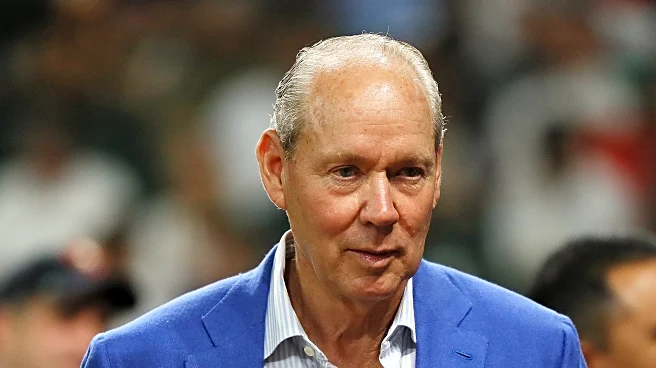
Could they invest more? I suppose if they were to spend 250 million then that would end up being almost exactly 50 percent. However, with the tax multiplier, that would essentially be a 3.5 to 4.0 million dollar player. We point this out to point out that those that claim Crane should spend more are free to suggest it, but it is hard to watch him damn the torpedoes when most other owners aren’t doing that.
Everyone points to the Dodgers, but the same source (CNBC) reported that the Dodgers were between 750 and one billion in revenue. Their opening day payroll was 354 million dollars. So, they weren’t even spending 50 percent of their revenues on players. So, in that context it seems presumptuous to expect Crane to spend more money. If you want him to spend more money then there needs to be more revenue. That could be possible as the Space City Network will be sold directly to consumers for the first time. Could that generate more revenue? Since the Astros and Rockets own the station it is highly possible that could increase revenue.
Until that time comes, expecting Crane to spend more than what he is currently spending is not horribly realistic. That brings us to the second portion of the purpose behind the lab and the value of things. Are the teams spending their money wisely? Those are harder questions to answer. They are harder questions because major professional sports are entertainment products. Winning is certainly more entertaining than losing. However, fans are also attached to certain guys and that makes following teams more entertaining.
In the Astros case, Jose Altuve and Carlos Correa have built up a fanbase in the community in addition to guys like Lance McCullers Jr. Does their performance justify their pay? In the strictest sense the answer is no. If we are looking purely at wins and the amount of money spent per win then they don’t justify their salaries. However, when you look at what they bring to the team in terms of public relations and fan interest then they do justify their pay.
The question for the Astros (as this period of hyper competitiveness winds down) is how many of those guys you can afford to keep around before it begins to bog down the entire operation. That’s a hard question to answer. However, as more and more money gets socked into player salaries for specific big name guys then the task for Dana Brown becomes more difficult. He will have to build a competitive roster around the edges.
When you look at criticism of the Astros, it usually either centers on Crane not spending enough money to field a championship team or Dana Brown for not making the moves necessary to build that same team. The reality is that Crane is spending the industry standard on player salaries. You have an aging team and aging teams are harder to sustain. Player performance dwindles. Health dwindles. This all happens while player salaries increase. The net result is a hamster wheel that is difficult to get off of.
That leaves Brown and company two unappealing options. You can either tear it down and rebuild from the ground up like the St. Louis Cardinals are currently doing or you can continue to spackle around the edges and hope for the best. It is easy to suggest that they should barter everything off and start over, but losing teams don’t create the same revenue. Owners are understandably reluctant to allow management to do that. So, in the last year of his contract, Brown is expected to live around the margins.
If Brown is living around the margins then Joe Espada is also living around the margins. We say all this to simply say that any criticism of both should be looked at through that prism. They are limited. Admittedly, the Astros have more resources than most teams, but they aren’t the Yankees, Dodgers, Mets, or Blue Jays. They live in the same neighborhood as the teams right under those four. They are in a group that will always be competitive as long as they continue to spend around 50 percent of their revenue. They just don’t have quite enough to compete with those big boys in terms of dollars. They will have to outsmart them. That is where the lab comes into play.