

As the newest movie installment of “The Hunger Games” series makes its debut in theaters this week with “Sunrise on the Reaping,” my mind, when it is not on LSU lately, drifts toward how entertaining a literary and cinematic franchise it is. In some ways, it is similar to the history between LSU and Tennessee.
If you have not read or seen any of the series, the brief on the story is: in a dystopian nation, the government selects one boy and one girl between the ages of 12 and 18 as tributes from each
of the country’s 12 districts to enter an arena where “Gamemakers” change certain aspects of the arena while the tributes fight to the death until only one remains.
The other tributes typically are not the scariest part of the arena. It is the Gamemakers sitting in a control room, randomly changing the weather, releasing bioengineered animals, supplying barbaric weaponry, and breaking your expectations the second things start looking predictable. This is what some of the Tigers’ and Volunteers’ most iconic moments together have felt like: an invisible control room hijacking the battle and rewriting expectations.
LSU and Tennessee first met in 1925 in Knoxville, Tennessee, where they battled to a 0-0 tie. Since then, the Vols have held the series bragging rights with a 21-10-3 record. Tennessee strung together 10 consecutive victories from 1934 to 1959. It was almost 13, but a 3-3 tie in 1964 broke up the win streak. Since the turn of the century, LSU has dominated the series, leading 7-3 in that timeframe.
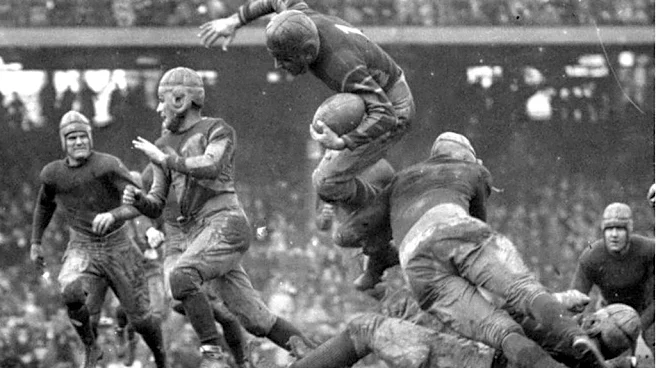
“The Stop” in 1959 marked one of the most iconic moments in the history of this matchup’s early years. Riding a 19-game win streak, fresh off an SEC championship and a National championship from a season ago and a week after Heisman Trophy winner Billy Cannon’s Halloween Run against Ole Miss, No. 1 LSU led by Paul Dietzel traveled to Shields-Watkins Field in Knoxville to face No. 13 Tennessee. Late in the fourth, the Tigers would score a touchdown to cut the deficit to 14-13. They opted to go for two and the win. Who else would you give the ball to in that situation other than Cannon? Cannon would controversially be ruled short of the goal line, being stopped by Bill Majors and Wayne Grubb, effectively ending LSU’s hopes of repeating as national champions.
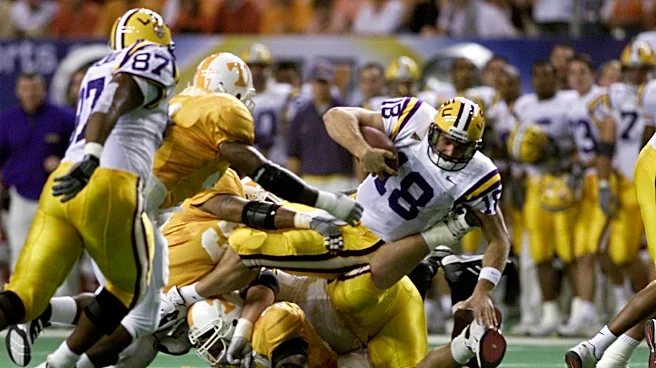
The legend of Matt Mauck started in 2001 with another unexpected twist in the series. No. 2 Tennessee, with a 10-1 record, had already beaten LSU earlier in the season in Knoxville, 26-18, and marched into Atlanta for the SEC championship game for a rematch against the Tigers. The twist would come early when starting Tiger quarterback Rohan Davey went down with an injury, and in came the former minor league baseball player at quarterback for LSU. Mauck would fully take over at QB for the second half. While he would only complete 5 of his 15 passes, Mauck would rush for 43 yards and pick up two touchdowns on the ground, including one to take the lead in the fourth quarter. Mauck and LSU would run away with another touchdown late in the fourth to win Nick Saban his first SEC championship, 31-20.
Heartbreak struck the state of Louisiana in 2005 with Hurricanes Katrina and Rita. The first home game after Katrina would be moved to Monday due to Rita. No. 4 LSU and No. 10 Tennessee would head to overtime, tied at 24 after the Tigers coughed up a 21-point lead thanks to Rick Clausen, who had transferred from LSU to Tennessee earlier in his career. After stalling out on the first drive of overtime, LSU would kick a field goal to make it 27-24. Tennessee would answer with a rushing touchdown from the 1-yard line to steal the victory, 30-27. The Tigers would get their revenge in Neyland Stadium a year later when they trailed 24-21 with 14 seconds left; JaMarcus Russell would rifle one to Early Doucet for the 7-yard score to win it 28-24.
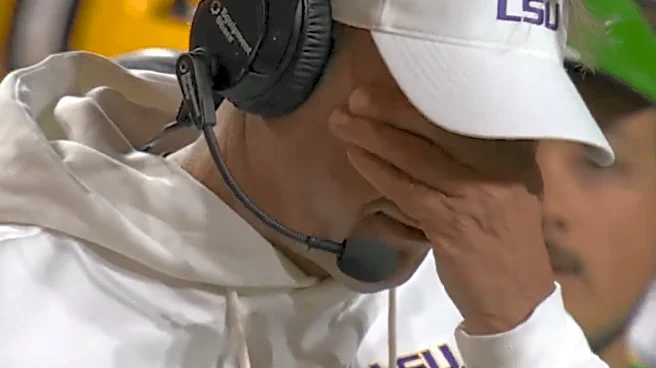
Down to the wire once again in 2010, No. 10 LSU trailing 14-10 at home, classic Les Miles clock management would come into play as the Tigers would sub with about 15 seconds left in the game and no timeouts, eventually winding it down to just 3 seconds when the snap would come in, but Jordan Jefferson was not ready for it, and the ball would run all the way back to the 20-yard line. Tennessee had seemingly won the game. A review would show the Vols had 13 men on the field, giving LSU one more shot with an untimed down. Jefferson would go under center and hand the ball to Stevan Ridley, who punched it in as the Tigers pulled off one of the most chaotic endings in SEC history for a 16-14 victory.
The last time the Tigers and Vols squared off was in 2022 under Brian Kelly in Baton Rouge. It was an absolute beatdown in favor of Tennessee and Josh Heupel. The game started with the Vols kicking off to LSU, but the Tigers fumbled, handing the ball over. Tennessee ran full steam ahead, scoring on each of its first four drives and securing the victory with a 40-13 final score. Jayden Daniels led LSU in passing and rushing with 338 total yards, completing 32 of his 45 passes with one touchdown through the air to Kayson Boutte and an interception. Malik Nabers led receivers with six catches for 80 yards. Defensively, Micah Baskerville led the unit with 15 total tackles. Hendon Hooker quarterbacked for Tennessee, completing 17 of his 27 passes for 239 yards and two touchdowns, both to Jalin Hyatt. Jabari Small led the way in rushing for the Vols with 127 yards from 22 carries and two touchdowns. The Tennessee defense recorded five sacks, with 2.5 coming from Byron Young.
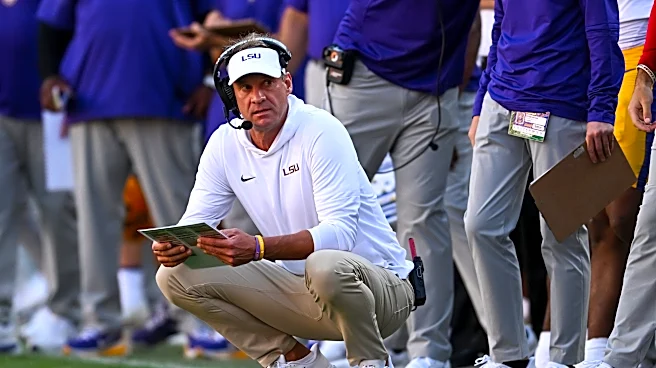
LSU and Tennessee will meet on Saturday, Nov. 21, as Lane Kiffin is set to face another one of his previous employers on the road. Kickoff is scheduled for 2:30 p.m. CST and will be broadcast on ABC.