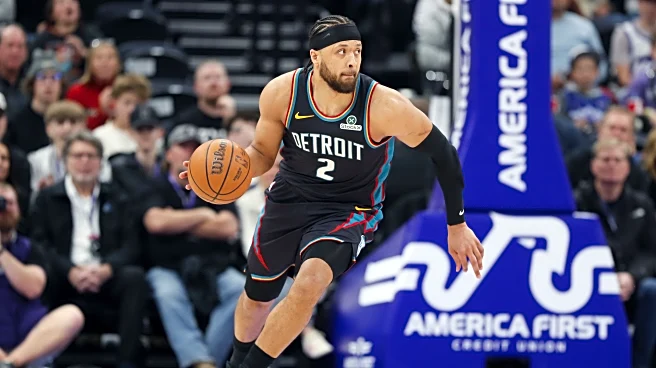




The Pistons wrapped up their West Coast trip with a 3–2 record, dropping a pair of games to Western Conference bottom-dwellers in Utah and Los Angeles. While both the Jazz and Clippers have been playing better basketball over the last couple of weeks, those losses still leave a bit of a sour taste.
Overall, it’s fair to label the trip a success—and there are some positives and negatives to take from it.
1. More shooting needed
The Pistons have barreled through the first third of the season and sit atop the Eastern Conference
despite not taking—or making—many threes. Detroit ranks 21st in three-point percentage (35%) and 27th in attempts per game (31.5). That lack of perimeter shooting has been masked by elite paint scoring and strong defensive play, but recent games have highlighted the limitations of that approach.

On the West Coast, Detroit found itself in early holes and didn’t have enough reliable outside shot-making to mount comebacks. When that happens, the Pistons often lean into their identity—out-muscling opponents and dominating the interior—but two points at a time only goes so far when facing double-digit deficits.
That raises a legitimate concern come playoff time. If Detroit falls behind, who becomes the spark plug that can shoot them back into games, especially when opponents tighten up defensively and clog the paint?
2. Depth still a weapon
Marcus Sasser’s performance against the Lakers—19 points and five assists—was a friendly reminder of just how deep this Pistons roster is. While they may not match Oklahoma City’s depth top to bottom, Detroit’s ability to trust players at the end of the bench when injuries or situational needs arise is a significant advantage.
It also speaks to the mindset of players in smaller roles. Sasser and Dannis Jenkins have shown in spurts that when their number is called, they play with urgency and fearlessness—as if every minute matters. That mentality appears to permeate the locker room and has become a defining trait of this team.
3. Bickerstaff’s chaos lineup
With the Pistons recently returning to full health, some players have seen their roles reduced compared to earlier in the season. That’s prompted head coach J.B. Bickerstaff to experiment when the team needs an energy jolt.

Against Dallas and Utah, when Detroit looked flat, Bickerstaff rolled out a lineup designed to create chaos: Dannis Jenkins, Marcus Sasser, Ron Holland II, Jevonte Green, and Paul Reed. Late in the third quarter against Utah, with the Pistons trailing by 14 and searching for momentum, the group flipped the energy of the game. Jenkins spearheaded the run, finishing with 11 points and a +15 plus-minus, and the lineup helped Detroit claw its way back into contention.
It’ll be worth monitoring whether Bickerstaff continues to deploy this group—or a version of it—moving forward, as it’s delivered results in both appearances so far.