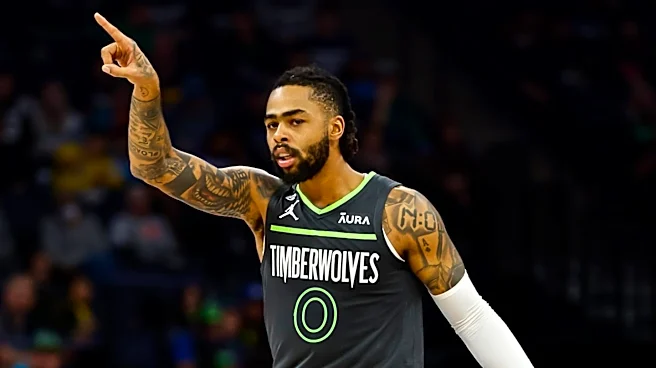



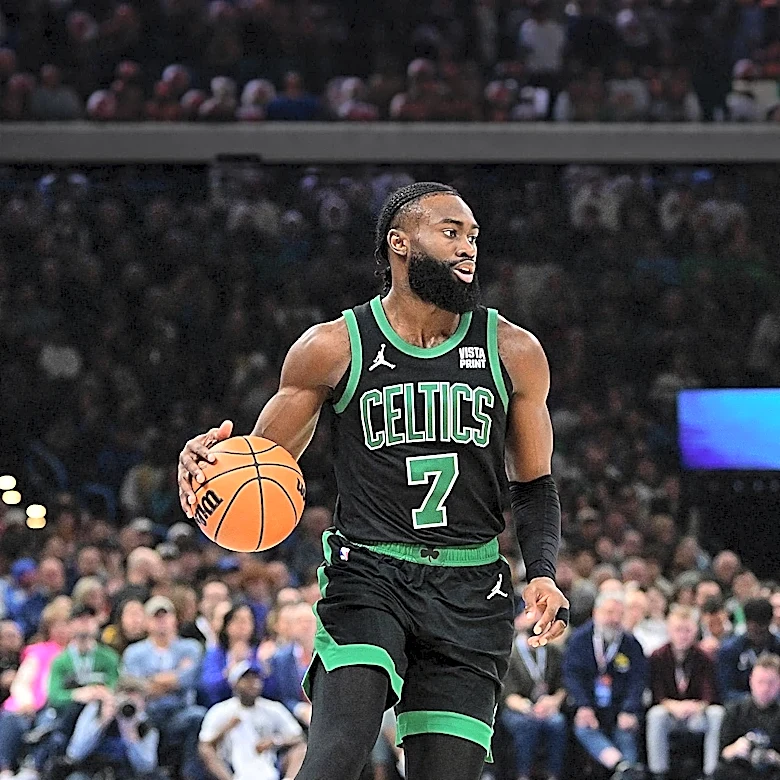

The loud part of the offseason is over, and it ended the way Minnesota’s flirtations with the rest of the league usually end, with somebody else’s celebration. LeBron went to Philadelphia. The three weeks we spent talking ourselves into a 41-year-old choosing Minneapolis for his curtain call is now filed in the drawer with every other summer we willed into a story that wasn’t there.
What’s left is quieter, and honestly more useful. Because underneath all that noise sat a plain basketball question
nobody could answer, and it’s still sitting there now that the music’s stopped and the folding chairs are being stacked: who starts at power forward?
It sounds small. It isn’t. When Julius Randle went to Brooklyn and Naz Reid went to Charlotte in the LaMelo Ball trade, the Wolves lost 21.1 points and nearly seven boards a night from Randle, and another 13.6 and six from Naz. Two key members of last year’s frontcourt rotation were subtracted in a single week. That’s not a tweak to the recipe. That’s an empty chair at the table with the good silverware still set in front of it.
This week, our SB Nation Reacts poll asked: who should start at the four? The answer came back loud.

Jaden McDaniels, 44 percent. Josh Green a distant second at 24. Terrence Shannon Jr. at 15, then Trey Lyles and Joan Beringer splitting the leftovers at nine and eight apiece. Of course, this is just the opinion of a few dozen of the diehards who fill out weekly surveys in July. But the diehards usually see the thing before the crowd admits it.
And here’s the thing about the 44 percent: they’re right. Just not yet.
Why Everyone’s First Instinct Is Jaden
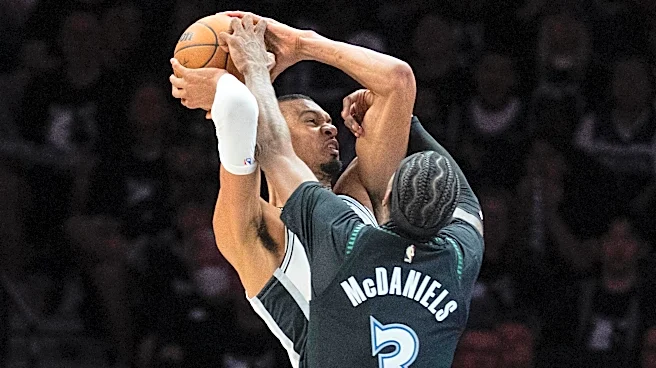
The case for McDaniels at the four writes itself, which is exactly why fans got there first. He’s the version of this lineup with the highest ceiling. Slide Jaden to the four and you get a 6-foot-9 menace switching one through four, guarding the other team’s best scorer while nominally checking a power forward, and enough length to turn the paint into a place opposing wings visit and immediately regret. His 14.8 points on 41 percent from three last season wasn’t the point. The point was the two-way math: he’s one of maybe five players alive who can defend up a position without costing you anything, and playing him at the four is how you get your best perimeter defender on the floor without benching anybody who matters.
That’s the dream. A starting five of Ball, Edwards, Ayo, McDaniels, and Gobert, with Jaden as the connective tissue between the perimeter and the rim. On paper it’s the most switchable, longest lineup Minnesota can field.
There’s just one voice in the building who keeps declining to sign off on it. And it belongs to the guy who fills out the actual lineup card.
The Coach Is Pumping the Brakes
Chris Finch, talking to the Star Tribune this summer, was about as clear as coaches get in July: “I don’t immediately envision Jaden just moving over and playing the four. While I can see at times he’ll play there and maybe play a good number of minutes there, I don’t see that right off the bat and I don’t necessarily, in my mind’s eye, see that as a starting lineup with him there.”
Read that twice, because Finch buried the whole season in it. Not never. Not right off the bat. Those are the words of a coach who knows where the road ends and just isn’t ready to be there on opening night.
His hesitation is fair, too. Move McDaniels to the four and you’ve solved one hole by opening another. Now the small forward spot is bare, and you’re asking Ayo Dosunmu or Josh Green to soak up starter minutes on the wing. You’ve also quietly signed up to be one of the smaller starting fives in the West, which is a thing Canis has already flagged this offseason and not a thing you want to learn about in a playoff series against a real frontcourt. Bleacher Report’s Greg Swartz slotted the Wolves’ projected starting group 12th in the league before anyone had settled the four. Going smaller to chase upside is a real trade, not a free one.
What the Job Actually Is
Here’s the part the poll can’t quite capture, because it’s about fit, not talent. This team does not need another shot-maker at the four. Ball and Edwards are two ball-dominant guards and they are playing with only one basketball. Assigning a fifth starter for this roster is less like hiring a lead singer and more like hiring a bassist: you want somebody who holds the pocket, never asks for a solo, and makes everyone around him sound tighter. Flash is the last thing on the job description.
Which is precisely where Trey Lyles walks in, unbothered, from the veteran’s-minimum aisle, the roster equivalent of finding exactly what you needed on the day-old rack. Lyles spent last season with Real Madrid, which is why nobody noticed the Wolves signing him, but he’s a natural power forward with nearly a decade of NBA tread and a career 34.7 percent stroke from deep. He stretches the floor without demanding a touch, he can guard a couple of frontcourt spots, and he rebounds his position. Minnesota isn’t asking him to replace Randle’s shot creation. It’s asking him to stand in the corner, knock down the open one Ball and Ant will manufacture, and get out of the way.
The alternatives thin out fast. Terrence Shannon Jr. is the young riser everybody likes, but he’s too ball-dominant for a role built entirely around not holding the ball. Ask a natural scorer to volunteer for wallpaper duty and you usually get neither the scoring nor the spacing. Joan Beringer is the genuinely exciting wild card, and in his seven rookie appearances of 10-plus minutes he put up 12.3 points, 6.4 boards and nearly two blocks on a frankly silly 74 percent from the floor. But Beringer is a center. Starting him at the four means playing two centers at once, which crowds two rim-bound bigs into the same patch of paint and dares your spacing to survive it. You can make it work in spurts, but you’re fighting the geometry of the modern game to do it. That’s a bench-unit weapon and a Gobert insurance policy, not an opening-night four.
The Cap Says Solve It From Inside
There’s no cavalry coming, either, and the ledger is why. Minnesota has roughly $215.9 million already committed for this season, an over-the-apron team with limited room to spend. Whatever the answer at the four is, it likely already has a locker in the building. That’s the quiet reason the Reacts poll matters: the fans aren’t picking between a dream free agent and a stopgap. They’re picking among the guys who are already here. So am I. So is Finch.
So Who Starts?
Both of them are right, and that’s the answer nobody wants because it doesn’t fit on a bumper sticker.
Finch is right about October. You open the season with Lyles: the natural four, the low-usage floor-spacer, the guy who lets Ball and Edwards run the offense through the front door instead of jamming a third creator into the frame. You keep McDaniels at the three, guarding the wings he was born to guard, and you don’t hand him a new job in game one.
But the 44 percent are right about April. The version of this team that survives a seven-game series has Jaden McDaniels at the four and a lineup long enough to make elite offenses feel claustrophobic. That’s the team that has to switch everything against a Wemby, an OKC buzzsaw, or a Denver trilogy nobody asked for a fourth chapter of. Finch knows it. “Not right off the bat” is a man telling you the destination while insisting on the scenic route.
We’ve watched enough of these seasons to know the lineup on opening night is almost never the one that matters in May. This franchise has spent thirty-seven years learning, the hard way, that the important version of the team is the one still standing when the playoffs begin.
Start Lyles.
Trust Jaden.
The four isn’t a name. It’s a sequence.
The fans didn’t vote wrong. They just voted early.
The Timberwolves 2027 Championship odds sit at +2700, at FanDuel Sportsbook. That could be a healthy payday if you believe in the Wolves!