





In a zonal block, Jose Mourinho’s Real Madrid sits in a 4-2-3-1 formation. Most of the time, the front four remain slightly high compared to the rest of the block. Additionally, the wingers and the attacking midfielder operate in a compact shape horizontally. The goal is to force the opposing team into wide traps.

Keeping the forwards relatively high out of possession has upside and downside. In a nutshell, it is a double-edged sword. The wingers staying high on a regular basis and not tracking back
hindered Real Madrid in the Champions League against Internazionale.

It forced Real Madrid’s pivots to shift across to deny the wide overloads Inter tried to generate. However, the space in front of the backline was extremely vulnerable. Not only that, but Inter was able to overload the opposite side. In this example, Fede Valverde shuffled across to cover the space Vinicius Junior was supposed to take charge of. Trent Alexander-Arnold followed the Uruguayan to plug the gap in the half-space. As a consequence, Lautaro Martinez found joy in dropping into the space at the edge of the box:

Moreover, Inter committed five players up front, outnumbering Real Madrid’s backline of four. Dean Huijsen had to keep tabs on Marcus Thuram, and Ibrahima Konaté had to swing across and monitor Curtis Jones’s movement. At the end, Denzel Dumfries found himself defending against Augusto and Lautaro Martínez. The Dutch right-back stood still, which allowed Inter striker to dash in and lay off Nico Barella’s clipped pass to Jones:

Inter’s goal is a projection to the downside of the high position of Real Madrid’s wingers. At first look, Marc Cucurella and Dumfries were overloaded and pinned inside. Lautaro Martinez tied up Cucurella in the right half-space, so Yan Bisseck could stroll comfortably in the wide channels. Instead of working his way back, Vinicius Jr opted for cutting off the passing lane between Diouf and Bisseck. Hence, the former solved the problem by playing the ball over the Brazilian to bypass him:

As a natural reaction, Cucurella pulled off wide to defend Yan Bisseck. But it was late, as Lautaro Martinez exploited the gap between Cucurella and Huijsen, taking advantage of Alexander-Arnold not picking him up early on:

Huijsen covered the front post zone, and Konaté marked Bonny. The latter dragged the French center-back across for Augusto to come from behind and guide Lautaro’s cutback home:

Football is a game of trade-offs. Coaches work to find a formula to balance risks and rewards. The high position of Real Madrid’s forwards appears to be costly, considering the vulnerabilities that come with such an approach. Nonetheless, there is another part of the truth. Keeping the likes of Vinicius Jr and Kylian Mbappé high gave Real Madrid the edge to hurt opponents in transitional moments.
According to Opta Analyst, Real Madrid tallied 2.4 fast breaks per match in La Liga. Only Real Betis accumulated more than Real Madrid in this regard. However, Los Blancos underperformed when it comes to finishing off chances.

Below, Valverde ran intensely to prevent Petar Sučić from easily controlling the second ball. He pressed Sučić into an error. Jude Bellingham collected the miscued pass and tended to pick up Vinicius. Piotr Zieliński blocked off the pass; however, Bellingham hunted the ball and tackled Sučić, wrapping his legs around him to poke the ball to Vinicius. Yan Bisseck pushing high allowed Real Madrid’s front three to create numerical superiority in the transition against Stones and Bastoni:

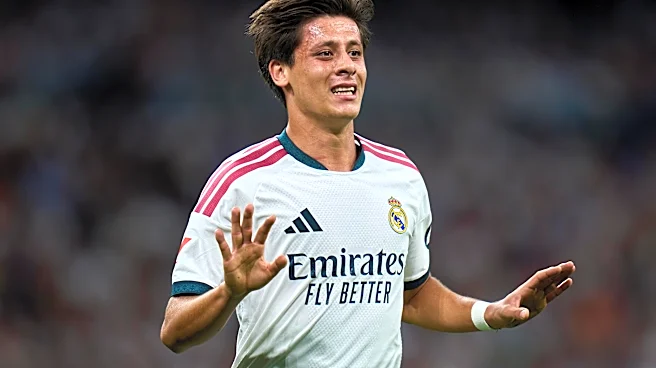
The last minute of Real Madrid against Malaga saw Dean Huijsen stepping up aggressively on Pablo Martínez, tipping the ball to Vinicius. The latter operating narrow and slightly high put him in a good position to develop the counterattack. Vinicius immediately played the pass to Arda Güler, who scampered the length of the pitch. Güler picked up the moment when the center-back, Ángel Recio, tended to step up to find Vinicius around the left-back, Rafael Garrido Hierro. Recio’s step up offered Güler an opening between the defenders to capitalise on and nip the game in the bud.

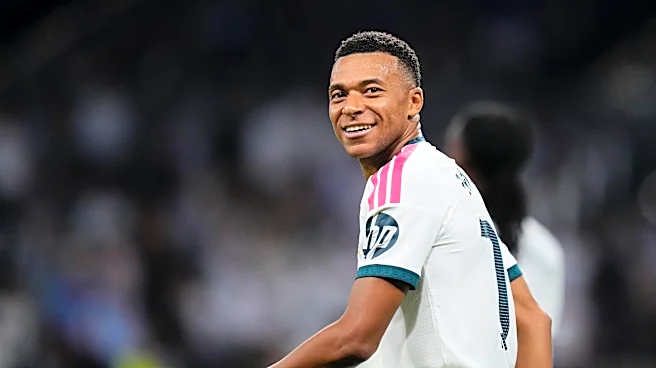
In the belwo scene, Mbappé targets Pavard from the blindside and Vinicius pounces on him to regain possession and initiate the counterattack. The latter carried forward, whereas Mbappé attacking the space between Bisseck and Augusto forces the pair to focus on the French forward, so Brahim Diaz arrives in open space inside the box and exposes Bastoni’s advanced position. Brahim sets up Bellingham (who arrived late) and Mbappé at the same time.


In the last minutes of the game against Rayo Vallecano, Eduardo Camavinga collected the loose ball after Rüdiger blocked the visitors’ shot. Pathé Ciss instantly shut down Bellingham. However, he left space behind his back for Camavinga to continue carrying the ball. Camavinga noticed Arda Guler running into a free island in the center. Rayo Vallecano’s defenders shifting laterally toward Camavinga allowed Arda Guler to set up Mbappé, who finished the chance from his first touch.

Deploying the likes of Vinicius, Mbappé, and Güler in advanced defensive positions is detrimental to opponents given the pace, the passing quality, carrying ability, and finishing skills these players offer when they are provided with open spaces to attack. However, it also tips the scales in the opposing team’s favor, as it serves it well in taking advantage of Real Madrid’s defensive woes. The solution may lie between the two situations, as knowing when to drop to support and stay advanced to be ready for the transition might enable Real Madrid to benefit from the two worlds.