


I am generally of the opinion that coordinators are a bit overrated in terms of their importance to a team.
Now let’s be clear – your importance can be “overrated” and still be an integral part of team success. Football is a team sport unlike many others: everyone plays a key role when they’re on the field or in the coach’s box.
But coordinators, especially at the college level, are often just an extension of the head coach. They play the guys the head coach signs. They scheme the way the head coach wants
them to scheme. And, in Batoon’s case, he runs the defense Drinkwitz wants to run based on the Tigers’ offense.
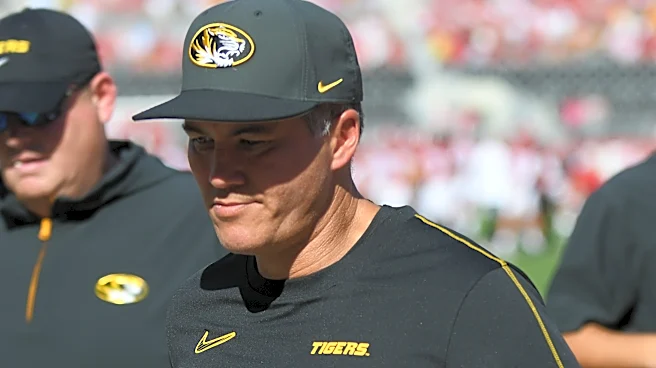
And yet, Corey Batoon has proven himself to be an invaluable member of this staff. After the sudden departure of Blake Baker before the 2024 season, most of us did our best Snoop Dogg impression when it was announced Drinkwitz would hire Batoon away from South Alabama:
But Batoon proved himself quickly, leading a defense that ranked 20th in SP+ after the 2024 season. His sophomore season was anything but a slump, and the Tigers ended up having the 10th best defense in the country by SP+. A guy with that pedigree at the SEC level surely has proven himself without a shadow of a doubt… right?
Maybe I’m not doubting Batoon as much as I am the method that he and Drinkwitz have gone about building their defense this year. When the first depth chart of the season popped up this past weekend, I couldn’t help but notice a lot of new names, especially near the top.

By my count the starting defense this year is comprised of:
- 36 percent of players who have never suited up for Mizzou in a regular season game (more if you consider that both CB positions are fronted by two transfers each.)
- 55 percent of players who have played in Mizzou’s system, but will be shouldering the role of starter for the first time.
- 9 percent – that’s one of 11, math nerds – returning starters. Hello, Nick Rodriguez.
For a team with College Football Playoff ambitions that is, uh, ambitious! Turnover is never a great indicator of year-over-year success, no matter how much you want to spin it. Losing the vast majority of your starting players makes it even tougher to predict how things will go. You could strike gold on half of your starting transfers and still end up in a position of weakness at two positions. And as much as we love when a rotational player becomes a star, it’s probably a bit much to expect all six guys to find their best form right away.
That’s why Corey Batoon could represent the difference between a pretty good Mizzou team and one we’ll talk about the way we do the teams of 2007, 2013 and 2023. We know his system works with continuity, but how will it perform when Batoon is managing the integration of so many new faces and roles?
Batoon is known as a guy who doesn’t quite fit the mold of a venomous, fiery SEC defensive personality. He prefers to work from a place of tranquility, trading volume for serenity in the booth. Maybe that will make all the difference between defensive hiccups being isolated to the early going and potentially seeing those lapses dwell into the latter autumn Saturdays. At best, though, you’d have to qualify that as speculation.
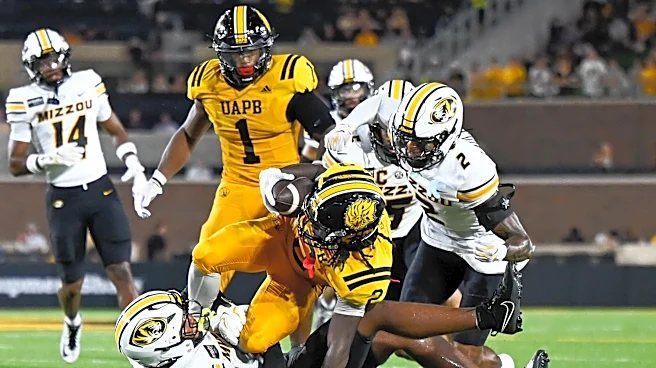
But speculate is all we can do until we see Mizzou’s defense in action, both on Thursday night against Arkansas Pine-Bluff and in the weeks to come against more formidable opponents. If Mizzou’s defense in 2026 will be measured by the contributions of its newcomers, it may very well be defined by the work of Corey Batoon – the thread of continuity that draws them all together.