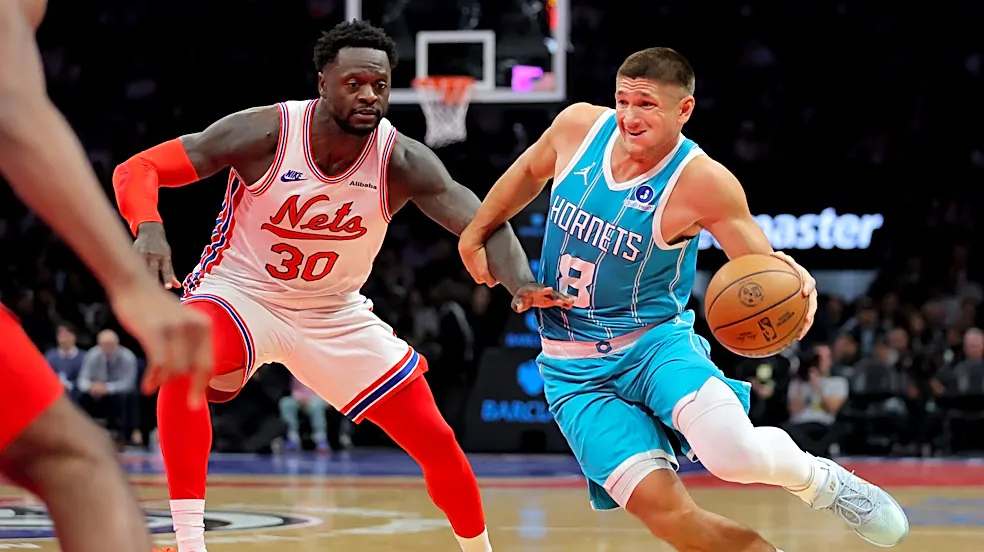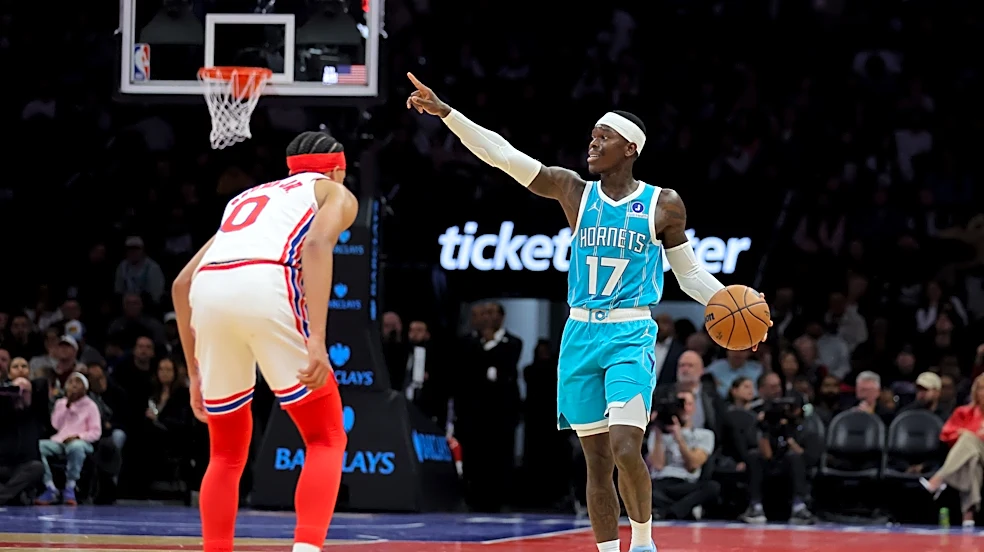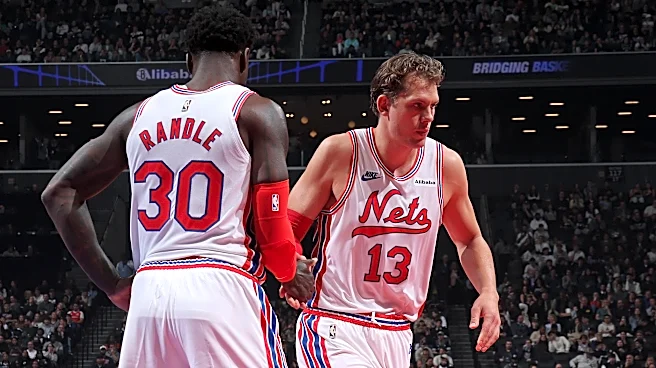




There was plenty to enjoy at the start of opening night. The new court, the jerseys, the starting lineup video and Vince Carter’s brief speech all helped set the stage for a new season in Brooklyn.
Then the game started.
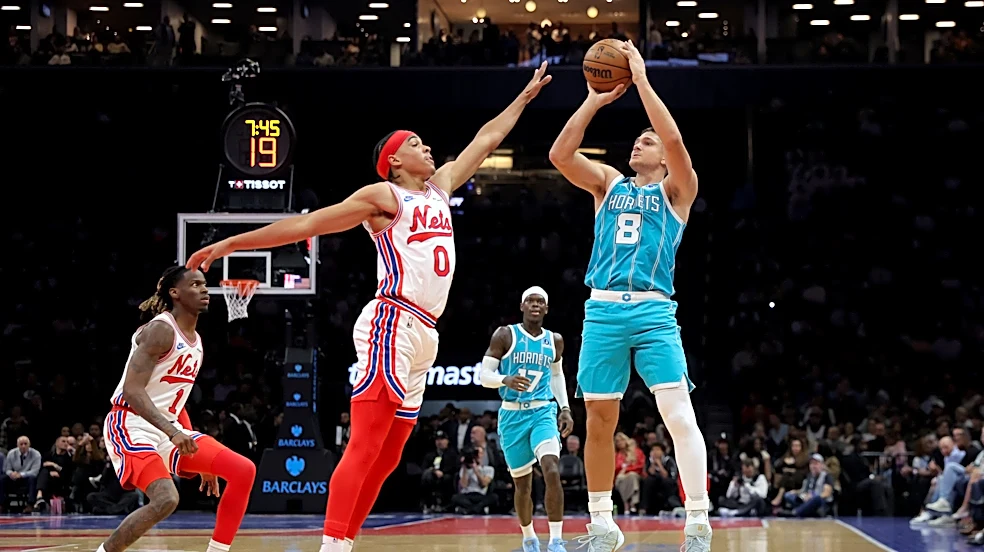
The Nets’ defensive problems were hard to miss. Charlotte scored 48 points in the paint and 20 second-chance points, exposing the risk of prioritizing positional size without having the personnel to make it work. The Hornets shot 17-of-22 at the rim (77.3%), compared with Brooklyn’s
12-of-24 (50%).

Day’Ron Sharpe wasn’t a liability, but his early foul trouble disrupted the frontcourt rotation. He picked up his second foul at the 7:28 mark of the first quarter, when Brooklyn led 11-5. Moritz Wagner checked in and Charlotte immediately attacked the rim.
Charlotte went on an 11-1 run from that point to take a 16-12 lead. Brooklyn didn’t regain the lead until 8:12 remained in the third quarter, when Michael Porter Jr. hit a three-pointer and converted the ensuing free throw to put the Nets ahead 64-62.
The problem wasn’t limited to one stretch. Charlotte kept creating extra possessions, and Brooklyn couldn’t consistently finish defensive stops. With 7:03 left in the third quarter, the Hornets grabbed three offensive rebounds before Naz Reid knocked down a three-pointer to put Charlotte back in front, 65-64.
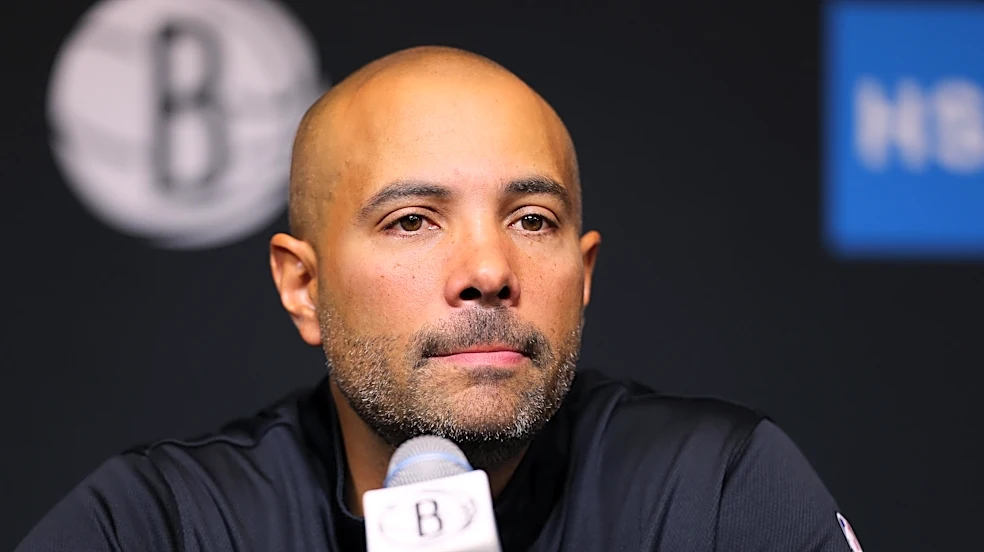
Head coach Jordi Fernández pointed to the rebounding technique the Nets failed to execute.
“Just help with the technique,” Fernández said. “If your man doesn’t crash, you can go sandwich and help. Like, it’s all these things that we’ve worked on that obviously we didn’t execute.”
Positional size is supposed to give the Nets versatility, but that versatility doesn’t mean much if they can’t keep opponents off the glass (or protect the basket.).
“You can win a basketball game and not do anything principle-wise how you’re supposed to do as a team. So, we don’t want to do that. We want to win every game playing our style of basketball, holding each other accountable, doing the things that it’s going to take not just to win games but just establish the culture and identity of the team that we want to be,” Jordi Fernandez said after the game.
Foul trouble made the problem harder to manage. Brooklyn spent a combined 2:31 across two stretches without either Sharpe or Wagner on the floor, leaving Noah Clowney to play center. That’s a small-ball look for a team built around positional size.
Clowney picked up his fifth foul with 6:40 remaining in the fourth quarter, then fouled out at 3:44, just 1:28 after returning to the floor. Randle had also picked up his fourth foul at 9:48.
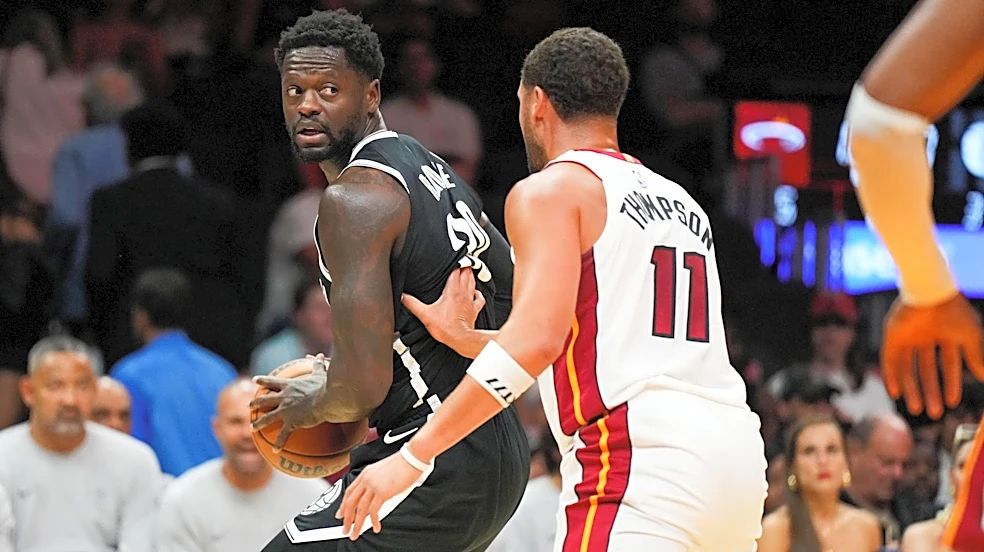
Randle finished with 33 points, eight rebounds and seven assists, but acknowledged that Brooklyn needed to be more physical on the glass.
“We got to look at the film,” Randle said. “I think we got to, including myself, I put it on me. We got to impose our physicality on those things and hit people first. So, I’ll set a tone with that.”
The Nets also didn’t get enough help offensively to offset their defensive problems. Porter Jr. and Randle were Brooklyn’s only players to score at least 10 points. The bench combined for 25 points on 6-of-19 shooting, while Drake Powell, Danny Wolf and Ben Saraf didn’t log a single minute.
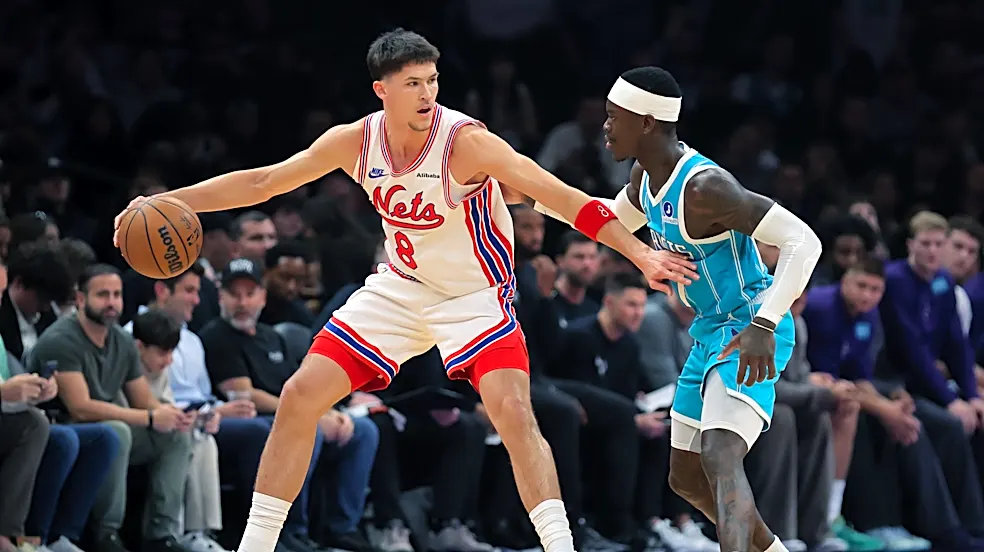
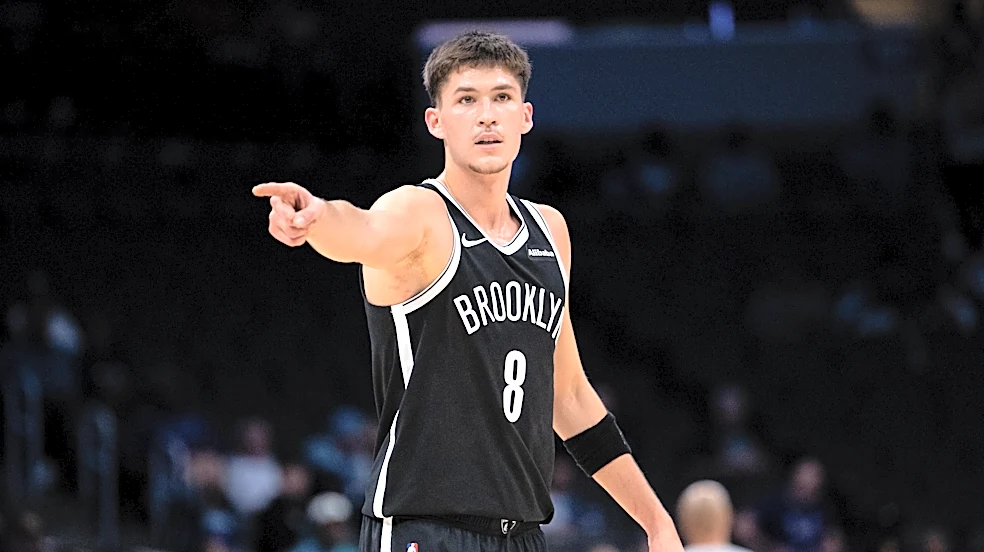
All three were among Brooklyn’s five first-round picks in 2025, the most the franchise has ever selected in a single draft. Egor Dëmin and Nolan Traoré, the two first-round picks who did play, combined to shoot 2-of-14 and committed five turnovers.
Dëmin was candid about his performance.
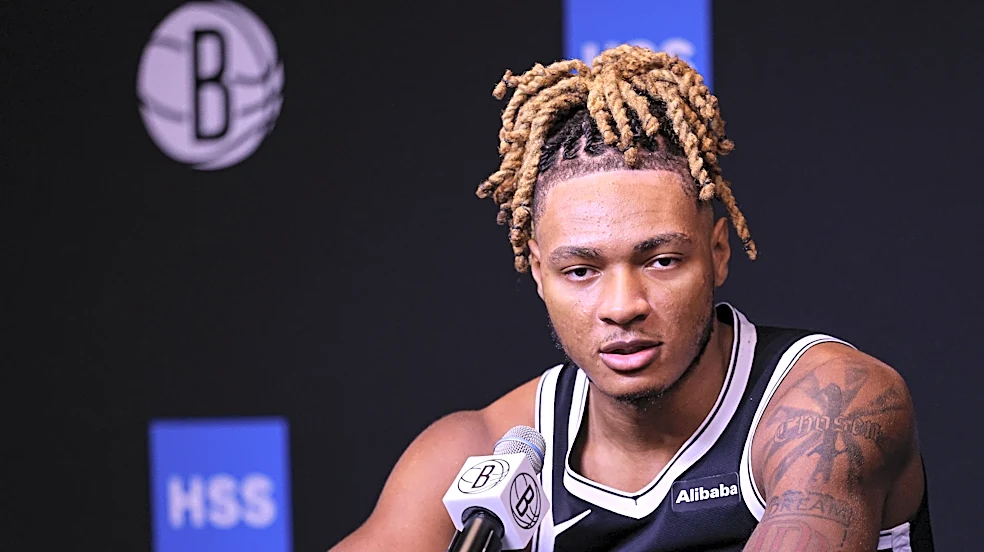
“Mine? Not very good,” Dëmin said. “I’m not very happy with how I end up playing the game. I started with two scored buckets, but then kind of just got slower from a standpoint of my intensity.”
Brooklyn shot 12-of-31 from three-point range (38.7%), so perimeter shooting wasn’t the main issue. The Nets needed more production from the supporting cast to make up for what they were giving up inside.
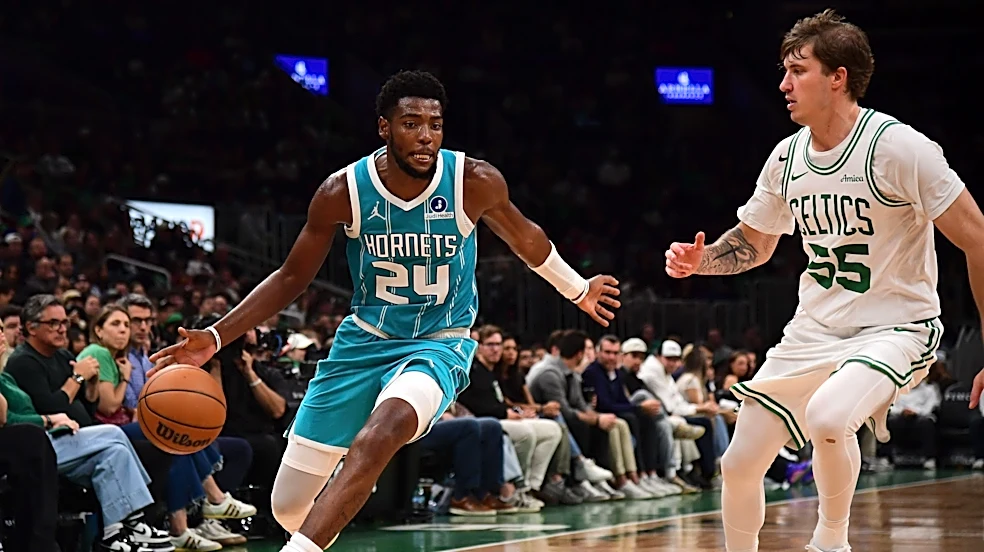
Charlotte center Moussa Diabaté logged 17 points on 7-of-11 shooting, eight rebounds and five steals, while Starting power forward Naz Reid finished with 20 points, 11 rebounds and seven assists.
It’s one game, but it exposed a familiar problem for Brooklyn: size at the five. The Nets want players who can move across positions and create advantages. But what happens when that versatility leaves them vulnerable at the rim, on the glass and short on reliable production from the bench?
Charlotte, even without three of its starters, exposed those weaknesses on opening night.