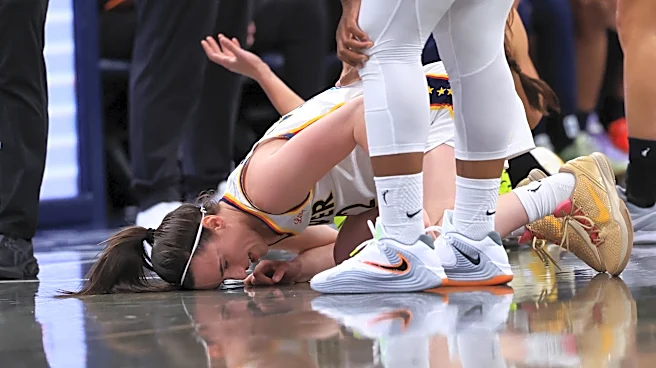




For casual basketball fans, watching the WNBA can be a stark surprise, as the league has traditionally permitted a lot of physicality. The NBA, in contrast, allows far less physicality than the W.
But, it seems like the WNBA is adapting and that the league will be much less physical going forward. One way this will be accomplished is by discouraging hard fouls, in addition to new officiating points of emphasis.
Here’s what we’ve learned about how the W is trying to cut down on physicality, along with
the opinions of prominent coaches and players.
Hard fouls will now come with higher fines for WNBA players
According Colin Salao for Front Office Sports, both technical and flagrant fouls will have a significant increase in fines.
Technical fouls
The new technical foul fine structure for the regular season is:
- Technical Foul 1–3: $500 fine each
- Technical Foul 4–7: $1,000 fine each, plus a warning letter from the league issued after the 5th technical
- Technical Foul 8: $1,500 fine, plus a one-game suspension
Last year, the fines began at $200, rose to $400 for a player’s fourth through sixth technicals and maxed out $800 for a seventh tech and beyond. Now, players will also be suspended for the eighth technical, and every other technical thereafter.
In the playoffs, a player’s tech count will reset. However, the fine structure is steeper:
- Technical Foul 1–2: $500 fine each
- Technical Foul 3: $1,000 fine, plus a warning letter from the league
- Technical Foul 4: $1,500, plus a one-game suspension
Flagrant fouls
Flagrant fouls are adjudicated through a points system: a Flagrant 1 counts for one point and a Flagrant 2 counts for two points.
A player will be fined $500 for every Flagrant point; last year, the fine was $200 per Flagrant point. At four Flagrant points, a player will be automatically suspended for one game. If a player is at three total Flagrant points and is called for a Flagrant 2, they will be suspended for two games. At six Flagrant points, a player will also receive at two-game suspension.
Most WNBA coaches and players want the league to be less physical
By hurting players in their pockets, they’ll likely think twice when making an aggressive defensive play.
But, a less-physical WNBA is not just the about the increase in fines for hard fouls. Coaches and players from around the league are talking about a need to tone down the excessive defense, something that will be encouraged with officials allowing for freedom of movement for offensive players.
Minnesota Lynx head coach Cheryl Reeve even went so far as to say the amount of physicality in the game is currently too much, sharing:
While they were hard at work on the (CBA), we were hard at work on the state of the game… We don’t want the level of physicality that we’ve seen in our game … We play beautiful basketball in the W. We Gotta make sure it’s not marred by unnecessary physical contact.
In an exclusive interview with NPR, Napheesa Collier went beyond her head coach’s words, saying that people don’t come to WNBA games for defense and want to see offense.
She suggested the WNBA was like 1980s NBA basketball in a critical manner, saying, among other things:
The game is too physical right now. I think that’s been a complaint of players and coaches alike for the past several years. We’ve been compared to the NBA of the 80s, in just our physicality. And I do think that hinders the players obviously. You come to watch players play offense and to score. When it’s so physical, the game is not fun to watch and it’s not fun to play.
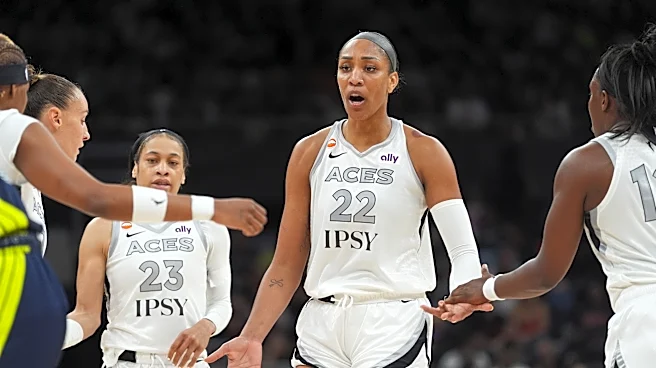
After a recent practice, Las Vegas Aces head coach Becky Hammon also elaborated on the league’s points of emphasis that are focused on cleaning up the game and making it less physical this year compared to last season.
While some fans might like the game the way it is, it’s evident that change is coming. The league wants it, and key coaches and players are calling for it.
This opening week of games, seeing how contests are officiated will be interesting, although it will take time to tell if these changes are impactful, or just early-season chatter. However, this is shaping up to be a potential inflection point in the WNBA.
What are your thoughts? Are you in favor of these changes? Do you think they will be implemented successfully and equitably, or do you anticipate new issues emerging? Which teams and players do you expect to benefit? Who will have to adapt? Spill all your opinions in the comments!