





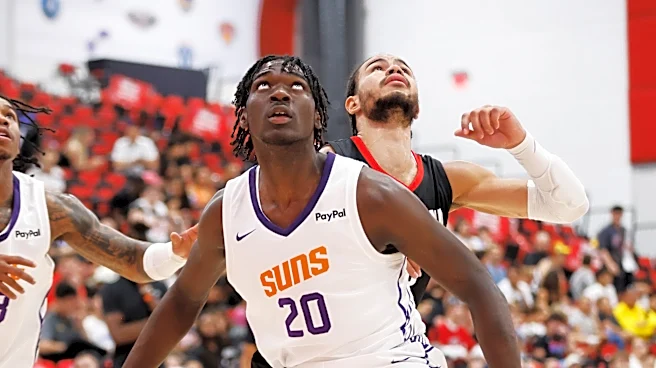
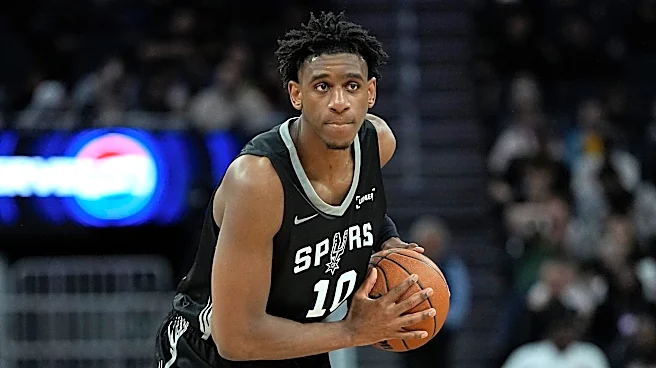


Summer League basketball begins tonight for the Phoenix Suns, and with it comes the annual exercise of managing expectations. We want answers, we want progress, and we want to believe that the young players the Phoenix Suns are sending to Las Vegas will return looking a little more comfortable, a little more confident, and a little closer to becoming the players this organization needs them to be.
Personally, I’m most interested in Rasheer Fleming. He will almost certainly see an increase in minutes
this upcoming season, which makes his progression important to the overall health of this roster. I want to see him look more comfortable on the floor, be more decisive, and more aware of where he needs to be and what he needs to do when he gets there.
I’m tempering expectations because, ultimately, these games don’t count. That doesn’t mean they don’t matter. Development is a pillar of this organization, and progression is paramount. When you’re trying to build something sustainable, the growth of your young players becomes one of the most important variables in the equation. And the cheapest. You must have quality youth to be competitive in the Apron Era of the NBA.
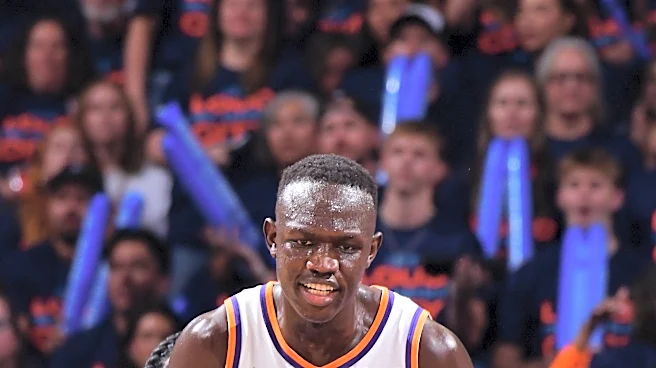
I’m not surprised that the majority of the community believes Khaman Maluach is the player who needs to showcase the most improvement. 64% of the Bright Side community believes this is true. After all, he’s a lottery pick. Quite possibly the last lottery pick the Suns will make for nearly half a decade. With that comes the weight of expectations, whether people are comfortable admitting it or not.

That became a topic of conversation on the infamous Suns Twitter this week. Dave Burns of Arizona Sports 98.7 said that by this time next year, we need to know that Khaman Maluach can provide quality NBA minutes, or it might be time to panic.
“I need Khaman Maluach to play more than he did,” Burns said of Maluach. “I think it’s imperative that Khaman Maluach, by the end of the season, you can see it. You can start to see it happening with him. And if it hasn’t happened by the end of the season, brother, it is panic time.”
Of course, the comment section is ridiculous. I’ll get to that shortly.
Panic? I’m not sure I’d go that far. Concerned? Absolutely. If we’re sitting here one year from now and Maluach hasn’t progressed, hasn’t demonstrated that he can contribute, and hasn’t begun turning his physical tools into productive NBA basketball, there should be concern. And again, for those who wonder how a path to opportunity exists to provide a platform for development, I’ve covered that.
As I see the responses and reactions to someone simply stating that plateauing in year two is not a good thing, I feel it. I feel a rant coming on. And you know what? I haven’t had a good rant in a while, so why not? Let’s stand on the podium for a few paragraphs and let off some steam that is surely fueled by the festing rage only the Arizona heat can bring out of someone in July.
Apparently, saying out loud that a year in which Khaman Maluach does not show improvement is a cause for concern is controversial. Sections of Suns’ Twitter immediately went on the defensive. The local media was “being negative”. The expectations were “unfair”. “Why are we attacking a young player?”
I find the reaction strange. Maybe it’s a product of a broader cultural shift in which criticism is interpreted as cruelty and expectations are seen as unfair pressure. Everything is expected to be positive, comfortable, and affirming. Disagreement is mistaken for hostility. Accountability is viewed as negativity. Maybe it’s the product of gentle parenting. Everyone gets a sticker, nobody keeps score, and pointing out deficiencies makes you the bad guy.
I’m not interested in gatekeeping how anyone chooses to be a fan. Root however you want. But I reserve the right to find some of these reactions bizarre.
Maluach turns 20 in September. He hasn’t played basketball for very long and his development will require patience. All of that is true. And that is precisely why progression is so important. If he’s plateauing after two years inside an NBA development system, that’s a red flag. It doesn’t mean the Suns should abandon him. It doesn’t mean he’s a bust. It means you should be concerned about the trajectory. Apparently, even acknowledging that possibility is too aggressive for some people.
We’ve lived this before in Phoenix, haven’t we? Marquese Chriss. Dragan Bender. Josh Jackson. After two seasons, the warning signs were there. Development had stalled. Progression wasn’t occurring at the rate the organization needed. Concern crept in because that’s what happens when expectations collide with reality.
Yet somewhere along the way, it became taboo to say these things out loud. To admit that you’re worried about a player. To establish expectations and acknowledge that failing to meet them would be disappointing. Maybe I’m the old guy yelling from the lawn now, wondering how we reached the point where the media is considered harsh for observing that professional athletes have expectations attached to their performance.
Criticism isn’t inherently negative. It’s part of analysis, part of accountability, part of sports. And if you think Phoenix media is brutal, spend a week following a team back east. We’re playing with Nerf guns out here.
Social media has complicated the relationship between fans, media, and players. It provides direct access, or at least the illusion of it. Too many people crave that interaction. They want the follow. The reply. The acknowledgment. They want to be liked. They need to be liked. And criticism threatens that possibility.
If you say something negative about a player’s performance, perhaps he won’t interact with you. Maybe he won’t repost your work or acknowledge your existence. So criticism becomes something to avoid. Every performance needs an excuse and every concern needs a qualifier. Every uncomfortable observation is dismissed as negativity because telling the truth might jeopardize the possibility of that idyllic affection.
I have news for you. Being critical allows you to see the entire picture. It forces you to examine strengths and weaknesses, successes and failures, progress and regression. That’s what analysis is supposed to be. Being balanced doesn’t make you a hater. It makes your praise carry more weight because people know you’re willing to acknowledge the flaws as readily as you celebrate the accomplishments. And in the long run, balance is what earns respect.
Thank you for attending my Ted Talk.
Summer League begins tomorrow, and hopefully we begin finding answers to some of these questions. Development isn’t linear and Maluach doesn’t need to score 20 points and grab 20 rebounds to prove he’s progressing. He doesn’t need to be the guy who moves the FanDuel win total up three wins next season. Fleming doesn’t need to dominate every possession. Koby Brea doesn’t need to look like a finished NBA product.
What do I define as progression? I want to see confidence, court awareness, basketball IQ, and execution. I want to see young players process the game faster than they did a year ago, making quicker decisions, understanding where to be defensively, and recognizing opportunities offensively. The goal should be to turn mistakes from last season into lessons they no longer need to learn twice.
Whether those improvements translate into counting statistics is secondary. Progress isn’t always found in the box score. Sometimes you have to watch closely enough to see it. And that is what I’ll be watching for when the Phoenix Suns take the floor at NBA Summer League 2026.