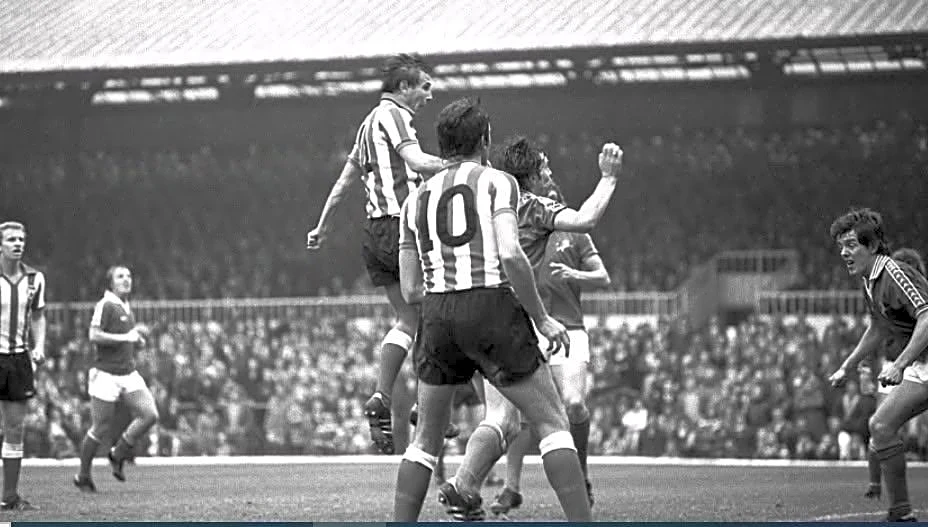


What a strange game this was. We had a referee in Derek Richardson from Lincolnshire who made some very odd decisions and appeared to want to officiate the game without his linesmen. If only we had VAR back in 1978!
Sunderland had not lost a game at Roker Park for ten games coming into this clash with Millwall. We were in tenth position in Division Two, but there were signs that Jimmy Adamson was starting to get his game plan across to the squad, especially in making us a lot harder to beat. It seemed
possible that we could have a tilt at promotion, especially as nobody above us in the division was running away with the championship.
Millwall had not had a good start to the 1978-79 season and were scrapping for points down at the bottom of the table.
With a tough-as-teak centre-half in Barry Kitchener, Barry Walker in midfield and John Mitchell ranging forward, I was not anticipating an easy game. To see the very experienced Northern Ireland international Bryan Hamilton on the bench for the Lions made me just a tad wary as kick-off approached.
Jimmy Adamson was a difficult coach to read at times, and I make no bones about being frustrated with him dismantling the squad that Bob Stokoe inherited and added to. He also did not appear to be a big fan of conventional wingmen and had us playing a style that was not always easy on the eye.
Wayne Entwhistle and Alan Brown up front were beginning to show signs of a burgeoning partnership. Bob Lee was being used in midfield and had some elegant touches to add to his threat in the air. In midfield, Mick Docherty was Adamson’s captain on the pitch and led from the front. Never taking a backward step and running for ninety minutes and some was “Baby Doc’s” mantra.
Gary Rowell was on five league goals for the season so far, occupying a left-hand side midfield position, with a licence to get forward.

Jimmy Adamson was said to have a stomach bug and was unavailable to take his place in the dugout for this game, so his assistant Dave Merrington deputised.
My slight wariness seemed misplaced within the first ten minutes, as we raced out of the blocks and into a two-goal lead with some fine football.
A short corner from Doc to Alan Brown was driven across the box, and Rowell ghosted in to prod the ball home on two minutes.
It was all Sunderland at this stage in the game, with Brown, Rowell and Lee all looking lively. The referee made an odd decision on ten minutes, awarding a foul in the box on Rowell. It looked like a penalty offence to the majority of us in the ground, but admittedly, most of us were biased! The award was an indirect free-kick, and Wayne Entwhistle rose to cleverly glance the cross into a narrow space that was filled sharply by Rowell, who once again prodded home from close range.
It was, despite the best efforts of a referee who seemed determined not to let the game flow, a blistering start.
Millwall had hardly laid a glove on us when, on nineteen minutes, the tidy Walker angled a ball into our half of the field. Tony Towner raced on to this, but looked at least a mile offside, and the linesman agreed, raising his flag for all gathered to see. Barry Siddall let Towner jink past him and put the ball in the net, and our players were turning to receive the free-kick when referee Richardson awarded the goal!
It was something of a calamity, with Docherty and Mick Henderson booked for protesting the award and fiery Dave Merrington going visibly nuts in the directors’ box, from where he watched the first phase of the game. Captain Docherty was clearly asking the referee to go and consult with the linesman, who had kept his flag in the air for an extraordinary amount of time. Mr Richardson was not for bending, though, and the goal was given, much to the chagrin of the Roker crowd.
The incident appeared to rattle the Sunderland team and simultaneously trigger Millwall, as a thumping shot from Gale hit the bar shortly after the goal.
Sunderland did reassert some authority and, as we came into half-time, we were looking more likely to score again.
Bryan Hamilton came on for Gale at the start of the second half. The half was hardly five minutes old when Alan Brown won the ball and broke away. I thought he might have been offside, but he wasn’t hanging around to give the referee any clues. Those of us who watched Brown play will recall his exceptional pace. His standing start was impressive, and he would then appear to get quicker the further he ran. He ran the ball into the box with a clutch of defenders in his wake and smashed it past Cuff to restore our two-goal advantage.
Millwall defender Tony Tagg had been booked for an agricultural challenge on Gordon Chisholm just before half-time. He repeated the offence just after Brown’s goal, almost right in front of the referee. It was a dangerous challenge and looked, at the very least, a stonewall second yellow card. Mr Richardson infuriated the majority of the crowd and waved play on.
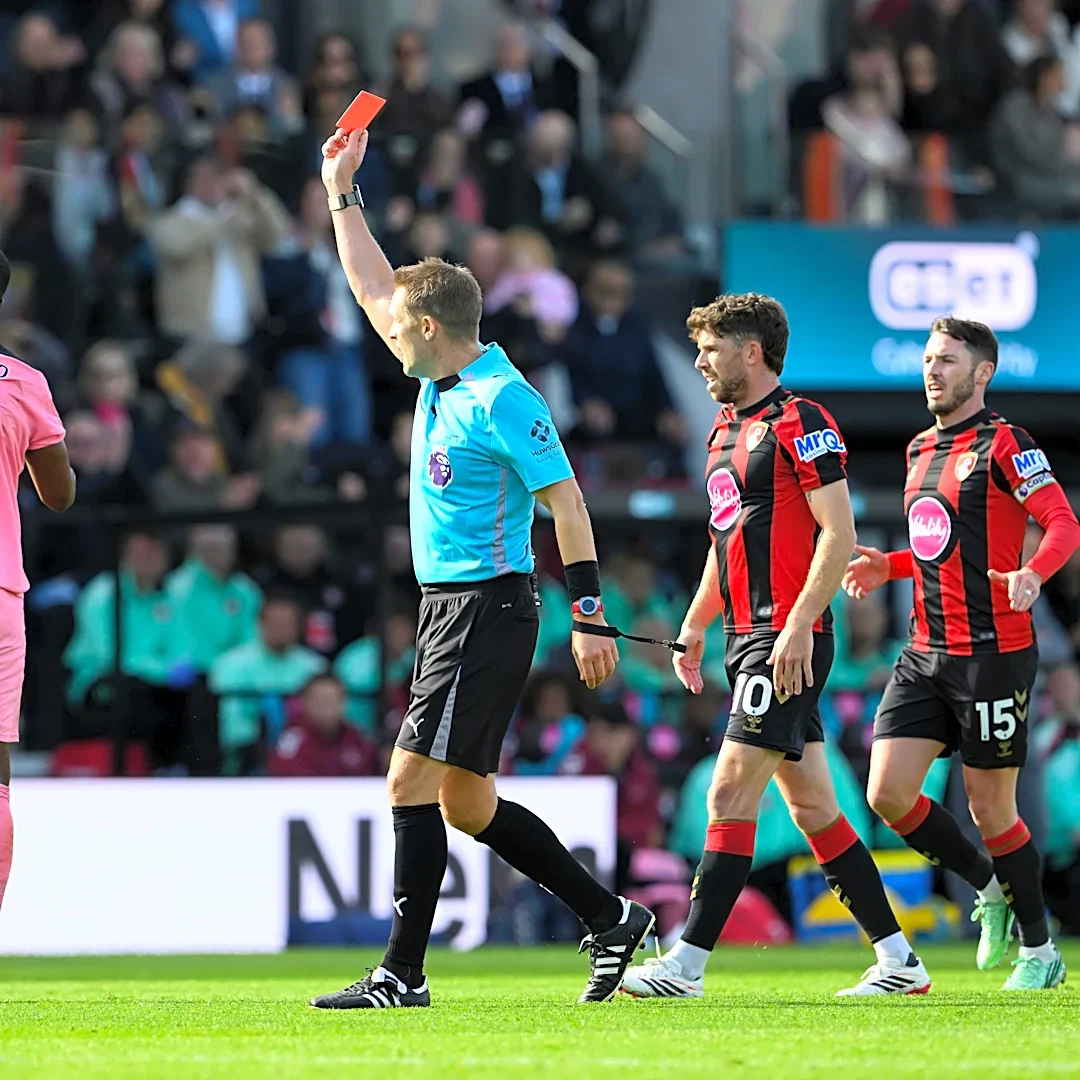
Less than five minutes later, the match official gave John Mitchell a second yellow card for an innocuous challenge and sent him off. It was hard not to feel a degree of sympathy for the young forward, who received some support from some of Sunderland’s players as he trudged dejectedly off. The match official’s performance had players and fans alike scratching their heads in disbelief.

Roy Greenwood came on for Gordon Chisholm on the hour, by which point I felt we were back in control of this game. I was particularly impressed with Gary Rowell when the game was at its most competitive. He wasn’t just a goalscorer; with a smart short- and long-ball game, he got himself about the box and the left flank and was always available to receive a pass. He did not overcomplicate the game either, keeping the ball and himself on the move and remaining elusive to defenders.
It is an old adage in football that ten men are often harder to play against than eleven, and so it proved during the last quarter of an hour of this game. With Hamilton and Phil Walker gelling quite well, Millwall found some possession and threat again. On seventy-seven minutes, Hamilton found some space and raced clear to score past Siddall. Once again, it looked like he was offside when he received the ball, and I am pretty sure, all these years on, that the goal would not have stood if VAR had been in place. The goal did stand, and Hamilton followed up minutes later with a shot that clipped the bar, with Sunderland looking nervous and unsure whether to stick or twist!
Thankfully, we did see the game out, and the points moved us up to joint fourth in the table, with hopes of a promotion push back on the agenda.
Millwall had put a lot into the game but would be relegated at the end of the season. Dave Merrington had plenty to say about the referee’s performance after the game. He also confirmed he had words with his team about letting Millwall back into the game in the second half.
It is a well-worn cliché that ten players can be harder to play against than eleven. Over many years, I have seen this enacted and wondered why this is so. The low-block defence teams typically adopt when down to ten men had an impact in this game, with space in Millwall’s third of the field at a premium. There is also a tendency for the team with eleven players to force the issue a little too much, and that was evident in this game too.
Typically, with an extra player, there is a psychological pressure that says you should win the game. But while you are doing all the attacking, you are vulnerable to the counter-attack, and that was definitely what happened in this game too, as poor pass selection and overthinking afflicted the majority of Sunderland’s team for the last ten minutes, almost costing us the win!
Whilst ten players can feel harder to play against, the statistics do seem to say that it is not a fact that ten men often play well enough to win the game.
When a red card is shown in the first fifteen minutes, 65% of the time the team shorn of a player loses the game. When a red card is shown in the last fifteen minutes, 51% of the time the team with the red card loses.

This game proved to be Jimmy Adamson’s last game as Sunderland manager, as rumours circulated that he was not absent through illness but was being interviewed for the manager’s post at First Division Leeds United, whose manager, Jock Stein, had recently resigned. Adamson accepted the Leeds post on 25 October.
Dave Merrington had plenty to say to the press about the referee. Captain Mick Docherty was particularly aggrieved. He told the press he had been booked for asking the referee to consult with the linesman, who had flagged for offside just before Millwall’s first goal. When he asked the ref to explain why he would not go and consult, Mr Richardson had told him to come and see him at half-time. When Docherty had tried to do this, the official would not speak with him and told him to come back after the game. When he went back after the game, Mr Richardson would not speak to him!
It’s a funny old game, football! Next week, we will explore the belief that “you are never more vulnerable than when you have just scored” and “2-0 is the most dangerous score in football”.
Division Two
Date – 21.10.1978
Venue – Roker Park
Attendance – 19,962Sunderland 3 – 2 Millwall
Goal scorers – Rowell 2 and 10 mins; Brown 50 mins.
Towner 19 mins; Hamilton 77 mins.Sunderland: Siddall; Henderson; Bolton; Clarke; Elliott; Docherty; Lee; Chisholm (Greenwood, 60 mins); Rowell; Brown; Entwhistle.
Millwall: Cuff; Donaldson; Gregory; Gale (Hamilton, 46 mins); Kitchener; Tagg; Towner; Seasman; Mitchell (sent off, 54 mins); Walker; Pearson.