


It’s easy to see that all the negotiation and consternation required for the WNBA and WNBPA to agree to a new CBA was worth it.
Peruse Her Hoop Stats’ handy team salary cap sheets
, and the jump in player salaries from the 2025 season to the 2026 season is incredible. Simply, WNBA getting paid what they deserve is the most significant aspect of the deal.However, those big salaries come with other ramifications, especially in a league that still operates under at hard salary cap.
Thus far, the WNBA offseason has provided more questions than clarity about the realities of the new CBA, as organizations have approached team building—from handing out contracts to free agents to executing trades to filling out their roster—with differing levels of aggression, caution and vision.
Let’s dig deeper into two emerging offseason team-building trends that reflect the unsettled “new normal” under the new WNBA CBA.
It’s unclear who is, and should be, a “million-dollar player” under the new WNBA CBA

With each WNBA team permitted to spend $7 million on their roster in 2026, not every player can score a million-dollar contract.
To build the best team possible, teams must determine how much of their cap space they’re willing to devote to a player, and whether it’s worth deviating from that number to sign the player or risk that player inking a more lucrative contract with a different team.
From the outside, it looks like some team were ready to outlay whatever funds were necessary to get a player to sign on the bottom line; other teams practiced patience. This gap in aggressiveness resulted in some confusing salary numbers, with players who have never approached an All-Star team signing deals that exceed those of their more accomplished peers.
To be clear, all credit to the players, and their agents, who secured themselves the biggest pay day possible.
But, a player’s reward can become a team’s regret. Ideally, a team (as well as most fans) wants a player to outperform her contract; that usually produces more wins. Banking on a player attaining a new level of impact under a contract that exceeds her prior level of production is a huge risk that can bust a team’s salary cap sheet.
So far, the team that has most eagerly rolled the dice on new deals is the Dallas Wings, plundering the Minnesota Lynx by signing Alanna Smith to a regular-max contract that starts at $1.2 million and Jessica Shepard to a deal that begins at $1 million.
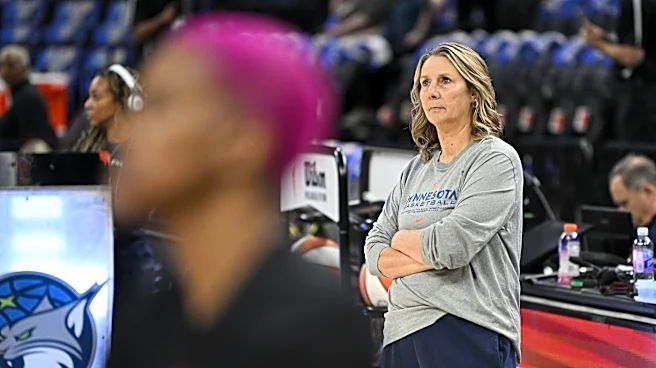
The reigning co-Defensive Player of the Year, Smith likely could have received such a contract from several teams, even if it’s worth questioning if she can sustain a such a level of defensive impact outside the Cheryl Reeve infrastructure. Shepard primarily has been a reserve for her WNBA career, although she may have received more starting opportunities had she been with an organization with less frontcourt talent than the Lynx. When given the opportunity, she’s produced, including notching a triple-double last season as a fill-in starter for Napheesa Collier.
Investing in Smith-Shepard frontcourt that is more empowered outside Minnesota could be a winning gamble. But, when Minnesota, an organization with much (much, much) stronger track record than Dallas, presumably elected to pass on Smith and Shepard at those numbers, that’s a cause for pause.
Furthermore, the Las Vegas Aces managed to get Chelsea Gray on a contract that begins at $1 million in 2026. The same is true for the Atlanta Dream and Brionna Jones. Then, all of Kelsey Plum, Nneka Ogwumike, Veronica Burton and Skylar Diggins signed sub-million dollar contracts. Plum and the Los Angles Sparks agreed to a $999,999 dollar deal with the Los Angeles Sparks, with the team brining back Nneka Ogwumike for $950,000. Burton’s contract with Golden State begins at $925,000, while Diggins signed with the Chicago Sky for $920,000.
That grouping of players claims multiple titles, a WNBA Finals MVP, a WNBA MVP, All-WNBA selections and tons of All-Star honors, plus Most Improved and Sixth Player of the Year awards.
Yes, a team like Dallas has to overpay to entice players, although such a strategy might doom Dallas to remaining Dallas.
Players should not feel pressured to take less. They don’t have to hear out team rationales for why building the best roster possible requires them to sign for a perceived discount.
Nevertheless, in order to build a sustainable team that’s in the best situation possible to win, organizations should negotiate, establishing salary stipulations and standards. During the 2026 offseason, some organizations adhered to these principles, while other enriched players’ bank accounts.
How are draft picks, including late-round picks, valued under the new WNBA CBA?

Traditionally, only top-tier WNBA lottery picks were certain to make final rosters, making draft assets quite fungible; second- and third-round picks were essentially performative trade pieces unlikely to produce any value to the receiving team.
With 180 roster spots to fill, plus a new rookie salary scale, is that changing? The trades executed during the 2026 offseason suggest the level has not been set when it comes to the value of draft picks.
The WNBA offseason kicked off with the Atlanta Dream acquiring Angel Reese from the Chicago Sky in exchange for two future first-round draft picks. Reese was the No. 7 pick in the 2024 WNBA Draft who blossomed into a two-time All-Star. Considering the Dream have locked up their prime-age core on three-year contracts, the team is likely to finish high in the standings, resulting in Chicago getting two later first-round picks.
Is that a fair deal?
It’s also possible that, with the likes of Allisha Gray, Rhyne Howard and Naz Hillmon signed to deals that soak up a significant portion of the team’s salary cap space, it will be difficult for the Dream to accommodate rookies, less likely to be ready to contribute to a win-now team, on a first-round salary.
With rookies drafted in the first round scheduled to make a good bit more than those who are second- or third-round selections, could some teams, in fact, start to prefer later picks? Will some organizations choose to invest in superior scouting, prioritizing finding value outside the first round rather than paying for first-round talent?
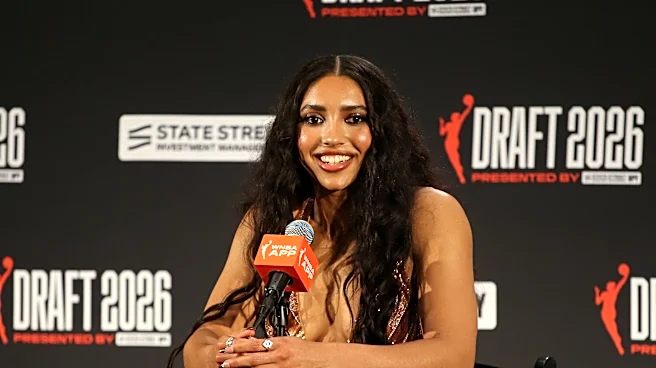
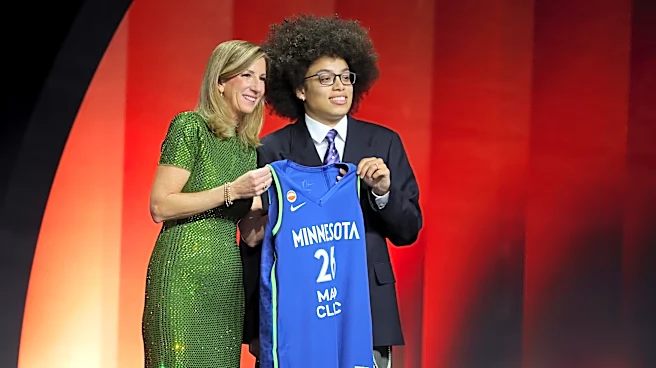
This approach might explain the draft night trade between the Golden State Valkyries and Seattle Storm, when the Valkyries drafted Flau’Jae Johnson with the No. 9 pick before sending her to the Storm in exchange for Marta Suárez, the No. 16 pick, and a 2028 second-round pick. It seems like Seattle scored quite the steal, securing a top-10 prospect for two second rounders.
Golden State general manager Oheema Nyanin was asked if salary cap concerns motivated the move. She declined to answer, while offering other comments that only raised more questions about why the Valkyries agreed to the trade, or even selected Johnson in the first place.
Suárez will make $270,000 in 2026, while Johnson will earn $309,622. Currently, before signing their drafted players to contracts, the Valkyries have $1,416,490 in cap room remaining. Although, of their $7 million in cap space, only $3,840,000 is committed to guaranteed contracts. It’s unclear if the team is planning on devoting some of those funds to retaining Tiffany Hayes, one of the most high-profile unrestricted free agents who remains unsigned.
Compared to other teams, Golden State is not facing a severe cap crunch, at least as things currently stand, making it difficult to discern the degree to which present or future finances could have directed their draft day decision.
The Washington Mystics, in contrast, appear unworried about filling their roster with higher-salaried first-round picks. Their three first-round picks in 2025 have been followed by three more in 2026, with one in 2027 before two more first rounders in 2028.
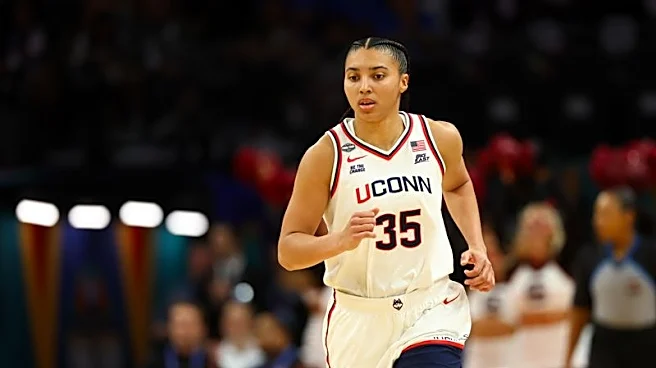
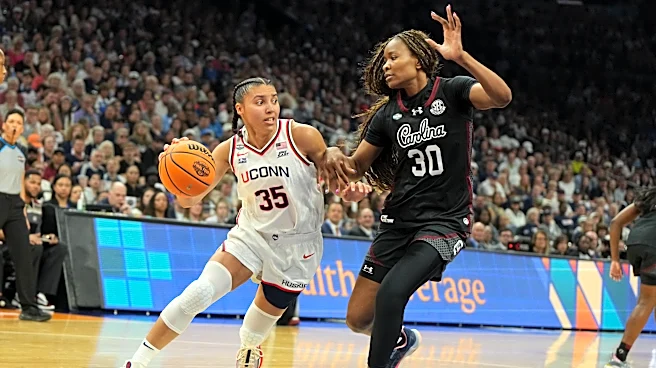
While all that capital could be extinguished in a major trade or two, Washington will offer an interesting test case as to whether or not an NBA-style build—getting as many chances as possible to draft as many good, young players as possible who can grow together into a contender—is one that translates to the new WNBA. Maybe JuJu Watkins and Sarah Strong will join Sonia Citron, Kiki Iriafen and Lauren Betts, or maybe those pick will produce good-but-not-great young players who are on guaranteed deals that pay them a lot more than proven vets.
So, Atlanta was happy to sacrifice two future first rounders for Reese. Golden State had a prime pick that they didn’t seem to want. Washington wants all the picks. And then, Chicago also sent out their own 2028 first-round selection for Jacy Sheldon, the No. 5 pick in the 2024 draft who will be on her fourth team in three seasons.
All that activity is more confusing than clarifying.
Overall, franchises’ variable valuation of draft picks and free agents seems to have resulted in a messy WNBA transaction market, where their is no consensus understanding of the value of certain picks or players. This is not necessarily a new thing in the WNBA; the league’s history is full of head-scratching transactions.
But under the new CBA, it seems like the margins might be slimmer, where misvaulations and misevaluations could prove more costly, while the maximization of every strategic edge could produce steeper advantages.
Or, maybe just having good players, even if overpaid or overdrafted or acquired in a imbalanced trade, is more important than smart management.
Winning on the court, not the cap sheet, is still what matters. Nevertheless, under the new CBA, it will be interesting to monitor how much court wins and cap wins are correlated.