
Well, it’s that time of the year again. Time to reflect on a 2025 filled with highs and lows, and time to look ahead to a 2026 filled with promise and excitement. And for Juventus fans, it’s time to sit
back and review a year defined by managerial instability.
Thiago Motta was sacked on March 23, just nine months after being hired, with Igor Tudor taking the reins initially on an interim basis. After guiding them to a top-four finish in Serie A that secured Champions League qualification, the Croat was given the permanent role, but he was given his marching orders at the end of October after a dismal start to the 2025-26 season.
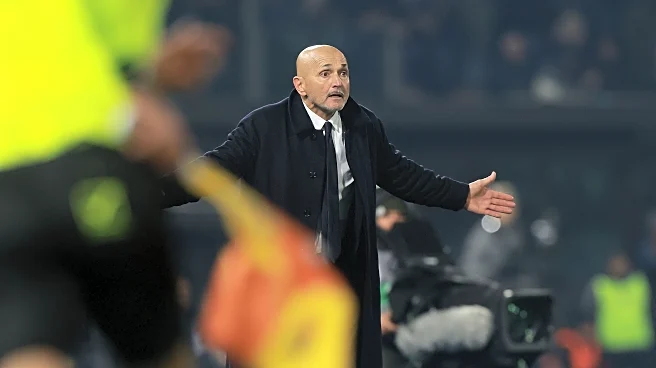
The reviews were mixed amongst the Juve fanbase. After all, Spalletti was just two years removed from guiding Napoli to a first Scudetto in three decades, but he was also coming off an unfulfilling spell in charge of Italy. Spalletti commenced his tenure with a 2-1 win at Cremonese before succumbing to three straight stalemates, followed by narrow wins vs. Bodø/Glimt and Cagliari.
After kicking off December with a 2-0 win vs. Udinese in the Coppa Italia, Spalletti returned to his former stomping grounds and was thwarted 2-1 at defending champions Napoli. However, he’s bounced back in stellar fashion, spearheading Juventus to a 2-0 win vs. Pafos and a 1-0 win at reigning Coppa Italia winners and Champions League side Bologna, followed by a 2-1 win vs. Roma and a 2-0 win at Pisa.
It’s shaping up to a heated battle for the Scudetto, and Spalletti is doing everything he can to ensure that Juve are involved in the free-for-all at the top of Serie A. Juve sit fifth in the table entering the new year, one point behind Roma, as well as two behind Napoli, three behind Milan, and four behind Inter (all of whom have a game in hand).
But just how has Spalletti transformed Juventus? Let’s take a look.
Many had speculated that Spalletti would change from the 3-4-3 formation that Juve had grown accustomed to over the past few months under Tudor and revert to his preferred 4-2-3-1. He hasn’t done just that, but what he has done is make gradual, nuanced adjustments rather than a radical tactical shift.
The Bianconeri has been historically renowned for its ‘Corto Muso’ approach, their ability to win by a nose and eke out an ugly victory. However, it’s clear that Spalletti is looking to eradicate this mindset and instead persuade his players to push for more and continue to attack rather than dig deep and defend. It’s precisely this refreshing vision that has drawn praise from commentators like Nico Cantor and Glenn Davis, and which has seen him introduce a change in their prevailing dichotomy.
When Juve pulled off the biggest win of his entire reign (so far), taking the lead before halftime via Francisco Conceição before doubling the scoring vs. Loïs Openda. Tommaso Baldanzi halved the deficit shortly after, prompting for a nervy 2-1 victory in Turin. Despite taking three points off his former employers, and despite gaining a massive victory with Champions League implications, Spalletti was far from satisfied with Juve’s approach of desperately hanging on for the final minutes, lamenting, “You can’t win 2-1 and wait for the referee’s whistle. That’s the wrong mentality.”
Spalletti wants his players to show courage and initiative in possession, be that dropping deep to receive and dribbling out of pressure, or triangulating passes and drawing the opponent in before carving out a goal-scoring opportunity. He wants them to understand that winning isn’t the only thing that matters — what also matters is how you win. He wants them to push for the 3-1 rather than dig their heels in and try to shore up a 2-1. He wants them to control for all 90 minutes, not just 75.
It no longer suffices to merely rely on an opponent’s mistakes to score and then camp out in your own half and soak up the pressure: you need to be able to dominate, to make the fans enjoy the viewing experience and not just result, to impose themselves on the ball from start to finish. Parking the bus is no longer something to be proud of — it’s a sign of weakness.
It’s why, no matter who’s playing where, each Juve player is well aware of what’s expected of him on and off the ball. Even when he was playing outside of his preferred central midfield role, Teun Koopmeiners was able to deputize on the left side of the back three alongside Lloyd Kelly and Pierre Kalulu until Gleison Bremer’s recent return from injury. Weston McKennie, meanwhile, has filled into the right wing-back position opposite of Andrea Cambiaso, whilst Michele Di Gregorio has proven an ideal ‘sweeper-keeper’ for Juve’s possession-oriented style of play.
Khéphren Thuram and Manuel Locatelli have forged an impressive synergy in midfield, Conceição has offered plenty of directness and unpredictability on the right side of attack, whilst Kenan Yıldız has continued to stake his claim as one of the finest players in Serie A as Juve’s left winger.
The only real concern is at the center forward position, with neither Jonathan David nor Loïs Openda managing to cover themselves in glory following their summer arrivals from Lille and RB Leipzig. With Dušan Vlahović set to depart on a free transfer this summer, Juve could very well be set for another striker signing unless things change up front.
Despite this lack of guarantees in attack, Juve have been able to hit their hottest run of form since the midpoint of the 2023/24 season, closing out the year with four wins on the bounce, with just one goal conceded in that timeframe. La Vecchia Signora are starting to click on all cylinders under their new manager, sitting third in Serie A with 39 big chances created and 7.0 successful dribbles per 90, whilst only Inter have registered more shots and shots on target per match than Juve.
Whereas Tudor managed just 12 points from the first eight league matches, Spalletti has led Juve to 17 points from his first eight since taking charge; only Inter (18) have registered more in that timeframe. But he hasn’t just won on a regular basis — he’s done it with aesthetically pleasing football.
Over the past decade, Juventus have failed to achieve long-term stability with a single manager (apart from a certain Massimiliano Allegri). This lack of stable ground has prevented Juve from challenging the likes of Inter, Napoli and Milan for the title, but with Spalletti in charge, they might very well have found someone who’s capable of staying for a long time and leaving his tactical footprint. It’s why, with every convincing win and every imposing display, Juve will be starting to consider offering Spalletti a contract extension past its current expiry date of June 30.