
Recent transactions and discussions in baseball have turned attention back to the age-old complaints about wealth disparities that have plagued Major League Baseball forever. It’s hard to tell whether the current situation is meaningfully different, historically speaking, or if this is simply the same debate we’ve been having my entire life. Still, there are a couple of notable factors that suggest the current gap may differ from those of the past.
I first became aware of the small-market versus big-market
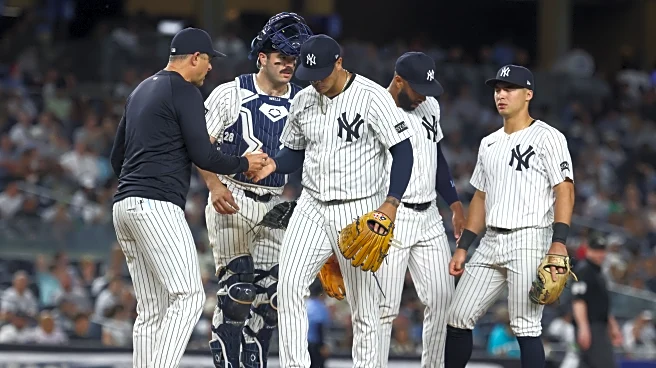
dynamic during the Yankees’ “Evil Empire” era in the early 2000s. It was easy to be frustrated by that version of the Yankees. They reached the World Series six times in eight seasons from 1996 to 2003 and won four championships. George Steinbrenner didn’t mind running enormous payrolls, and that approach really stood out in 2003 and 2004, when the Yankees’ payrolls were more than 60 percent higher than the second-highest team. They began to feel like they were in a class of their own, completely separate from the other 29 clubs.
The Yankees are no longer the focal point of baseball’s financial anxiety, but the question now is whether the Dodgers and Mets are worse than those Yankees teams.
If you look strictly at payroll compared to the next-highest team or to the bottom of the league, the answer is probably no. That 2004 Yankees team ran a payroll nearly six times that of the lowest spender—and more than six times if you include the luxury tax, though the tax structure was very different then. Today, the Dodgers and Mets are clearly above everyone else at over half a billion dollars apiece, but the Dodgers are only about 45 percent above the Phillies, so the gap isn’t as extreme as it was in 2003. Similarly, the lowest payroll in 2026 sits a little over $100 million, which is still far below the top but not the six-to-one disparity we saw between the Yankees and Rays back in the day.
Those gaps are still significant—just not larger or scarier than they were 20 to 25 years ago. What gives me pause are the two massive contracts that were just signed. Both the sheer dollar amounts and the structure of those deals make me think the path toward even larger disparities between rich and poor teams isn’t far off. Some of the other owners appear to agree and will push for a salary cap in the next round of CBA negotiations. The Kyle Tucker deal seems to be the one drawing most of their ire, but I want to start with Bo Bichette, because I think a lot of nuance there is getting lost.
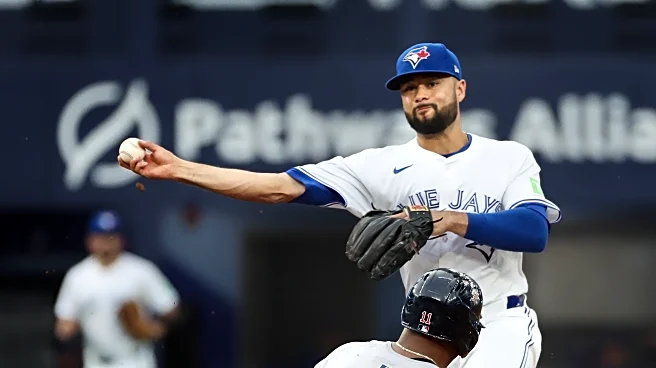
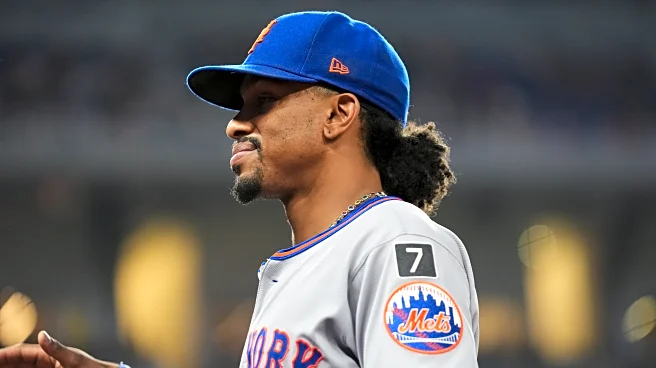
From a headline perspective, the Bo Bichette deal looks simple: three years and $126 million, an average annual value of $42 million. That’s a lot of money for a player who has posted between 3.5 and 5 WAR in four of the last five seasons. But he actually received more than $42 million per year in effective value. Bichette can opt out after 2026, has another opt-out after 2027, and receives $5 million if he exercises either one. That’s wild. Opt-outs represent pure risk for teams—they only get exercised when the team would prefer they didn’t—and here the Mets have to pay him on the way out, too.
On top of that, Bichette was extended a qualifying offer, meaning the Mets are also surrendering draft-pick compensation to Toronto. This deal could realistically turn into a one-year contract in which the Mets pay $47 million and a draft pick for a player projected at roughly four wins. That’s more than $12 million per win in total value. It’s an incredibly rich deal, and the team is shouldering almost all the risk. If Bichette struggles again, as he did in 2024, the Mets are still on the hook for more than $40 million per year. No small-market team can sign a deal like that, but the Mets can, because they’re in New York and their owner has more money than anyone could possibly need.
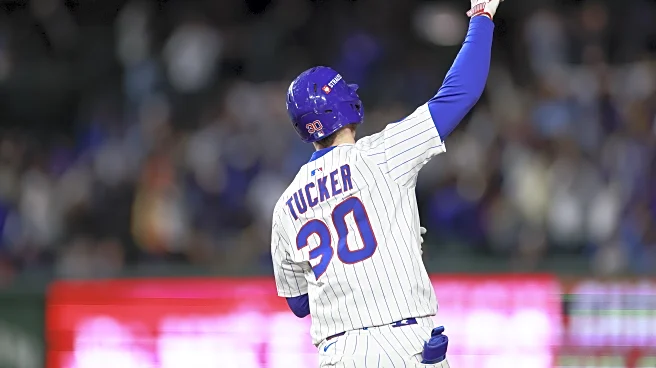
The Dodgers’ deal with Kyle Tucker is similar, only with even bigger dollars. He receives $54 million up front, a $1 million salary this year, $65 million in 2027, and $60 million in each of the following two seasons. That’s $240 million over four years, a $60 million AAV, though $10 million is deferred in each of the final three seasons. After accounting for deferrals, the luxury-tax hit is $57.1 million per year. That’s an enormous number—larger than the annual tax hit for Shohei Ohtani (because of deferrals) and Juan Soto, who sits at $51 million and carries that hit for 15 years.
Tucker’s deal is much shorter, but it’s also incredibly steep. When you factor in the Dodgers paying dollar-for-dollar into the luxury tax at their current payroll level, you could argue they’ve effectively agreed to pay $114.2 million per year for Kyle Tucker. He’s a 4.5–5 WAR player, which works out to roughly $23 million per win. Now imagine what a Bobby Witt Jr. contract would look like if he’s viewed as a seven- or eight-win player—and then consider the chances of him still being a Royal after 2030 (spoiler: he won’t be). If the Dodgers can afford to pay three times the typical $8 million-per-WAR rate we’ve come to think of as standard, very few teams can realistically compete.
None of this is new, but it does present at least one possible silver lining. If other owners can force a salary cap, there may be a path toward greater balance and a more equitable game. On the other hand, it could also lead to a strike, and I really don’t want players in the middle and lower income tiers to get squeezed as collateral damage.
The cynical side of me suspects that owners are happy to point at the Dodgers and Mets so they can frame a salary cap as a principled stance, when in reality it’s another attempt to capture a larger share of league revenue. A salary cap paired with a salary floor—and a guaranteed percentage of league revenue for players—however, might offer a path toward a healthier overall baseball ecosystem.