
This kinda was inspired by samath’s comment, saying that baseball has never been more popular. That seemed a stretch: but like defensive metrics, it turns out that the truth of the statement depends on
how you measure it. Certainly, MLB has absolutely no qualms about tooting its own trumpet (as any business would). At the end of last season, a press release informed us as follows:
Major League Baseball finished the season with its third consecutive season of attendance growth, viewership increases across its television partners, and growth with younger audiences both in ballparks and on television. The momentum has continued following the establishment of MLB’s on-field rule changes, incorporation of a balanced schedule, expanded Postseason, and remarkable individual player performances.
Of course, this all needs to be taken with a large grain of salt. Let’s drill down a little deeper and see how much truth there are to these claims.
Park attendance
The numbers coming through the gates have grown of late, recovering since COVID to surpass figures from the before times. But this year’s figure of 71.41 million is still a long way off the record of 79.48 million, set in 2007. It’s over a million below the attendance in 2001 – and there are now twenty percent more people than there were then. When you compare attendance to the US population, this year’s figure of 20.8 percent, is not only down on last year, it’s the lowest since before MLB expanded to its current thirty teams, for the 1998 season. Again, the highest was 2007, at 26.4 percent.
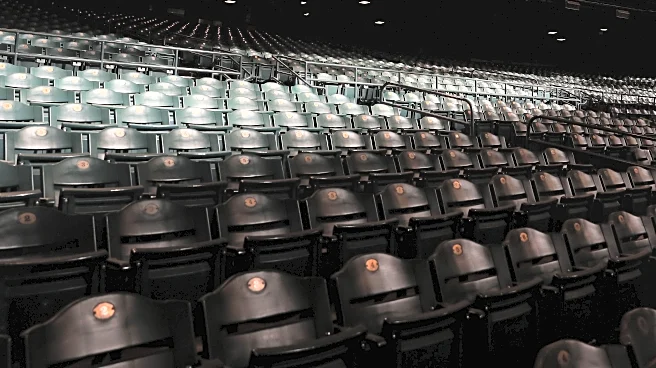
However, there are mitigating factors. In particular, the trend towards smaller ballparks. Chase Field’s official capacity of 48,330 now makes it the second-largest ballpark in the major leagues, behind the even older Dodger Stadium at 56,000. The four ballparks opened since the start of 2010 (belonging to Minnesota, Miami, Atlanta and Texas) have an average maximum capacity of just 39,168. The stadia they replaced averaged over 48,000 (not counting the Marlins, who previously shared with the Dolphins). The park the Athletics are currently building in Las Vegas, will hold a mere 33,000, bringing the average down further. There are simply less seats available.

TV ratings
The most obvious mark is the number of people watching the World Series, and that paints an ugly picture of a sport in severe decline. Despite the almost perfect storm last season, including the first Game 7 since the before times, the rating – the percentage of U.S. households that watched the series – was fractionally down on last year, and still finished in the bottom five World Series of all time by that metric. [Sadly, the Arizona-Texas match-up in 2023 is dead last, with Games 1 through 4 of the five played, and the overall average, each drawing the fewest viewers for that game(s) in World Series history]
It is true that the media landscape is far more fractured these days, with more alternative options for entertainment – both on-screen and off – than ever before. However, this doesn’t seem to have affected the Super Bowl: its ratings have remained remarkably and serenely constant over the past fifty-plus years. But it is a one-off event, and a cultural entity unlike any other. The NBA Finals have also struggled of late, though the situation there appears considerably more volatile. There certainly hasn’t been the same, near-constant downward trend we see on the World Series graph above.
There’s no doubt that the match-up is a factor: big markets = better national viewership. But baseball has always been a regional game too, though it’s hard to find reliable numbers for this, especially with the increase in teams no longer having a traditional television deal. MLB touts that, “MLB.TV set another consumption record this season with 19.39 billion minutes watched, an increase of +34% over last year.” No shit, Sherlock, when it was far and away the easiest way for fans in a significant number of markets to watch their team in 2025. The success of an individual team is another obvious variable, not easily controlled for in these figures.

Opinion polls
Gallup, in particular, have run a series of polls over almost ninety years, determining what sport is American’s favorite to watch. Initially, baseball was the leader, but somewhere in the sixties, football (note, in all its forms, so both NFL and college) overtook it, and has been the undisputed #1 since. The chart of baseball’s decline, to a figure of ten percent in the most recent poll (taken in December 2023) does match reasonably the decline in World Series ratings to a similar percentage. It also reflects the aging demographic. Only five percent of those aged 18-29 picked baseball – less than soccer – compared to sixteen percent among those 65+ years old.
Indeed, just a couple of weeks ago, a poll by a different organization reported that, “10 percent of Americans now identify soccer as their favorite sport, edging it narrowly ahead of baseball, long considered the country’s pastime.” It’s possible this is a result of this summer’s World Cup raising soccer’s profile: a deep run by the national squad could have an impact, in the same way the iconic success of the women’s team on home territory did in 1999. With the prospect of a lock-out next year looming increasingly large, it seems highly likely baseball could lose further support.
Another concern is the lack of name recognition. There’s a fascinating page by YouGov, ranking the most well-known sports personalities. As of the fourth quarter last year, Lebron James and Tiger Woods topped the list, with ninety percent of those polled having heard of them. But if you’re looking for a baseball player, you’re going to have scroll pretty far down. Unsurprisingly, it’s Shohei Ohtani. However, he is ranked 27th, known by barely half of the public, at 53%. That puts him behind three WNBA players: Caitlin Clark (70%), Brittney Griner (64%) and Angel Reese (54%). Though in Griner’s case, events off-court may explain some of that name recognition…
Below Ohtani, Aaron Judge is the only other baseball player to reach fifty percent, an indication of how baseball players generally struggle to achieve cultural relevance. Should you want to see any D-backs, you need a truly deep dive. While there are a good number of former Arizona players, including Zack Greinke, Paul Goldschmidt and Madison Bumgarner, the only one on the roster at the time of the poll, who gets ranked is Corbin Carroll. He shows up all the way down at 76th, on 30% [We’ve now added Nolan Arenado, who was 64th at 31%, and Mike Soroka who, inexplicably, is listed one spot ahead of Carroll, with the same 30%]