
The Colorado Rockies have been busy lately with the signing of free agent pitcher Michael Lorenzen and the reported signing of utilityman Willi Castro. It’s been clear that the Rockies are hoping to build
a team in 2026 that affords them the ability to let the young players of 2025 get more time to develop properly. It’s been about gaining depth with players that can allow them to rebuild a bit more smoothly this season.
The starting rotation remains the main area of focus as the team is interested in adding another starting pitcher in the same vein as Lorenzen. While it’s very unlikely they go after the high-profile, there are still several available free agents that could still be helpful in 2026. Particularly, there is one familiar face that could be an interesting flyer if both sides are willing to take a chance.
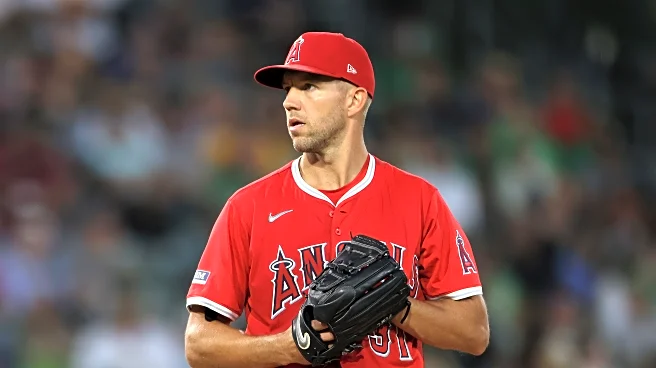
Left-handed pitcher Tyler Anderson has settled into a fairly solid arm since his days with the Rockies. The Rockies’ 20th overall pick in the 2011 draft, Anderson turned in three solid years with the organization before an injury took him down in 2019. He became a journeyman over the next few years, once he was healthy, spending stints with the San Francisco Giants, Pittsburgh Pirates, Seattle Mariners, Los Angeles Dodgers, and Los Angeles Angels. In his career, Anderson, now 36, has posted 17.3 WAR per Baseball Reference and owns a career 4.30 ERA through 231 games, including 223 starts, and was an All-Star in 2022 and 2024.
So, why could he be a fit for the new look Rockies?
Well, one of the first things that sticks out is that he is a relatively reliable innings eater. Now, he isn’t going to go out and deal 200 innings, but he can regularly take the ball every five days and throw five or six innings a game. Since 2018, he has worked at least 130 innings in each full season and made at least 25 starts. His career high of 179 1/3 innings came just recently in 2024. In 2025, Anderson made 26 starts and failed to complete at least five innings just seven times. Of those seven starts, he failed to record at least one out in the fifth inning just twice. For a backend veteran starter, that’s the kind of length the Rockies need in 2026 that they have been lacking for several years now.
Giving length is a useful skill, but what about the run prevention? Obviously, Anderson isn’t going to go out and throw up zeros night after night. He only had four scoreless outings on the year, but for a backend starter, that’s not necessarily required. The job of any starter, particularly one in Colorado, is to mitigate damage and keep things from spiraling out of control. Anderson has continued to do that in his career, and last season, he allowed more than four runs in a start just three times. He gave the Angels plenty of chances to win games, but bullpen failures and a rough offense just couldn’t offset some nights.
Still, Anderson can be effective on the mound and give you a chance to win a game if the offense can keep pace with the opposition. But the inner workings of Anderson’s game should still be intriguing for the new age Rockies.
Per Statcast, he finished with the 16th-lowest hard-hit rate in baseball last season. He remains around league average in Whiff rate with 25%, but places in the 68th percentile in Chase rate with 29.8%. He manages to limit hard contact and gets a decent number of ground balls and fly balls. He manages to do this with an arsenal of pitches to work with.
Anderson is the definition of a soft-tossing lefty. Over his 10-year career, nothing has really changed in terms of the overall velocity of usage of his pitches. The fastball roughly sits at 89 mph while he deploys an assortment of offspeed and breaking pitches. His changeup has been a particularly solid offering against right-handed batters. In all, he has roughly six pitches at his disposal that he could tinker with and deploy that could give the new pitching leadership more info to chew on.
There is a sense of familiarity that could also help the combined collaborative effort the Rockies are fostering now. Anderson has the reputation of being a studious pitcher, constantly taking notes and reflecting on his outings. He is a student of the game, a professor continuously trying to hone his craft and perfect his approach. That type of mentality would play well with the Rockies, as he can impart some knowledge not just from his time in other organizations, but also from Colorado. In 46 appearances at Coors Field, a total of 258 2/3 innings, Anderson sports a 4.04 ERA.
Now, of course, it’s worth pointing out some of the concerns. One of the main ones is that Anderson is not a pitcher who will strike out batters. With a career 19.4% strikeout rate, Anderson has at least been consistent in that department, but 2025 saw the lowest rate of his career at 17.4%. His career walk rate does come in under league average, but over the last three years with the Angels, he had at least a 9.5% walk rate.
Additionally, home runs have always been a concern for Anderson. In 2018, he led the league with 30 home runs allowed, but to his credit, he has reigned things in a bit and been more consistent, but last season some a spike in home runs. Coincidentally, his fly ball rates have also increased over the last few years.
It’s always going to be risky picking up a player who is pitch-to-contact, especially at Coors Field. Anderson would need to truly perfect his execution and utilize his defense accordingly. But that’s the type of problem that the new regime is eager to figure out and Anderson could easily fit the mold of what they are trying to do.
The biggest question would concern the price. Per Spotrac, Anderson’s market value is projected to be roughly $6.97 million. That’s not an awful amount for a one-year deal that he might have to settle for, but it’s unclear how much more the Rockies are willing to spend on the big league roster. Still, he’s an affordable free agent that could be worth serious consideration at that price.
Ultimately, the Rockies need another arm. I like Anderson because he is familiar, has carved out a nice career, is relatively cheap, and would add another lefty to the rotation to re-join Kyle Freeland. He’s older and wiser and could be a unique fit to help mentor the young pitchers on the team while bringing back some of the magic of the 2017 and 2018 seasons. 2026 is all about throwing everything at the wall to see what sticks, and Anderson is worthy of joining that discussion.
Freeland embracing all of the Rockies’ changes | MLB.com
We’ve heard a lot about how the organization is excited about the new additions to the coaching staff for pitching, but we haven’t heard as much from the players. Well, count Kyle Freeland as someone who bought in and is extremely excited about the new direction for the Rockies. Thomas Harding caught up with Freeland to discuss his thoughts on the team’s new front office.
Marlins acquire starter Bradley Blalock from Rox | MLB.com
When the Rockies made the signing of Michael Lorenzen official, Bradley Blalock was designated for assignment. After a few days, the team was able to swing a deal with the Miami Marlins, acquiring minor league pitcher Jake Brooks in return for Blalock.
Affected by Altitude Episode 196: Willi or Won’t He? | Rocky Mountain Rooftop
This week, Evan Lang and I discuss the finalization of Lorenzen’s signing, what Willi Castro’s signing signals for the Rockies and what other moves they may still need to make, while also talking about the return of Nolan Arenado to the NL West alongside the Dodgers spending big on Kyle Tucker.
Please keep in mind our Purple Row Community Guidelines when you’re commenting. Thanks!