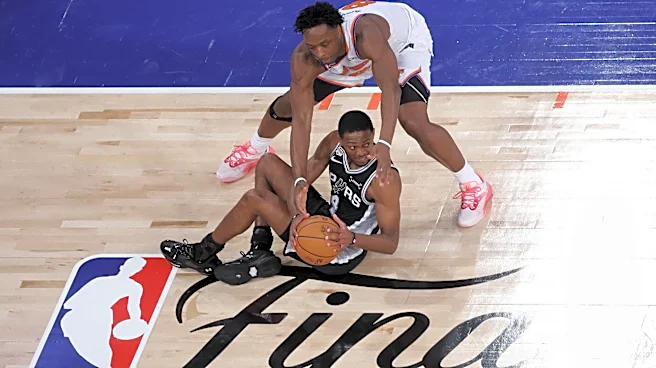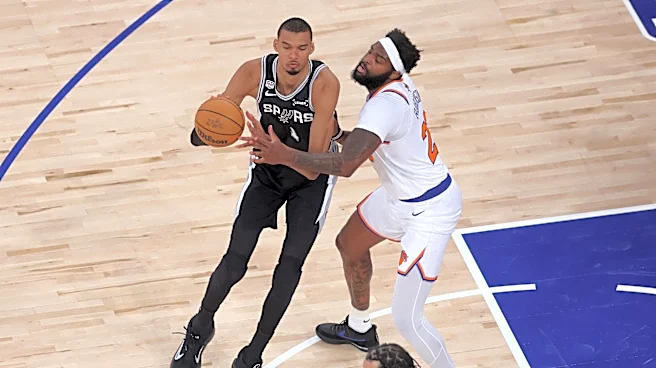




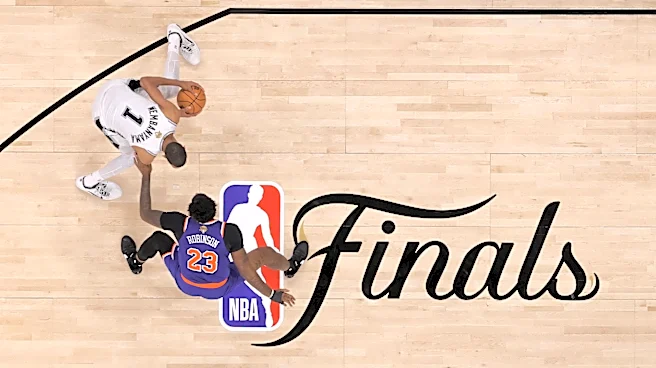
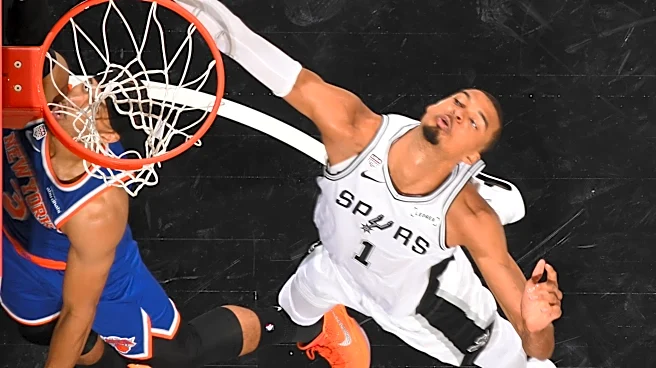

First and foremost, I want to apologize to the community for missing my Game 2 article; it wasn’t because the last 10 seconds made me want to throw up (though that certainly was the case); rather, it was because my two young kids have been sick and spent the weekend throwing up on me. In any case, I couldn’t be happier to return to action in a game where the Spurs corrected the main thing that plagued them in Games 1 and 2: poor execution down the stretch. On top of that, this game produced a box
score laden with several interesting quirks. Let’s review:
Note: Now that we’ve moved into the postseason, the reference period used for grading changes from the set of regular season games since 2012-2013 to the set of postseason games since 2012-2013. Unless otherwise noted below, this set DOES include play-in games. As of the end of June 8 2026, this group include 1,204 games.

Factors that decided the game
- The Spurs and Knicks traded off some important box score wins with respect to offensive opportunity, though in the end this trade favored San Antonio. First, New York recorded 3 more defensive boards and six more offensive rebounds, which (all else equal) should have secured them a solid edge in offensive opportunity. However, They did have five more turnovers, which dampened that edge significantly. Furthermore, the Knick’s turnovers were costly, as the Spurs crushed them on points off turnovers (21 to 7).
- From an efficiency standpoint, no team racked up a massive advantage in any one area. The Spurs were slightly better from the field, with FG% and 3P% differentials of +0.97 and +0.16 percentage points, respectively. However, New York’s FT% margin was +3.69 percentage points.
- While less efficient, the Knicks outscored San Antonio by three from the field on the back of better volume, including four more total shot attempts and three more threes.
- Given this advantage from the field for the Knicks, this game was ultimately decided at the free throw line. New York only committed two more fouls than San Antonio, but the timing and type of those fouls was much worse (which largely reflected San Antonio’s aggressive offense). As a result, the Spurs got to shoot 10 more free throws, and ultimately outscored the Knicks by seven from the charity stripe.
Rare Box Score Stats
- The Spurs became just the ninth postseason winner since 2012-2013 to have at least 10 more assists than their opponent and win by no more than four points. Typically, a victor with an assist margin at least as good wins by 20 or more.
- Contrary to what Mike Brown would have you believe, the Spurs FTA margin in this game wasn’t wildly out of the ordinary; in fact, nearly 18% of postseason winners (213 of 1,204) have had a FTA differential at least as good since 2012-2013. However, the Spurs did accomplish this feat while only logging two fewer fouls than New York. Only 36 of 1,203 (a bit more than 1 in 33) other postseason winners during the period have enjoyed 10+ more free throws than there opponent with so narrow an edge in fouls.
- San Antonio became the 46th postseason winner since 2012-2013 to make fewer field goals and threes than their opponent.
- It’s relatively rare for a postseason winner to really struggle on the offensive glass while handily winning the turnover battle. In fact, San Antonio became just the 48th postseason winner since 2012-2013 to have an ORB differential no better than – 6 and a turnover differential of – 5 or better.
- Wemby’s great games seem to nearly always coincide with a box score combination that is extremely rare. In this case, he recorded just the 10th playoff performance since the 1996-1997 postseason that included 32+ points, 8+ rebounds, 6+ assists, 2+ steals, and 3+ blocks.
What are Team Graded Box Scores?
Very briefly, these box scores grade winner-loser differentials for basic box score statistics, with the grade being based on the winning team’s differential relative to other NBA winners during a defined reference period. Think of it like a report card for understanding how a given winner performed relative to other winners. The reference period used runs from the start of the 2012-2013 season to the latest date of play, including only games in the same season category (i.e., regular season and playoff games are not compared to each other).
Data Source: The underlying data used to create these box scores was collected from Basketball Reference. In all cases, the data are collected the morning after the game is played. Although rare, postgame statistical revisions after data collection do occur and may affect the results after the fact.