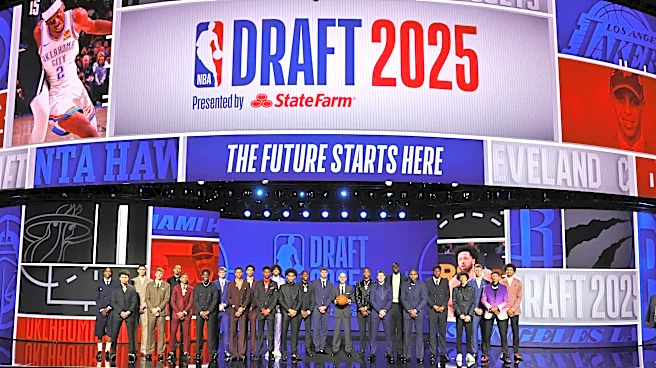





Tomorrow, May 28th, the NBA Board of Governors will meet to discuss rule changes to the NBA Draft Lottery system. The reasoning behind the proposal they’ll consider, the 3-2-1 system, has been discussed extensively on this site, including here and here. Needless to say, I’m in favor of the changes, since they mirror those we suggested.
For those unfamiliar with the proposal, a very-quick summation:
- More teams participate in the lottery than currently, 16 instead of 14. The extras come from the Play-In Tournament in both conferences, but it’s easy to imagine a switch to 16 non-playoffs teams if the league adds two expansion franchises in the near future.
- Teams get between 1-3 balls in the drawing, depending on where they finish by regular-season record (and slightly Play-In Tournament performance). The middle teams all get 3. The best-record teams get 2 or 1. Crucially, the worst three teams by regular-season record only get 2 balls.
- In the current system, only the first four draft positions are drawn for. Picks between 5-14 are seeded in reverse order of record. The 3-2-1 system draws for all 16 picks.
For a more rigorous rundown of the system, you can see our primer here.
Before the official vote, though,
I want to loft a flare once again that the last item on that list—drawing for all 16 positions—has the potential to sink the whole endeavor. It turns a decent idea into a potential nightmare. The league really ought to reconsider that part of its proposal before ridiculous chaos overtakes the process.
The Goal of the Draft
At its heart, the NBA Draft is still meant to help teams who need a boost. Bad teams have been favored in the draft process since its inception. That happens for a reason. Plenty of outside forces—timing, injuries, market size, state tax laws, and more—influence a team’s fortunes. One could argue that the top picks in the draft becoming so overwhelmingly important in the first place is due, in part, to the star system incubated by the league through the 1980’s to this very day. The draft counterbalances all those involuntary forces in the clearest way possible: if you’re suffering for any reason, you get a better selection.
Some randomness in the process is desirable to keep teams from intentionally losing to get extra help. But each bit of randomness introduced to the system comes at the cost of aid rendered to struggling teams. The league needs to find a balance: enough blind chance to loosen the link between losing and high picks, not so much as to decouple that link entirely.
3-2-1 Go!
The 3-2-1 system loosens the link in two ways.
First, it more evenly distributes the odds between all participants. In the current system, the four highest-odds teams have between a 5 and 28 times better chance of being promoted than the lowest-odds teams. In the 3-2-1 system, 7 teams will have 3 balls, 7 teams 2 balls, and 2 teams will have 1. The highest-odds teams have either 3 or 1.5 times the chances of the lower-odds teams. Factor in there being seven highest-odds teams instead of four and those teams having the middle records in the standings instead of the bottom and you have a major shift away from the league’s worst teams.
Second, drawing for all 16 positions takes away the safety net for bad-record teams. Even if they miss promotion in the current system, they can’t fall farther than the 5th spot. In the 3-2-1 setup, the worst teams can fall as far as 12th, everyone else all the way to 16th. There’s no reverse order of record to fall back on, nothing to stop the free ascent or freefall of any given teams but those ping pong ball bounces.
The Big Problem
In practice, this is going to lead to unsavory results. Remember the Dallas Mavericks getting Cooper Flagg on a 1.8% chance last season? That’s going to be child’s play in 3-2-1 land. The two teams with the lowest odds in the new system have a 2.7% chance of promotion, half again what the Mavericks had. The middle-odds teams have a 5.4% chance, the best-odds teams 8.1%.
That means you’re going to see teams ducking into the lottery with a rogue injury jumping to ultra-high positions. You’re going to see miserable teams devoid of wins for years drop to less significant spots. It’s all the bad parts of the current lottery system magnified, because they have a much bigger chance of happening compared to today.
Unless you’re literally The Joker from the Batman series, rooting for chaos and laughing all the way, the results of these drawings will make you very, very angry on a near-annual basis. The outcomes are going to be so ridiculous, and the uproar so loud, that I predict the league will look at altering the system within three years of its inception if they don’t change it.
Just Do the Simple Thing
This is easy to fix! The NBA just needs to come a little bit more towards the middle ground, drawing for some of the draft positions but not all of them. Draw for 8 picks, not 16, and see what happens.
Leaving the top eight picks up to chance and seeding the rest by reverse record would restore a little bit of balance and order, would give terrible teams at least some aid, and wouldn’t incentivize losing one bit more. Who tanks a season for the 9th pick in the draft?
The worst results—the flaws in the system—only have 8 chances to happen each year, not 16. Half of the picks have predictability that counterbalances any weirdness with the other half. The whole thing feels more anchored and purposeful instead of, “We had to stop tanking somehow, so everybody roll a twenty-sided die.”
A Last Plea
The NBA has a good plan in place IF they curb the drawing to half the picks involved or less. Otherwise they’re looking at a ticking time bomb and a PR nightmare.
Heck, even drawing for all 16 picks will be lengthy and awkward in this system. Load all the balls up, draw one. Open the hopper and remove that team’s remaining balls. Close it up. Draw one. Open the hopper and remove that team’s remaining balls. Do that thirteen more times. What??? Imagine the tedium of drawing for Pick 13 versus Pick 14 half an hour into the process. Who really cares at that point? Just get this over with! And how about the poor last participant whose ball never gets drawn like the last person picked for kickball on the playground. The whole thing is an emotional, psychological, logistical clusterbang, and that’s before the predictably-wonky results.
Leaving all that aside, it’s important to realize the potential impact before the damage is done rather than after. As we’re finding out in real time, the results of a messed-up lottery system can’t be undone. They’ll affect an entire generation of the NBA.
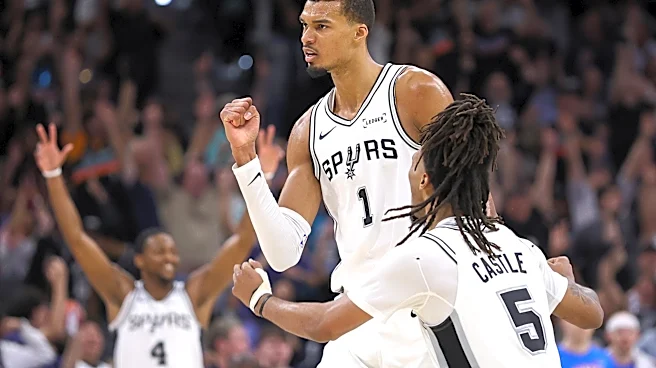
For years, analysts advocated for lottery reform, instituting a cap on the number of high picks a team could win consecutively. The league put those provisions in place with this 3-2-1 system, but only after the San Antonio Spurs finished 1-4-2 in three years, picking up Victor Wembanyama, Stephon Castle, and Dylan Harper in the process. If those names sound familiar to you, it’s because they’re playing in the Western Conference Finals as we speak…a completely fabricated star trio assembled because of lucky, weird ping-pong ball bounces. If it weren’t for the Oklahoma City Thunder, the Lottery Spurs would likely be this year’s NBA Champions. And they’re not going anywhere. The entire Western Conference will be dealing with the results of that odds-fest for the next 12 years.
The NBA can try to make sure that doesn’t happen again by putting limits on such things retroactively, but nothing will restore this generation of competition in the West or free its teams from that lottery-ball tyranny. And even those retroactive gestures lose meaning if they Screw Around and Find Out with a whole new system that introduces more opportunities for odd results. We shouldn’t have to actually see the next baseless, awful, random outcome—impacting another generation—before we lessen the chances of it occurring.
When the Board of Governors meets tomorrow, they should make a simple amendment: 3-2-1 yes, 16 drawings no. Cut it to 8, reverse-record order picks 9-16. Then judge the results and make alterations as needed. Maybe it should be 6. Maybe 10. Either way, I can’t imagine 16 drawings and maximum chaos being a good idea.
If the proposal goes through as-is, prepare for blood pressures to go up at lottery time and the league to start getting dominated by random chance—seasoned by the predictable success of a few privileged, non-lottery franchises—instead of actual basketball acumen. That’s not what we’re here for. NBA rules and policies are meant to augment, to clear the way and give the sport a chance to shine. At this point, they’re threatening to overshadow it entirely. You don’t fix one messed-up aspect by messing up another. That’s two messes and no solution at all.
This isn’t necessary. Make half of the lottery about anti-tanking, half bad-team aid and you’ll probably find a balance good enough to live with. Let’s hope they figure that out without having to experience a storm of outrage as a result of another decade of broken systems in the NBA.