



I’ve been following the Packers closely for about 30 years. In those three decades, I’ve received the same lesson again and again and again: football will hurt you if you let it, and it’s best to just let things wash over and through you than to get too invested in something outside of your control.
I say I’ve received this lesson because that’s true: I’ve received it, but I haven’t learned it. The first Packers game I remember with significant clarity is the 1995 NFC Championship, and it was the first in
a long series of lessons about the pitfalls of getting emotionally invested in something that plays out without any input from me at all.
But I didn’t learn the lesson then. I didn’t learn it after Super Bowl XXXII, or after Jerry Rice fumbled, or after 4th and 26, or after any of the gut wrenching losses of the Aaron Rodgers era (including more than a few where Rodgers himself didn’t get a say in overtime, the rules for which the NFL changed far too late to help the Packers).
And I don’t suspect I’ll learn the lesson now. The Packers seemed to have everything going their way for a brief, glorious window on Sunday. After Josh Jacobs’ 40-yard touchdown run (his longest with the Packers and the third-longest score of his career), the Packers forced a 3-and-out, giving them the ball with a chance to go up 30-14 on the AFC’s top seed.
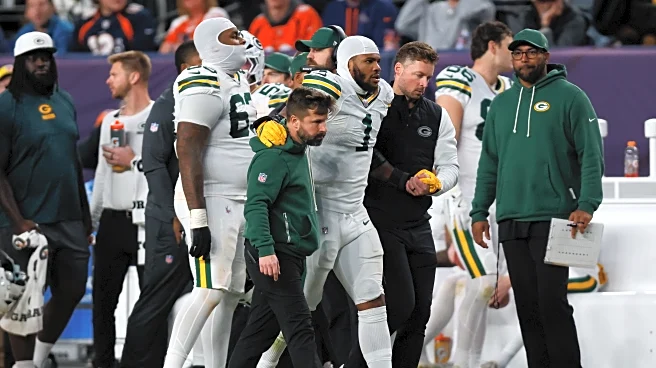
Instead, it all came crashing down. On the very first play of the next drive, Christian Watson slammed his left shoulder into the turf at Empower Field and never returned to the field. And just over 11 minutes of game time later, Micah Parsons was also crumpled on the field, the victim of the dreaded non-contact injury.
Throw in an injury to Zach Tom in the second quarter and the Packers had lost their best lineman, best wide receiver, and best player, period, in a little more than a quarter and a half. And here we are now on Monday morning, fans once again learning a lesson about loving and investing in things that can’t love you back and often actively antagonize you.
This version of the lesson feels worse, in some ways, because of how it happened for the players. It’s one thing for me to feel bummed about something out of my control, but how much worse must it be for the players in this instance? Christian Watson had done literally everything right after his first two injury-plagued seasons. He worked hard on his body in the 2024 offseason, and was essentially the picture of health that year until he tore his ACL in the final week of the regular season. But he doubled down, completing an improbably rapid recovery from his ACL surgery to not only return to the Packers well ahead of schedule, but to play some of his best football. And then, on a routine play, Watson’s day ended.
The same is true for Micah Parsons. Aside from his otherworldly pass rushing ability, Parsons’ most frequently discussed attributes are his work ethic and motor. He’s almost literally always in motion on the Packers’ defense, and his relentless drive resulted in more than a few sacks this year. But what does that effort and intensity get you when a slight misstep destroys your knee, other than opening the door to a potential return next year?
This is the real cruelty of football, and its best and hardest lesson. It’s not that hard work and devotion aren’t rewarded, it’s that they frequently don’t matter. You can’t outwork the capricious rupturing of a crucial ligament (or cruciate ligament, as the case may be). You can’t out-effort a chest injury that wouldn’t happen the same way if you ran the same play a thousand more times.
But that doesn’t mean the work should stop. For the remaining Packers, and for Parsons as he begins his recovery, the work is just beginning. That the results are, to an extent, out of their control shouldn’t diminish the dignity of the effort. There is still much to play for, and the fact that the road ahead is harder shouldn’t stop the Packers from trying — or us from watching. If life is how we respond to it, we’ve got quite a bit to respond to this week.