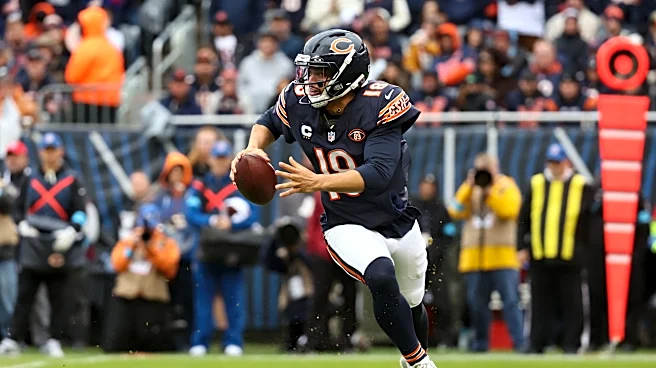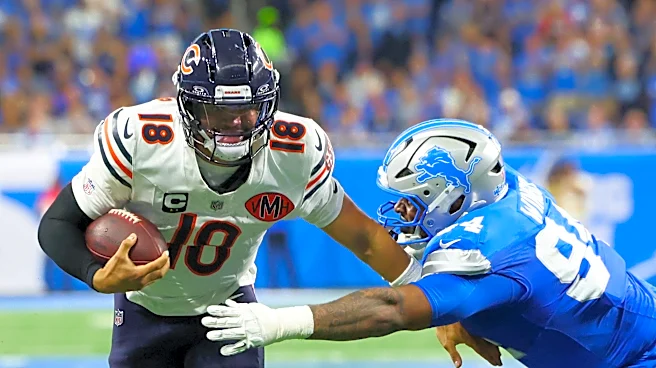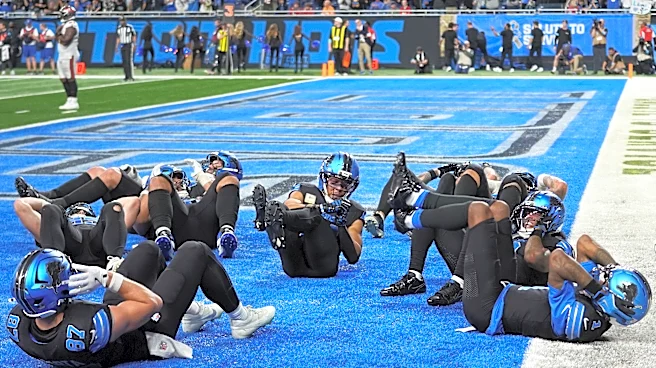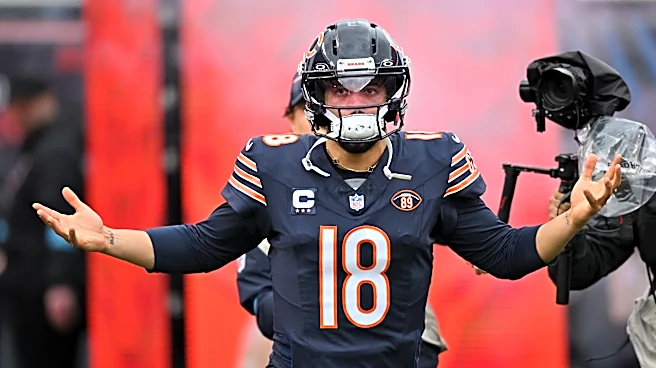



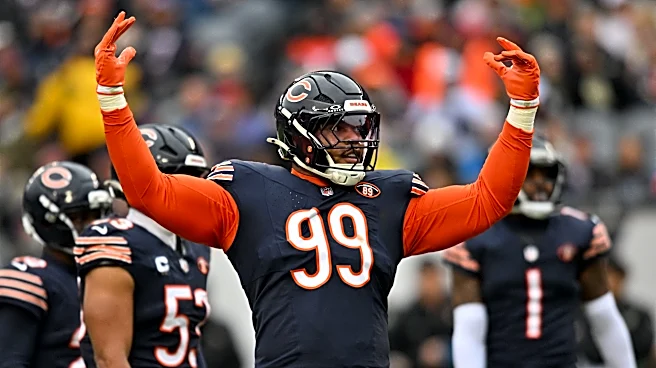
The Detroit Lions (8-2) and Chicago Bears (8-2) will face off at Ford Field in Detroit in a Week 12 showdown on Thanksgiving Day. With former Lions offensive coordinator Ben Johnson calling the shots in Chicago, it’s no surprise they mirror Detroit’s offense in several ways, and their recent success has certainly earned Lions coach Dan Campbell’s respect.
“They’re a lot like us. They play on the hunt, and they’re aggressive and run the football. And so this is a heck of a matchup. We’re looking forward
to it.”
As strong as the Bears team has been over the past season and a half, going 15-2 against non-NFC North opponents, they’ve struggled against their rivals, producing a 2-6 record against the Lions, Packers, and Vikings. Johnson hasn’t beaten the Lions since leaving Detroit, and the last time he was at Ford Field, the Lions took it to him, winning 52-21. Expect Johnson to be motivated to change the narrative here.
This week’s prediction preview is sponsored by the folks at FanDuel Sportsbook, who currently have the Lions listed at +1900 to win this year’s Super Bowl and are currently 2.5-point underdogs in Week 12. Let’s take a closer look at this matchup and predict how the Lions will beat the Bucs in this week’s Honolulu Blueprint.
Bears base scheme
For a detailed look at the opposing scheme, check out our complementary breakdown piece: Lions Week 12 preview: Breaking down the Bears’ offensive and defensive schemes.
Prediction 1: Lions find success on third down; win T.O.P.
Looking at the box score statistics, the Bears defense has some impressive numbers: 19.7 points allowed (6th best); 310.5 yards allowed per game (7th); and EPA per play: -0.15 (7th). But when you look closer at the efficiency rates, those numbers lose their luster. For example, their per-play numbers are in the bottom 10 in the NFL: EPA per play: 5.7 (28th); per pass: 7.7 (24th); and per run: 4.5 (25th).
The large disparity is mostly because the Bears’ defense has played the fewest snaps in the NFL (542). Chicago has been able to keep their defense on the sideline for two reasons: 1) Their offense holds the ball a league-leading 56.86% of the time; and 2) their defense gets off the field on 3rd down, allowing just a 26.6% conversion rate (Best in the NFL) and a third-down EPA allowed of -0.49 (2nd).
In the Bears’ most recent loss, the Packers succeeded in both categories, winning time of possession (30:24) and converting 4 of 12 (33%) on third down—and 1 of 1 on 4th down—though the real difference came by converting third downs in critical situations, earning a third-down EPA of +0.25.
The Lions’ success on third down started off slow in 2026 but has steadily improved. Over their six-game winning streak, the Lions’ third-down success rate has ranged from 37-39%, but entering this game, it’s risen to nearly 42% for the season, after converting 7 of 11 (64%) with a +0.29 EPA on third down against the Bucs’ stout defense last week.
On third down this season, the Lions mainly lean on Amon-Ra St. Brown (38% target share), Jameson Williams (17%), and Jahmyr Gibbs (17%) in the passing game. Here’s a look at how each has performed on third downs this season:
- St. Brown: 18 receptions on 31 targets for 243 yards (13.5 per) and 0.27 EPA per third-down target
- Williams: 8 receptions on 14 targets for 145 yards (18.13 per) and 0.37 EPA per third-down target
- Gibbs: 11 receptions on 14 targets for 114 yards (10.36 per) and 0.29 EPA per third-down target
Prediction 2: Lions lean into Gibbs early
One of the main ways the Lions will try to maintain possession is by establishing the run early. Jahmyr Gibbs currently leads the NFL with 1,098 rushing yards and 13 rushing touchdowns, plus 1,502 yards from scrimmage and 15 total touchdowns.
Again, the Bears’ box-score numbers make this look like a tough matchup. They are putting up top-10 numbers against the run: 94 run yards allowed per game (7th), a 39.6% success rate (6th), -0.1 EPA per rush allowed (8th), and 68 missed tackles (5th fewest in the NFL).
However, the Bears’ defensive efficiency numbers are once again on the other end of the spectrum, as they’re allowing 4.5 yards per rush (25th), 1.69 yards before contact (27th), and a 13.4% missed-tackle rate (25th); volume has been their biggest asset, and it could be their biggest enemy.
If the Bears don’t improve their tackle rate, Gibbs could give them problems all day. Here’s Next Gen Stats with more on Gibbs ‘ success in forcing missed tackles:
Jahmyr Gibbs has forced a league-high 92 missed tackles this season, 24 more than the next-closest player, Kenneth Walker (68). Those missed tackles have led to a league-high 496 yards after missed tackles, over 100 more than Jaylen Warren (388). That production has come consistently, as he has forced 10 or more missed tackles in four different games, the most in the NFL. The Bears have missed 13.4% of their tackle opportunities this season, the eighth-highest rate in the NFL.
Since the Bears acquired All-Pro defensive tackle Jeffrey Simmons, teams have slightly adjusted how they attack the Bears in the run game. The Seahawks, who faced Chicago in Simmons’ first game, ran inside on 53% of plays and were held below their season rushing average. The next week, the Bucs stayed away from inside runs (43%) and instead attacked the edge 57% of the time, rushing for 126 yards. Last Sunday, the Saints followed the Bucs’ strategy, attacked the edge on 55% of runs, and gained 120 yards on the ground (27 yards above their league average)
Look for the Lions to do the same. This season, the Lions attack the edge with outside runs on 54.6% of run plays (9th-highest rate), mainly leaning on an outside zone blocking scheme. According to Next Gen Stats, in these situations, Gibbs has gained 500 yards rushing, including 17 explosive run plays (best in the NFL), and has forced 43 missed tackles (best in the NFL).
Prediction 3: Exploit one-on-one matchups
While offenses have adjusted their approach with Simmons in the mix for the Bears, Chicago has adjusted its defense as well.
The Bears defensive coordinator, Dennis Allen, has historically run heavy man-coverage concepts (38-40% of the time), and while they started the season at that pace, they’ve since scaled things back and leaned more on zone concepts. Since the acquisition of Simmons, this has shifted even more, and over the last three games, the Bears have only run man coverage 22% of the time, while also leaning into more nickel sets (increasing from 59% to 70%) and two-high safety shells (up from 52% to 62%).
Essentially, with Simmons in the fold, the Bears are leaning into more four-man fronts and dropping seven into coverage to prevent big passing plays, and so far the results have been positive. Over the last three games, they’ve only allowed explosive plays on 5.2% of passing plays, the second-best mark in the NFL.
For the Lions passing offense to find success, they’ll need to do two things: 1) expose coverage with pre-snap diagnosis, and 2) be patient and take advantage of what the Bears are giving them.
Lions quarterback Jared Goff is one of the best in the NFL at reading defenses pre- and post-snap. He’s highly successful throwing against both man (EPA +0.52, 1st) and zone (+0.19, 8th) coverages, and has the skill players available to beat both.
St. Brown is Goff’s default option on most downs, especially on short and intermediate routes and in critical moments. In last year’s matchups, St. Brown dominated his one-on-ones against the Bears, catching 9 of 11 targets for 115 yards and 3 touchdowns in their first meeting, then securing 11 of 15 for 139 yards in their second.
But the Lions should also have an advantage deep, where Williams has been thriving lately. This season, when throwing deep, Goff has targeted Williams on half his attempts (12 attempts) and connected with him 67% of the time (8 receptions). According to Next Gen Stats, the Bears are allowing “45.7% completion percentage (7th-highest), 649 yards (2nd-most) and six touchdowns (tied-most) on deep passes this season.”
In last season’s matchups, Williams caught 2 of 4 targets for 108 yards and a touchdown, then followed it up by securing 6 of 8 targets for 74 yards in their second meeting. Expect another few deep shots in this game.
Prediction 4: Lions limit rushing attack, are opportunistic in secondary
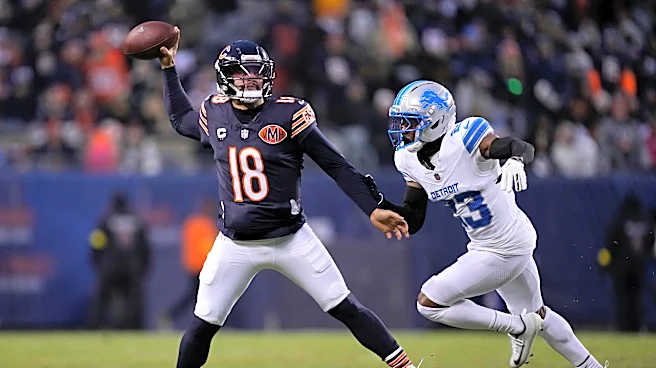
While Caleb Williams will get all the national attention in this game, he’s been in a bit of a rut of late. Over the last three games, Williams has thrown for fewer than eight yards per pass attempt, along with five touchdowns and five interceptions. In the one game he exceeded 250 yards passing, his passer rating was just 61.5 because of turnovers—four interceptions to the Bucs’ defense.
With Williams’ play a bit erratic, look for the Lions to work hard to limit the Bears’ rushing attack. And like on defense, the box score numbers look a lot better than their efficiency stats due to volume:
- Rush yards per attempt: 4.2 (14th); EPA per rush: -0.06 (16th)
- Explosive runs over last four games: 5.3% (31st in the NFL)
- Runs of 10+ yards: 29 on season (13th) — only six in the last four games
- Success rate over last four games: 40.8% (16th)
- Rush yards over expectations: -27 (20th)
If the Lions can slow down the Bears’ run game, Williams tends to try to force the issue. Williams is a dynamic athlete with an uncanny ability to extend plays and keep his options open, but he has tended—especially over the last three weeks—to try and force big plays instead of taking easier checkdowns, leading to mistakes and turnovers.
Last Sunday, after the Lions beat the Bucs, Kerby Joseph said he was disappointed he didn’t secure an interception on his return because Baker Mayfield wasn’t willing to test them deep. The Lions won’t have that problem with Williams, so Joseph will likely get an opportunity to get his hands on one in this game.
Lions fans, download the SB Nation app today!
The SB Nation app keeps you connected to fellow Lions fans before, during and after every game.
- Join the live game-day chat
- Enjoy fewer ads
- Move seamlessly between communities and conversations
- Comment and post faster
Download the SB Nation app on iOS or Android.