

At the risk of repeating myself, it’s going to be a pretty cathartic experience on Friday night when we get to see UNC men’s basketball for the first time since March, and hopefully get to wash the taste of that loss out of our mouths with a new team and a new coach. There are always a lot of questions at the beginning of a season, doubly so when the program has changed hands and we aren’t completely sure what the team’s identity even wants to be, beyond a couple of semi-obvious ideals we’ve heard
in press conferences. And as much as I’d like for the first preseason game to answer all of those questions, that’s simply not enough evidence. But there will still be things to glean from what we see: if not hard-and-fast conclusions, certainly some indications about what this team wants to look like and how close or far it is from being that. I could say basically anything basketball-related and be correct about it being a “thing to watch” in this game, but I hope to have isolated some things that are both going to be immediately evident and long-term relevant for what this team is going to need to be successful.
1. Perimeter shooting: volume and efficiency
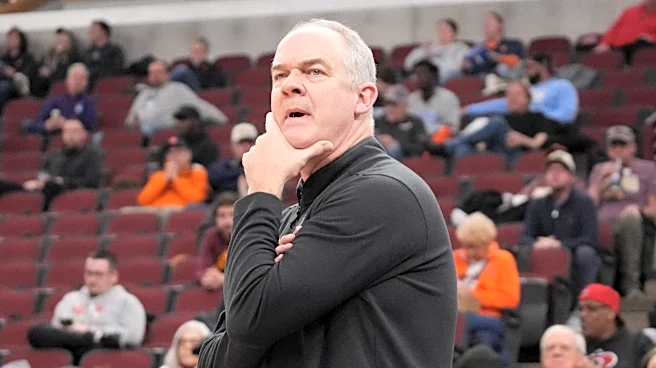
Michael Malone coached the Denver Nuggets during the thick of the NBA’s three-point revolution but didn’t really participate in it, in part because he had Nikola Jokic putting up historic efficiency numbers inside the arc that made threes less useful for his teams than they were for the average NBA squad. That meant that over the course of his decade as an NBA head coach, his teams went from top-10 in three-point attempt rate to dead last in his last two years, and bottom-10 in his championship 2022-23 season. But the actual rate remained pretty steady, between 35 and 42% (for comparison, last year’s UNC team ended up at 42.2%). Of course, Malone is not going to have a Jokic on this roster, so that might change the distribution of shots he’s aiming for. It’ll be interesting to see, especially against a quality opponent who’s going to make the Heels work for every shot they can generate, how much Malone emphasizes creating open perimeter shots.
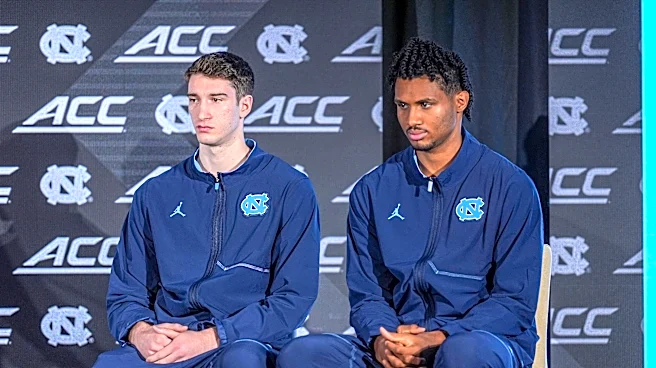
And of course, the corollary to that is who he trusts to take those shots. Matt Able was a decent shooter for N.C. State last year, shooting 36% on 4 shots a game, and he’ll likely be asked to scale that up a smidge. Beyond him, though, the picture is muddier. Jarin Stevenson and Neo Avdalas are both willing shooters who can get hot, but both of them shot just around 30% from 3 last year. Maximo Adams has the look of a good shooter, but lots of first-year players struggle with their outside shot, especially at UNC. Jaydon Young was a decent shooter for the Heels last year, but will have to earn minutes in a crowded wing group. Isaiah Denis and Angelo Brizzi both look like good shooters, but it’s similarly unclear how much burn they’re going to get as ballhandlers. Alex Samodurov has a smooth stroke, but hasn’t shot very well against the highest level of competition in which he’s played. There are probably some perimeter threats in this lineup, but there’s a non-trivial amount of coaching work that will have to have gone into finding and developing them, and this could end up being the first indicator as to what Malone can bring to this job — you might remember that the way Hubert Davis dealt with shooting and shooters was one of the first red flags I saw.
2. Post Minutes and Usage
Without Cameron Fens eligible as of this writing, Malone and the Heels are going to be fairly thin in the post. Sayon Keita and Samodurov are the only real centers on the roster right now, and behind Stevenson, it’s unclear who the Heels really have at the power forward position — I think Maximo Adams fits there, but that’s not a universally held opinion. I’m curious how much positional overlap Malone sees between the two positions with the personnel that he has; Samodurov and Stevenson can probably each play the other position at least in a pinch, while I’m less able to see the vision with the other two (if anything, Adams’s positional versatility goes the other direction). Kevin Thomas might also figure into the power forward minutes — he’s got a pretty strong build.
I wonder how many minutes Keita and Samodurov are ready for at this level; they both come from professional rosters but didn’t see a lot of time playing against adults, and it’s unclear how much of a physical toll they’re ready for against opposition that physically matches or even even outdoes them. The same can be said, at least a little bit, of the freshmen. They’re going to get a good test right off the bat — USC is a pretty guard-heavy team, but they’ve got some beef in the frontcourt. It’ll be interesting to see the ways that Malone attacks the position, and how he adjusts if and when he needs to.
3. Terrence Brown, Jr.
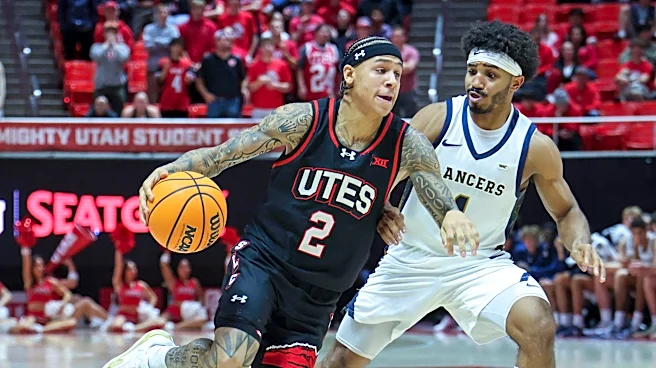
Brown comes to UNC out of Utah, where he averaged 20 points a game against one of the strongest conferences in college basketball. He’s going to be expected to be the offensive engine of this team — the hope is that he’s got better teammates and will feel less of a need to shoulder that much of an offensive burden, but that doesn’t mean UNC wants him to score less. The other hope is that, much like what happened with Harrison Ingram, having a better team around him will help Brown not have to take as many bad shots and clean up his efficiency: He only took 98 threes all season, so there’s probably not much improvement to be made there, but hopefully the looks around the basket will be cleaner and the midrange shots will be less forced. I’ve made the Ingram comparison at least once before, but it really does serve as proof of concept for such a transfer to have that kind of offensive efficiency jump without needing to rework their game.
And that’s all besides the obvious, which is that Brown just has a really exciting game. He’s an old-school bucket-getter who is constantly in attack mode and looking to punish the rim, his defender, or both. He had 20 dunks and 204 free throw attempts last year, which was more than basically every 2025-26 UNC backcourt player combined. You don’t see a lot of players like him these days and he seems like he’s going to be very fun to watch. Hopefully, he’s also good — I really do think he’s going to be the ultimate bellwether for how this season ends up going for the Tar Heels. It’d be really great to see evidence that on a new team expected to be significantly better than Utah last year, he can still get buckets, and hopefully not leave as many possessions on the table.