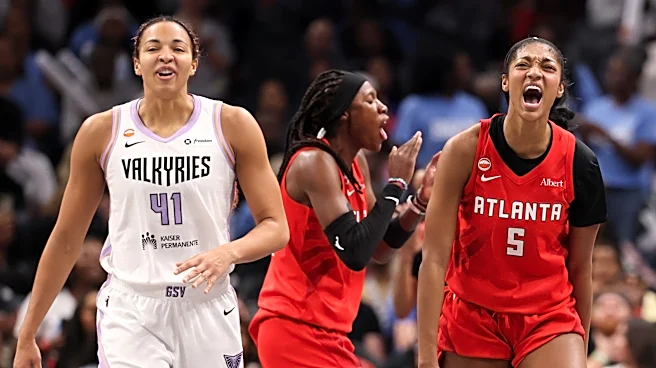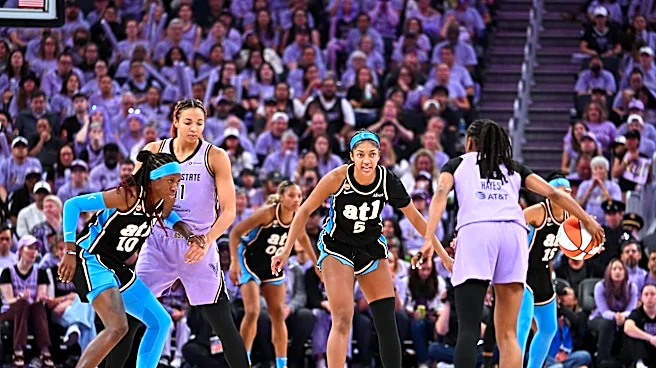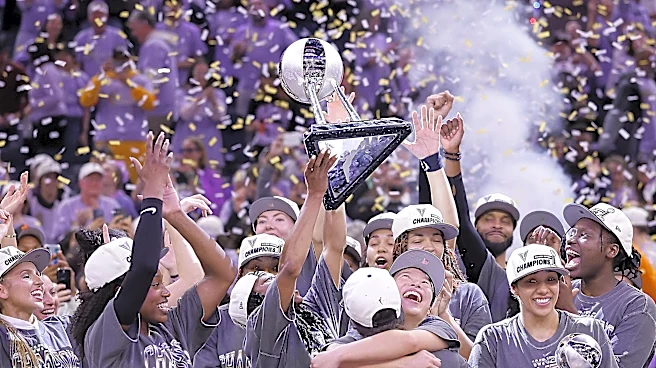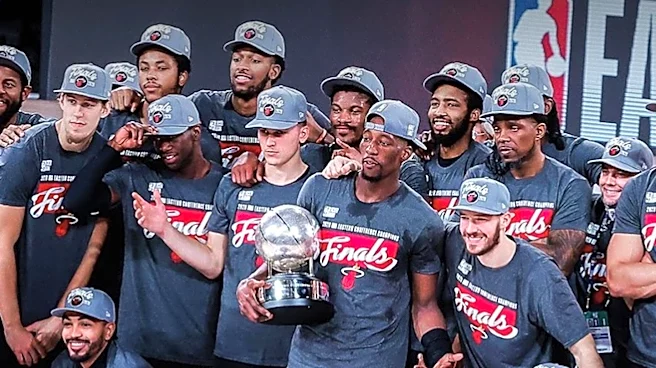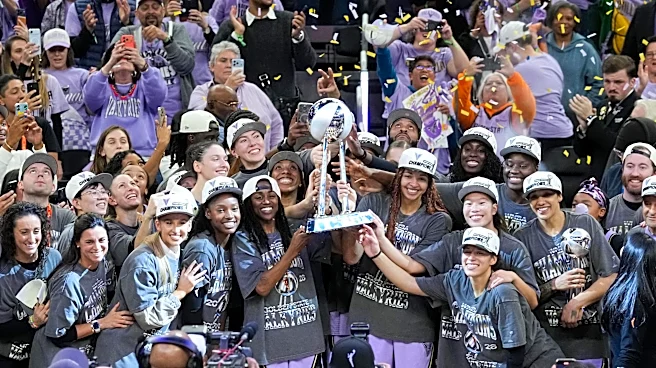


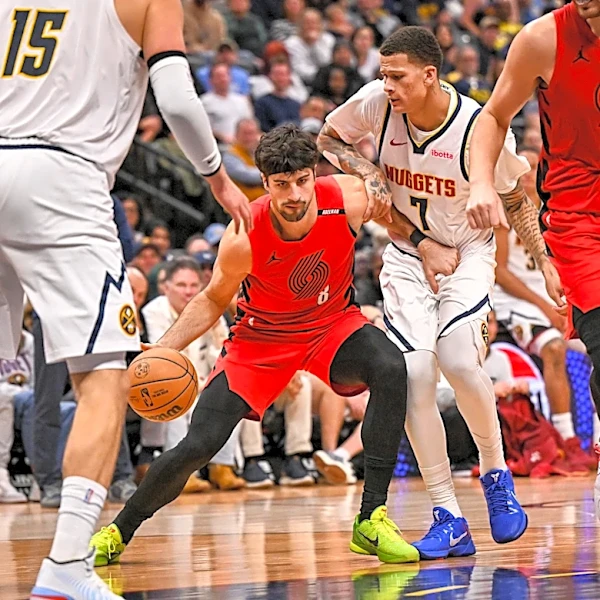

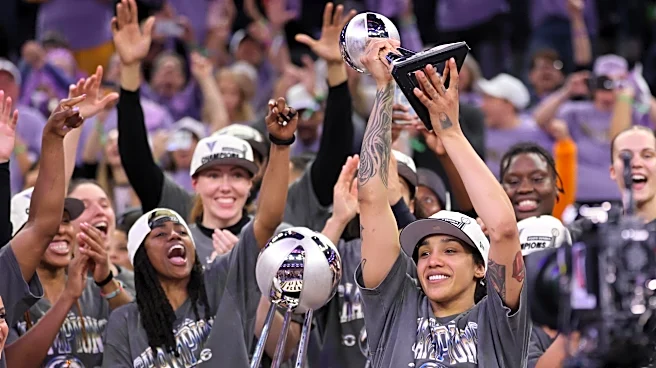
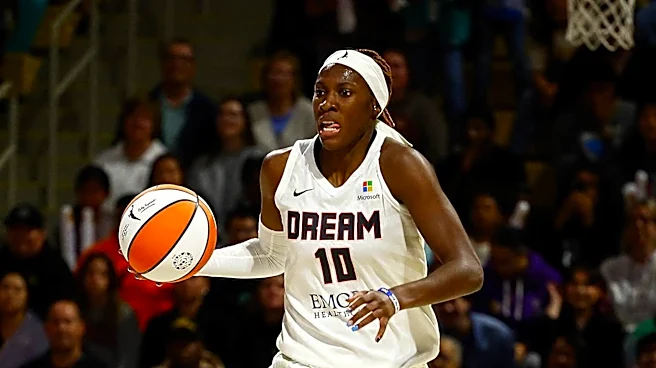
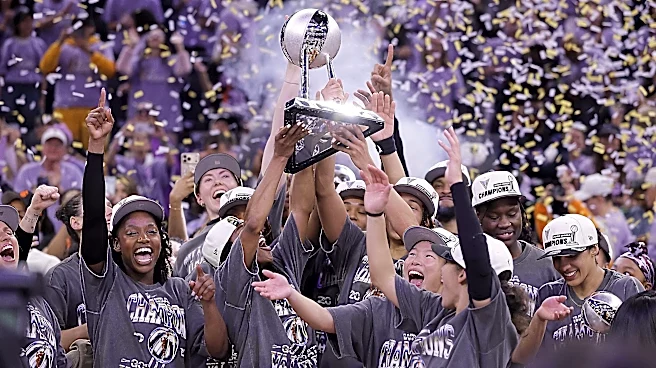

The Golden State Valkyries are still celebrating their history-making 2026 WNBA championship.
But even as champagne flows in San Francisco, WNBA fans are rushing to what’s next.
Denied drama last offseason due the extended CBA negotiations, the forthcoming offseason presents an opportunity to engage in schemes and dreams what could, should and will happen.
With over 70 players who sniffed the WNBA last season entering the offseason as free agents, including 31 free agents who are unrestricted, there
promises to be plenty of movement. All that activity could be amplified by a frothy trade market, as teams aim to imitate the Valkyries’ successful team build or chart their own pioneering path to a title.
So, let’s take an early look at the trade market, exploring why three players, including one each from the two Finals competitors, could be on the move this offseason.
Then, give us some fantasy trades in the comments! Where might these players find a new home, what’s the return and why should the two general managers get ready to call it in when offseason business officially begins? Also, nominate your own too-early trade candidates.
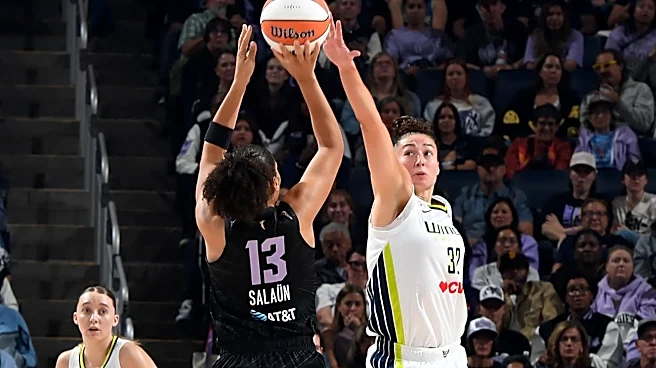
Janelle Salaün (Golden State Valkyries —> ______)

When the NBA team based in San Francisco, the Golden State Warriors, were in the middle of their dynasty, Draymond Green famously drew a distinction between 82-game players and 16-game players, ascribing greater value to those who have the skills required to help a team win 16 playoff games (the number need to win an NBA title) compared to those whose skills helped a team succeed through the 82-game NBA regular season.
Now, the championship-winning WNBA team based in San Francisco might have the avatar of the league’s 44-game-vs.-nine-game player: Janelle Salaün.
The unanimous Sixth Player of the Year saw her minutes dwindle during the Valkyries’ title run. After playing more than a combined 50 minutes across Golden State’s first two first-round games against the Dallas Wings, her minutes plunged in Game 3. From there, she never received more than 12 minutes in single game. And when she did play those 12 minutes in Game 3 of the Finals against the Dream, she scored 13 points, hitting three 3-pointers.
Yet, she would play less than three minutes across Games 4, 5, 6 and 7, seeing no time in the series’ final three games.
Green’s delineation between players who are valuable in the regular season compared to those who are valuable in the playoffs recognizes that regular-season play prioritizes players’ strengths whereas the postseason exposes weaknesses, making a players with fewer weaknesses, even if those same players lack demonstrable strengths, gain more value in the playoffs.
Salaün’s strength is her 3-point shooting, particularly her ability to enter the game cold and still get on a heater. Her high-release, plus her high-volume, makes her a powerful floor spacer, as defenders must stick close to her any time she’s parked behind the arc.
But, that’s just about all she does. While she can attack a closeout and rise for midranger, opposing defenses are fine to allow her to take that shot. Not much of a playmaker, she’s just not a dynamic offensive player. But, the bigger issues pop up on the other end. A sturdy 6-foot-2, Salaün looks like a better athlete than she is. She’s not strong nor explosive and rather stiff, making her exploitable on the defensive end. Outside of rebounding, she’s a liability the defense-first (and second and third) Valkyries.
As Nakase leaned more heavily into her defensive preferences as the playoffs progressed, she determined Salaün’s singular shooting strength, even for a team that was struggle to make shots, couldn’t overcome her limitations on the other end.
The extreme gap between Salaün’s regular-season and postseason experiences suggest her place in Golden State is now untenable. Motivated to established a dynasty reminiscent of their NBA brothers, the Valkyries must roster as many nine-game players as possible.
Despite with how done Nakase seemed with Salaün, she likely still is valued by other teams around the league, especially those that understand that their 2027 season is not about the championship chase. Even some championship-aspirant squads that favor offense over defense could also identify Salaün as an upgrade. Plus, she’s on a favorable $520,000 contract that is unprotected.
So, let’s hear your Salaün trades. What teams should prioritize her as a target? What do they need to send back to Golden State to get a deal done?
Jessica Shepard (Dallas Wings —> ______)

Salaün isn’t the only season-long award winner exposed as a 44-game player during the 2026 playoffs.
The Valkyries did their own exposing of an opponent in Most Improved Player Jessica Shepard.
Shepard’s strengths, like Salaün index heavily on the offensive end. As one of the league’s few multi-faceted bigs, her strengths, arguably, were more amplified. She efficiently stuffed the stat sheet, including recording a league-high six triple-doubles, as she operated as a low-post scorer and offensive initiator for the Wings, all while cleaning the glass.
Her weaknessness, likewise, were more glaring. Offensively, Shepard’s lack of a reliable outside shot, even from the midrange, is a problem. But, the defense is detrimental. A center is the foundation of a team’s defense, and Shepard guaranteed the Wings had a shaky one, largely because of her infamous lack of rim protection.
Kiah Stokes’ epic playoff run was kickstarted by how badly she owned Shepard. The MIP was MIA.
As the Wings still pushed the Valkyries to three games, despite Shepard shrinking, the organization should aim for an upgrade, or look to empower Awak Kuier, in order to raise their playoff ceiling.
But, did Shepard’s award-winning regular season, which also included an All-Star starter nod, for a team that has traditionally has struggled to string together successful seasons, buy her enough equity in the organization? Would trying to sell high on such a player, one who can be marketed as a star, be perceived as a bad look?
As the Wings likely would have trouble finding a suitor for Alanna Smith, who is due to make $1.2 million next season after an injury-plagued debut season in Dallas, moving on from Shepard and her $1.05 million salary is the Wings’ best route to create the financial flexibility necessary to re-sign Kuier and then round out their roster with more playoff-caliber contributors.
What do you think? Should Dallas sell on Shepard? And what teams might benefit from her offensive talents?
Brionna Jones (Atlanta Dream —> ______)

Sometimes being good comes with some bad, at least in terms of building a team that can return to the WNBA Finals.
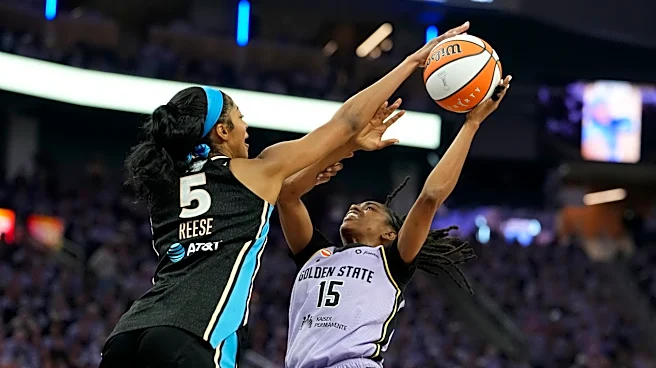
By earning Second Team All-WNBA honors, Angel Reese is eligible for an EPIC contract extension, the CBA provision that allows excellent players on their rookie-scale contract to get an expedited raise to the standard maximum contract value.
That means Angel, projected to make $396,282 next season, could now make up to $1.9 million. That’s great for Angel, but, even as the Dream should be eager to offer her all the money she deserves, it will put them in a tough spot financially, with three deals already exceeding $1 million on the books.
Two of those belong to Allisha Gray and Rhyne Howard, with the other assigned to Brionna Jones.
Jones is the obvious cap casualty. Coming off an essentially lost season after her recovery from an offseason knee procedure lingered well into the season before she suffered an apparent re-aggravation, Jones would project to be the Dream’s sixth player next season, behind the starting frontcourt of Reese and Naz Hillmon.
While Atlanta could benefit from a near-automatic post scorer, who might have changed the result of the Finals had she been available, Jones’ price, plus her injury history, makes her a luxury that the Dream likely can no longer afford. That Madina Okot is waiting in the wings on a rookie-scale contract also makes Jones more expendable.
Although the knee issues might be a red flag for some organizations, Jones’ track record as one of the most efficient low-post scorers in the league should make her appealing. Similar to Salaün, she seems like a perfect piece for a team looking to raise their regular-season floor.
So, is saying goodby to Breezy the logical move for Atlanta? Or, do you see an different move coming? And, what teams should be interested in making an offer for Jones?