





From now until preseason camp starts in August, Land-Grant Holy Land will be writing articles around a different theme every week. This week is all about Ohio State heroes; from the biggest names in Buckeye athletic history to underappreciated icons to the athletes who will eventually become all-time Buckeye greats. You can catch up on all of the Theme Week content here and all of our ”Buckeye Heroes” articles here.
There are a lot of ways that a Buckeye can become a hero. Stats. Highlights. Titles.
Gold pants. A tree in Buckeye Grove. Malcolm Jenkins checks every single one of those boxes anyway.
A Thorpe Award winner. A consensus All-American. A first-round draft pick. A three-time Pro Bowler. A two-time Super Bowl champ. A Philadelphia Eagles Hall of Famer. One of the defining defensive backs of both the Jim Tressel era and the 2010s in the NFL.
But what makes Jenkins different — what elevates him into a category that transcends football entirely — is that his legacy goes far beyond just what he accomplished on the field.
Even while he was still racking up interceptions, tackles, and trophies, Jenkins made it clear that football was not the ultimate goal of his life; it was simply the beginning.
And in an era that has focused so much attention on players rightfully getting their bag, Jenkins has spent nearly two decades not only getting the most from — and giving the most to — his sport and his career, but also what it looks like when an athlete uses his visibility, platform, intelligence, and influence to push for meaningful change.
For me, while I will always remember Jenkins as one of the toughest and exciting defensive backs in Ohio State’s early days as BIA, what he has accomplished off the field and who he has become as a human being is far more impressive to me than what he did in the scarlet and gray.
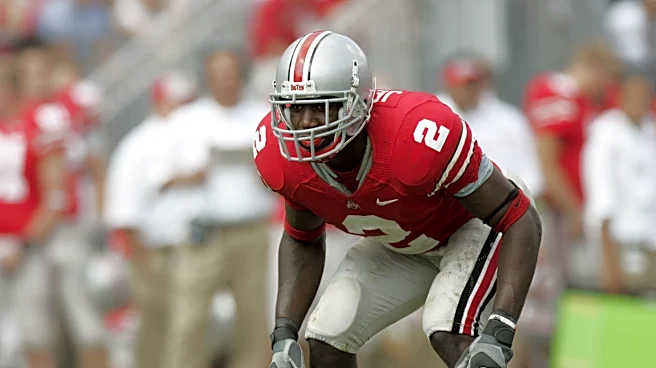
Now, make no mistake: Jenkins was a phenomenal football player. Even Buckeye fans with spotty memories (myself included) will remember his most iconic moments: the pick-six against Penn State in 2006, his interception in the iconic Nos. 1 vs. 2 game against TTUN, his nine tackles against Notre Dame in the 2006 Fiesta Bowl, his game-sealing interception against Wisconsin in 2007, and dominating every receiver that dared line up against him in 2008. During his time in Columbus, Jenkins displayed a versatility that allowed him to become the prototype modern defensive back before the sport fully realized how multidimensional the position could become.
By the time his Buckeye career ended, Jenkins had become one of the most decorated defensive players in program history. He finished with 196 tackles, 11 interceptions, three All-Big Ten First Team selections, and two All-American honors while helping lead Ohio State to four straight Big Ten titles.
He wasn’t just productive, he was dependable in the way that great Tressel defenders always seemed to be. Technically sound, violent when necessary, smart at all times. The type of player who looked like he understood what offenses were trying to do before the quarterbacks themselves did.
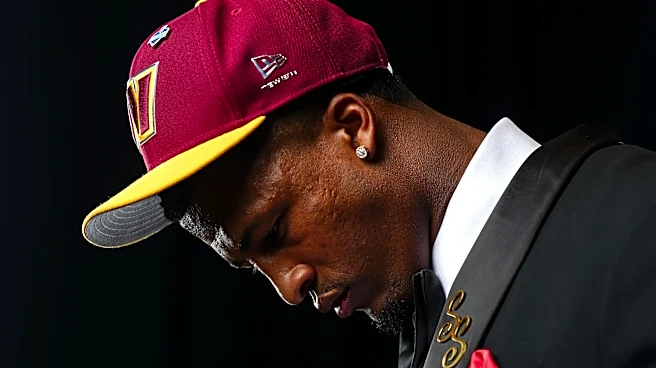
From there, he was the 14th overall pick in the 2009 NFL Draft, and over 13 NFL seasons with the Saints and Eagles, Jenkins evolved into one of the league’s smartest and most respected defensive leaders. He played in 191 games, won two Super Bowls, and became the rare defensive back who could seemingly do everything: cover slot receivers, patrol deep zones, support the run, blitz off the edge, erase tight ends, and captain entire secondaries.
But even at the height of his NFL success, Jenkins increasingly became known for something else: his voice. Not because he was loud or chased attention, but the opposite, actually. Jenkins focuses his activism and outreach not on slogans or building his brand, but on engaging with stakeholders and working towards attainable policy goals and measurable outcomes that promote community engagement and institutional accountability.
This work has led Jenkins to launch the Malcolm Jenkins Foundation, the Players Coalition, and the Let’s Listen Together initiative. In doing so, he has helped direct millions of dollars toward education initiatives, community programs, social justice efforts, and reform advocacy.
His eponymous foundation “is committed to youth development initiatives and programs which emphasize mentorship, character development, leadership, education, life skills, health and recreation.”
The Players Coalition works with over 1400 professional athletes, coaches, and owners across leagues to improve social justice and racial equality in our country.
The Let’s Listen Together initiative was formed in conjunction with the NFL and other players at the height of the national anthem protests surrounding police brutality. For his part, Jenkins would talk with Superintendent of Police Michael Chitwood about social justice issues and how they impacted police and community relations following the rash of police shootings of unarmed Black citizens.
Throughout his efforts, Jenkins has worked with lawmakers and community leaders to push the NFL and even society itself to confront issues that they would have otherwise preferred to avoid altogether. And in doing so, he has leveraged his fame and standing in the community without ever placing himself at the center of the story. For Jenkins, it has clearly always been about the work and making the lives of other people better.
Nowadays, when being an influencer can be a full-time job, Jenkins has seemingly understood something that many people far too often overlook: that influence is only meaningful if you are willing to use it.
It would have been incredibly easy for Malcolm Jenkins not to get into the weeds on such difficult and sticky issues. He had already achieved his dream, he made the money, he won Super Bowls, he could have comfortably transitioned into a post-playing career gig in broadcasting or (as I had hoped) a stint coaching DBs at his alma mater.
But instead, he chose to do harder, far more meaningful work, and for that, he is a hero.
Ohio State has produced dozens, if not hundreds, of elite football players over the decades, and Malcolm Jenkins absolutely belongs in that group athletically. But what makes him a nearly one-of-one figure in my personal Buckeye Mount Rushmore is the fact that he innately understood that leadership does not end when the game does, and that he emodied the axiom of to whom much is given, much is expected.
Future Buckeye players and fans alike should hold fast to the lessons learned from watching Jenkins both on and off the field. In a sport that so often celebrates power, fame, and bravado, Jenkins has spent his career reminding us that the greatest thing an athlete can do is to leave the world a better place than when they found it.