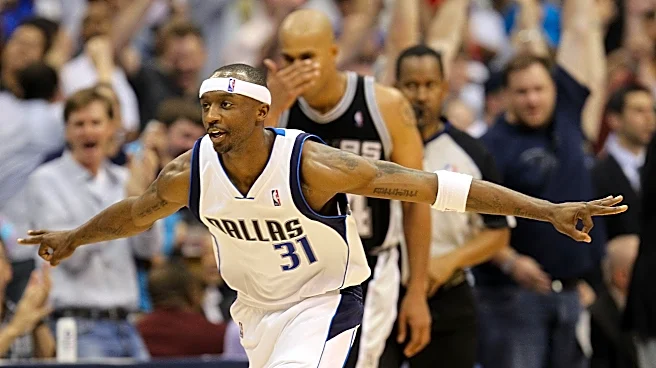




The Dallas Mavericks now have five Europeans on their roster, and the NBA is getting increasingly more international and influenced by the European style of play.
After primarily focusing on the European perspective in part Iand part II, it’s time to take a look at this topic from the other side in part III: the American perspective, and one European NBA coach.
Toni Canyameras, a reporter for the Spanish sports media Mundo Deportivo, covers the NBA from Toronto and has the unique perspective of a European
reporter on the ground.
In collaboration with Toni Canyameras, who has been asking multiple current and former NBA coaches about their view on this exact topic through the last few seasons, we dive into how the coaches on the floor view this.
It seems fitting to start with the first European head coach in the NBA who led a team an entire season and who is the first European coach to lead an NBA team to the playoffs. That’s of course Toronto Raptors head coach – and Serbian – Darko Rajakovic, who took over in Toronto in 2023.
Last season, Toni Canyameras asked him why Serbia produces so many great players – like Nikola Jokic. His answer can be used to help explain European success on a bigger scale, as well. This is what he said:
“Serbia has a huge basketball tradition. It’s a country that has had a lot of success over the last decades and the last half century. Basketball is the number one sport in the country, there is a lot of pride, a lot of pressure when you play for the Serbian national team.”
“Serbia is a small country with only 6 million people. So many great players come from there, because basketball is so special, means so much to people – and all the kids grow up watching the stars back in the day: Djordjevic, Divac, Bodiroga… and now watching Nikola Jokic, Bogdanovic and all the young players in the league,” Rajakovic said.
In Serbia, they can’t afford to waste talent, he points out, making the development of every single player a focus.
“Player development there is very important because it is a small country. We don’t have talent to waste, so every kid shows up to play basketball being short or tall, being skinny or not skinny. We are trying to maximize every single kid that wants to play basketball and I think that helps coaches to maximize potential.”
This insight gives a great perspective into what seems to be the more effective developmental system of Europe. The smaller talent pool in general may not be a downside all the time at all, but could serve as a way to help find the unique strengths of every talented player rather than try to make everyone fit into a box.
If nothing else, the European boom, the European NBA revolution – or if you will, the increasing dominance of European players in the National Basketball Association (of America), does not stem from having the most athletic or explosive players – and focusing on developing that type and skillset.
Because in order to compete, Europeans had to stand out in other ways. Ahmet Melik Subaşı, Turkish basketball executive and author of part II of this series, touched on that in his piece.
“In tactical terms, they either had to develop superior systems that would allow them to play the game more efficiently with less effort and despite having lower physical standards, or they had to develop players whose fundamental skills were so exceptional that they could compensate for the physical gap – players capable of creating magic with the ball,” he pointed out in part II.
Former Blazers coach Chauncey Billups agrees. Back in 2024, he said that the gap between Europe and the US had closed – exactly because Europe has a better player development system, teaching players how to play modern basketball:
“I do think that the gap has closed. I can tell you the difference. In the United States, when we grow up learning the game, we grow up learning skills, dribbling moves, we love highlight reels, shooting.”
“I think that in international basketball, they learn how to play modern basketball from a very young age, when to drop back, how to get off screens, how to handle the pick and roll, how to read the game properly. We aren’t taught that, so international players have an advantage over us because they are taught the game the right way.”
The advantage the other way around, mostly focused on individual skills and athleticism, is not enough by itself anymore, according to Billups:
“We have an advantage because individually, we are very gifted. You see players like the Joker (Nikola Jokic) or Luka (Doncic). These guys can’t beat me in a one-legged race or jump higher than me, but nobody in the NBA can defend them because they play mentally, with their heads, and their skill level evens things out. It’s a dynamic combination.”
This dynamic combination of European skill and IQ has led to the international players winning the NBA MVP since 2019, and Europeans receiving all but the last two (which went to another international: Canadian Shai Gilgeous-Alexander). On top of that, the top three finalists for MVP have consistently been Europeans, as well, with players like Slovenian Luka Doncic, Serbian Nikola Jokic, and Greek Giannis Antetokounmpo being repeat offenders, with Frenchman Victor Wembanyama entering the race last year.
But how are these players, along with a long list of European NBA players able to continue this dominance in the best league in the world without some of the athletic and individual gifts – which Billups mentions?
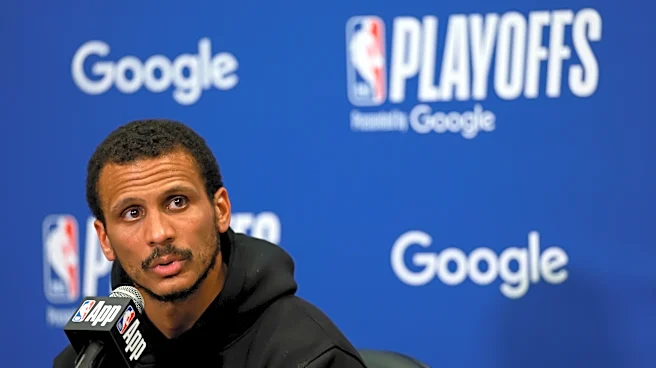
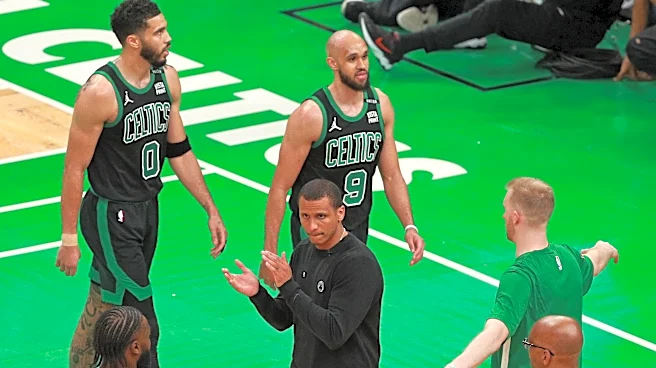
Basketball IQ is one thing that keeps recurring in the NBA coaches’ answers. Boston Celtics coach Joe Mazzulla tends to agree:
“You study some trends, things they do there, and it shows they have really smart players and coaches. I like the development system they have from kids to adults. They play with the same shot clock, they understand how to read the game, they do things faster at a younger age, which develops decision-making and basketball IQ,” Mazzulla said in 2024.
But things have also changed in the way Americans develop young players, longtime NBA coach Steve Clifford told Toni Canyameras. Clifford says he doesn’t think the American players’ basketball IQ is being developed in the same way as it used to be:
“My conclusion about basketball in my country is this: kids come into the league right after college games. Their shot creation, dribbling skills, and shooting accuracy are better than ever; they’re better with the ball, but their basketball IQ isn’t even close to what it used to be. Their understanding of how to work as a team offensively and defensively isn’t even close to what it used to be, because they don’t use the best coaches,” he said.
He makes the point that American players generally aren’t spending enough time playing college basketball, which is where you find some of the best US coaches.
“There aren’t high school coaches like there used to be. We have phenomenal college coaches, but the players aren’t even there for a year, just seven months. They don’t get the benefit of playing four years for Coach K (Mike Krzyzewski, longtime Duke head coach). We’re getting kids who don’t know about basketball, how to play. Their shot creation and accuracy are phenomenal, but their basketball IQ is nonexistent.”
Their basketball IQ is nonexistent. A powerful – albeit painful – sentence that may encapsulate a lot of the reasons why Europeans have taken the lead on how to develop players and dominate the game.
But Clifford isn’t done:
“Europeans, in most countries, learn when they are 13 or 14 years old. They go to these academies and are taught to play 3×3, 4×4, they are taught how to help each other, so there is a clear difference.”
He doesn’t have a lot of faith in American development catching up any time soon, however:
“Frankly, I don’t think it’s going to change. The United States is a money-making machine and there’s no way the teaching will go back.”
Doc Rivers, in 2025 when he was still the head coach of the Milwaukee Bucks, talked about the shortage of American centers and why European centers are playing bigger roles on NBA teams, generally:
“I just think they don’t have an AAU. And I hate to say that, I think AAU can serve a better purpose for us. But the European kids practice a lot, they practice on fundamentals. They spend hours in the gym practicing, where the US kids play games and they don’t practice on fundamentals and skills,” he told Toni Canyameras, which echoes the point multiple Europeans made in Part I of this series.
“I think right now we’re in the middle of having to change that and if we don’t change that, we’re going to continue to be outplayed,” Doc Rivers said.
It is worth noting that the narrative of Europeans being “soft” and not as physical as the Americans, which was prevalent a decade or two ago, seems to have disappeared.
It turns out that in the most physical position – the five center position – Europeans are outplaying the Americans, as Doc Rivers touches on. Almost all of the big men, who play significant roles on NBA teams at this point in time, are Europeans.
Dallas Mavericks center Dereck Lively could be an exception, if he can manage to stay healthy. We saw him play up against Wembanyama in his rookie season, and he has a lot of what it takes to make a real impact. In 2024, I wrote a piece touching on exactly that, where I called Lively’s skillset a great sign for the future of the American big man.
But not all NBA coaches buy into the viewpoint that the Europeans are ahead of the Americans.
Toni Canyameras asked Atlanta Hawks head coach Quin Snyder back in 2024, what he saw as the differences between the American player development system and the European system:
“I don’t think there’s a huge difference between what we have here and in Europe, but there are certainly some differences. I think here, when we think about development, we always think about 1-on-1 and 2-on-2. The fact that in Europe they’re trained in a 5-on-5 system means you could say they’re taught how to play with other people through passing. There are some things that carry over to the United States and things we can learn from,” Snyder said.
And when you ask Europeans what the difference is between the two styles, that’s exactly what they respond. Playing through passing, sharing the ball, team basketball versus individualism.
Could that mean that Europe has closed the gap by playing their own style, as other coaches have implied?
Former NBA coach Monty Williams was not so sure. Toni Canyameras asked him this question based on the results in the last World Cup tournaments.
“That question has come up a lot, and I truly believe the world has improved, but I’m not going to say the gap is closed because we’ve never seen our best talent in these particular World Cup tournaments. It’s a difficult question, and I don’t want to sound disrespectful. I’ve seen the spirit of those teams. I’ve been in the corridor with our guys, listening to their music, and other teams singing their anthems, preparing for the matches. I understand how important it is for every country we face there.”
National team success is one way to gauge dominance. Here, Germany and Spain won the last two World Cup tournaments. Another is the nationality of the players topping the MVP ladder and other awards.
Basketball is a competition where the best team wins. Not the best player, or the one with the best highlight reel. There’s no way around the fact that individualism doesn’t serve anyone in a team sport – and it doesn’t create a winning mentality or team success.
And it looks like we’re seeing the brunt of that mindset right now. If and when the American developmental system and players change the focus to become more team-oriented again, Europeans will lose some of their edge. If they manage to get back to teaching players how to develop their basketball IQ early on, Europeans will have to level up again.
And for all of us, who love the competition of team sports, this is a great race to witness. The race to greatness will sharpen both sides and result in the very best basketball possible. And that should be the aim above all else – to get to witness the very best by the very best.
Thank you to Toni Canyameras for quotes, links and collaboration.
Find more Beyond Basketball pieces here.