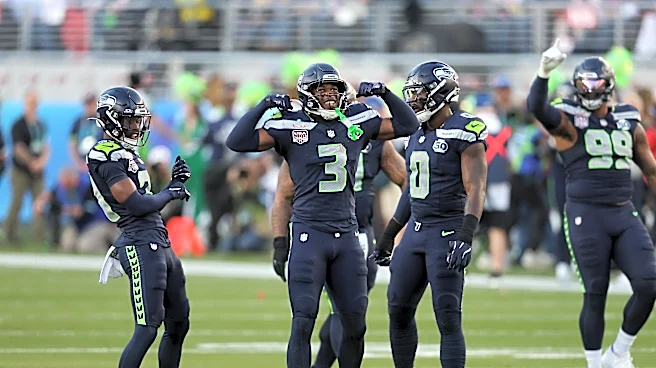



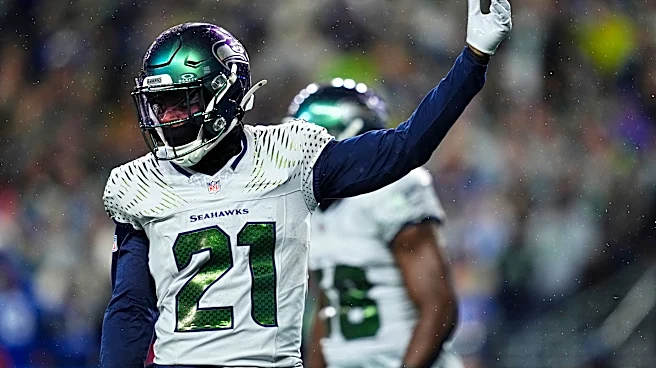
One of the more fascinating aspects of the Seattle Seahawks’ defensive resurgence under Mike Macdonald is that it wasn’t built around a single superstar. While the roster certainly features standout talent, the defense’s success came from how well every piece fit within the larger structure. Players consistently embraced unselfish roles, allowing teammates to make plays without sacrificing the integrity of the scheme.
Few rookies embodied that philosophy better than Nick Emmanwori.
Seattle’s second-round
selection entered the NFL with enormous physical tools and equally high expectations. Many viewed him as one of the most intriguing defensive prospects in the 2025 draft, although there were legitimate questions about how quickly he would adapt to an NFL role that differed significantly from what he had played at South Carolina.
While the Gamecocks have long valued versatility in the secondary, Emmanwori was never a full-time nickel defender in college. His responsibilities often changed from week to week, but consistently living inside as a nickel defender was not part of his collegiate résumé.
That transition made his rookie season even more impressive.
Learning a basically new position while adjusting to the speed and complexity of NFL offenses is a difficult assignment for any rookie. Emmanwori not only handled the challenge but quickly became an integral piece of Mike Macdonald’s defense, validating the coaching staff’s vision for how his unique skill set could elevate the entire unit.
Whether or not he received the national recognition his season deserved is a debate for another day. The tape tells a much clearer story: Seattle didn’t find another defensive back; they found a player whose versatility expanded what the defense could do on a snap-to-snap basis.
What stood out on Nick Emmanwori’s tape
A nickel who played like a linebacker against the run
Seattle’s success against the run was built on collective execution rather than individual dominance. The defensive line consistently sacrificed statistics by occupying double teams, controlling interior gaps and allowing the second level to flow freely to the football. It was a coordinated effort, not one player carrying the defense.
Emmanwori became one of the key reasons that structure worked.
Playing nickel normally forces a defense to sacrifice some physicality in the run game in exchange for better coverage personnel. Seattle largely avoided that tradeoff because Emmanwori consistently played the position with the mentality of a linebacker.
On tape, he repeatedly attacked pulling blockers, took on offensive linemen without hesitation, stacked tight ends at the point of attack and willingly met fullbacks in the hole. Rather than trying to avoid contact, he embraced it, using his size, leverage and play strength to keep runs from reaching the second level.
That versatility allowed Macdonald to keep nickel personnel on the field without becoming vulnerable against heavier offensive formations. In many ways, Emmanwori effectively gave Seattle an extra linebacker while preserving the coverage advantages of a defensive back.
Perhaps more importantly, it allowed Seattle to stay in its preferred personnel far more often. Offensive coordinators couldn’t force the Seahawks into heavier packages by threatening the run because their nickel defender already functioned as a legitimate run defender.
A valuable piece in Seattle’s pressure package
Macdonald’s pressure packages rely heavily on disguise rather than sheer volume of blitzers, making versatile defensive backs especially valuable.
Emmanwori quickly became one of the defense’s preferred pressure players.
Whether aligned in simulated pressures, overload blitzes or late rotations, he consistently timed his rushes well and forced offenses to account for him before the snap. His acceleration allowed him to stress protections and frequently influenced quarterbacks, even when he didn’t finish with a sack.
His value extended beyond production. Simply having a defensive back capable of threatening as a legitimate blitzer expanded the number of pressure looks Seattle could present without revealing its intentions before the snap. That kind of versatility is exactly what Macdonald looks for when designing pressure packages that rely as much on uncertainty as they do on numbers.
Better in coverage than expected
Before his rookie season start, one of the biggest questions surrounding Emmanwori centered on his ability to mirror quicker slot receivers.
Given his collegiate background as a safety, many expected him to excel against tight ends while struggling against smaller, more agile receivers working underneath.
The tape often suggested the opposite.
Although he wasn’t asked to live in true man coverage every snap, Emmanwori displayed surprisingly disciplined footwork, remained patient at the top of routes and consistently stayed in phase against slot receivers. His combination of length, recovery speed and physicality prevented many receivers from creating clean separation.
Rather than becoming a matchup offenses actively targeted, he proved to be a dependable coverage defender who comfortably handled responsibilities many questioned before the season.
That development significantly raised his ceiling within Seattle’s defense. Instead of being a situational player whose usage had to be carefully managed, he demonstrated enough competence in coverage to stay on the field regardless of offensive personnel.
In my view, this was Nick’s best play of the season. He’s playing zone coverage, reads the quarterback’s eyes, quickly recognizes the receiver’s route, transitions smoothly and uses his anticipation to break up the pass. Amazing.
Areas for improvement
Trusting his eyes before trusting his athleticism
There’s no questioning Emmanwori’s athletic profile. His size, explosiveness and closing speed are exactly what made him such an intriguing prospect entering the league.
At times during his rookie season, Emmanwori’s aggressiveness worked in Seattle’s favor. His willingness to trigger downhill helped disrupt runs, attack screens and become a factor as a blitzer. But there were also snaps where he committed too quickly to the initial action, opening space that more patient eyes might have prevented.
Those plays were often the product of a young defender trusting his athletic ability instead of allowing the play to fully develop.
Fortunately, that’s one of the most coachable aspects of his game.
Veteran defenders often describe the game as slowing down with experience. Better anticipation, improved positioning and cleaner pre-snap recognition allow them to arrive at the same spot while taking fewer unnecessary steps. For Emmanwori, that growth could be especially significant. The more consistently he plays with disciplined eyes, the less he’ll need to rely on recovering with athleticism alone.
That’s an encouraging projection because his physical tools were never the question. As his processing catches up with those traits, his overall game still has considerable room to grow.
This further complicates his transition ability, particularly in off coverage. On several snaps, it looks like he’s on the verge of getting his feet tangled and falling over at any moment.
Here, he gets caught watching the backfield, and once he turns to follow the receiver, he completely loses his balance and positioning. He’s ultimately bailed out by the opponent’s mistake.
Surprisingly less effective against tight ends
One of the more unexpected findings on film involved his coverage against tight ends.
Considering his size and collegiate experience at safety, many expected those matchups to be among his greatest strengths. Instead, the results were more inconsistent than his work against slot receivers.
Some of that appeared to stem from route anticipation and leverage rather than physical limitations. There were occasions where he allowed tight ends to dictate the terms of the route, particularly against experienced players who understood how to manipulate defenders through stems and body positioning.
That doesn’t necessarily indicate a long-term concern, but it is an area where improved route recognition, leverage and anticipation could allow him to become a much more complete coverage defender.
Expanding his pass-rush toolbox
Emmanwori was an effective blitzer, but much of his success came from timing and straight-line explosiveness.
Once offensive linemen engaged him, he need countered with developed pass-rush technique. His rushes often depended on trying to win the edge with speed rather than using his hands to disengage or counter blockers.
Given his physical profile—and the fact that Seattle has spent time developing his pass-rush skills alongside some of its edge defenders—there appears to be considerably more upside here than the rookie tape ultimately showed.
The flashes are already there. The next step is learning how to win once blockers get their hands on him and improve his timing.
Developing a more refined pass-rush repertoire could make him an even more dangerous chess piece within Macdonald’s pressure packages.
Future outlook
Projecting Emmanwori’s second season is more complicated than it initially appeared.
His offseason surgery, while reportedly not considered serious, still interrupted valuable practice time. Even relatively minor procedures can slow a young player’s development because they reduce opportunities to gain reps within an already demanding defensive system.
The early stages of training camp have also left his role less certain than many expected. Mike Macdonald’s public comments have been measured, making it difficult to draw firm conclusions about exactly how Seattle plans to deploy him moving forward.
Still, the rookie film provides plenty of optimism.
The foundation is already there: a rare athlete who willingly embraces physical play, fits naturally within Seattle’s defensive philosophy and has already demonstrated he can successfully transition into an entirely “new position” at the NFL level.
Perhaps the most encouraging aspect of his projection is that many of the remaining weaknesses are tied to experience rather than physical limitations. Improved discipline, cleaner route recognition and a more developed pass-rush plan are all areas that tend to improve with reps and coaching.
The next step isn’t becoming a different player; it’s refining the one he already is.
Final Thoughts
The tape consistently showed a defender capable of strengthening Seattle’s run defense without sacrificing coverage flexibility, contributing as a blitzer, handling difficult assignments in space and expanding the number of answers available within Mike Macdonald’s defensive system.
His ability to function as a linebacker against the run while remaining competent in coverage gave Seattle unusual flexibility from its nickel package. That alone made him one of the more important pieces of the defense, even if his contributions didn’t always generate headlines.
There is still room for technical growth, particularly in his eye discipline, pass-rush refinement and consistency in coverage. But those are exactly the kinds of improvements teams hope to see from a young player entering his second NFL season.
The most encouraging takeaway from the film is that Seattle doesn’t need Emmanwori to become something entirely different. The traits that made him successful are already present. What comes next is the gradual refinement that often separates talented young defenders from complete ones.
If that development continues, Emmanwori won’t be another talented defensive back. He’ll remain one of the foundational pieces that allows Seattle’s defense to function the way Mike Macdonald envisions.