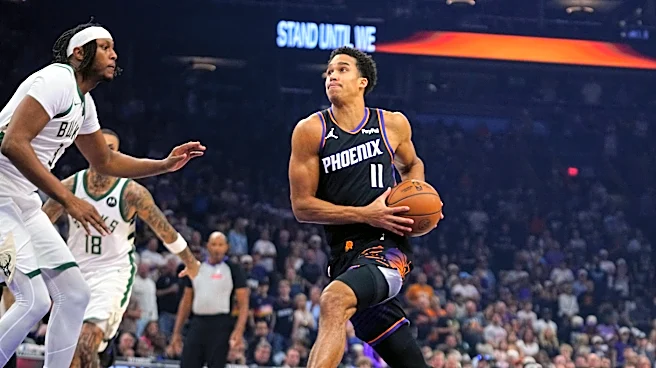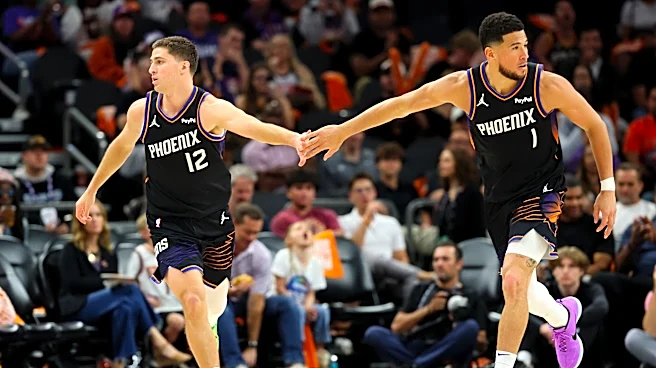



For the Phoenix Suns, roster building has become as much about flexibility as talent. The Bradley Beal trade, followed by his buyout two years later, reinforced how quickly a massive contract can limit both options and leverage. That makes identifying movable deals increasingly important. Phoenix may not have a roster overflowing with trade assets, but it does have a few contracts that could return legitimate value if the front office ever decided to cash them in.
(For the sake of the exercise, any
player on a rookie deal will not be included.)
1. Collin Gillespie
Contract: Gillespie signed a four-year, $48 million contract in June 2026 and will be a free agent after the 2029–30 season.
Despite some struggles at the end of the regular season, Gillespie earned himself the biggest and longest payday of his NBA career this offseason. He averaged 13 points and five assists while shooting 40% from three on seven attempts per game, and his offensive skill set is the type that NBA teams look for when evaluating the guard position. His deal is worth less than the Non-Taxpayer Mid-Level Exception (MLE) and comes in below those of some of the other top backup guards in the league, such as Dennis Schröder and Jrue Holiday (who is set to come off the bench for the Blazers). Gillespie is also significantly younger than many of them.
While he likely wouldn’t net Phoenix a massive haul in exchange for his services, his year-by-year progress, the need for his skill set and his age make his contract the team’s most tradable.
2. Devin Booker
Contract: Booker signed a two-year, $145 million max contract extension in July 2025. He has a player option for the 2029–30 season.
For any piece of media that contains Devin Booker and the word “trade,” it’s important to reiterate the objective of the piece. This is not meant as speculation about Booker’s potential exit from the team; it’s an exercise examining what the Suns would get in return for a potential deal. While much has been made about the value of his deal, which makes him one of the highest-paid players in league history, he remains an All-Star and one of only two players to average at least 25 points per game in each of the last eight seasons. Still scoring at an efficient level, he’s one of the league’s best shot creators, and the Suns went 8–10 without him in the lineup compared to 37–27 when he played.
The only reason Booker isn’t ahead of Gillespie is because of the history of teams dealing stars. Typically, when teams trade multi-time All-Stars, they’re dealt to teams that are already contenders, meaning their potential asset collections might be a tad smaller than those of other teams. They may also need to provide filler and expiring salaries to make deals work when such large contracts are being traded, like the Pacers did when they included Bruce Brown in a deal to acquire Pascal Siakam in 2024 and the Suns did when they included Jae Crowder in their deal to acquire Kevin Durant. It’s rare that a team gets as much as it gives up to acquire a star, and Booker would likely fall into that category because of his large salary.
3. Jordan Goodwin
Contract: Goodwin signed a three-year, $19 million deal with the Suns in June 2026. He has a player option for the 2028–29 season.
Just like Gillespie, Goodwin signed his deal after a career year and received the largest and longest deal of his career. He made improvements in nearly every major statistical category. A tenacious defender who started the one game he played during the team’s playoff run, he can guard multiple positions despite being undersized. With experience playing alongside major stars such as Booker, Durant, Luka Dončić and LeBron James, Goodwin knows how to contribute when the ball is not in his hands, and his improved three-point shooting over the past two seasons has helped him in that regard.
While he wouldn’t net the Suns a player who would be a surefire franchise changer, his deal positions him as someone for whom the team could get solid value if they decided to move him.
What did I get wrong?