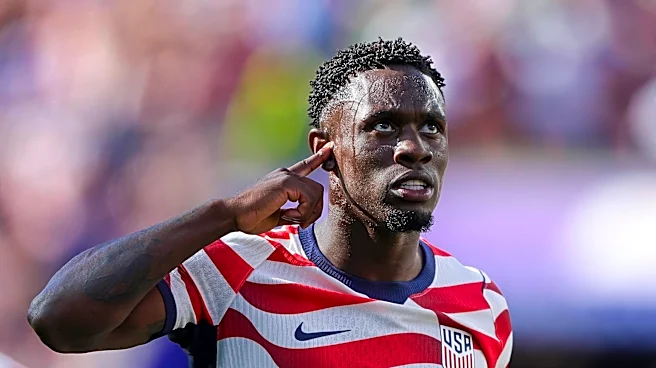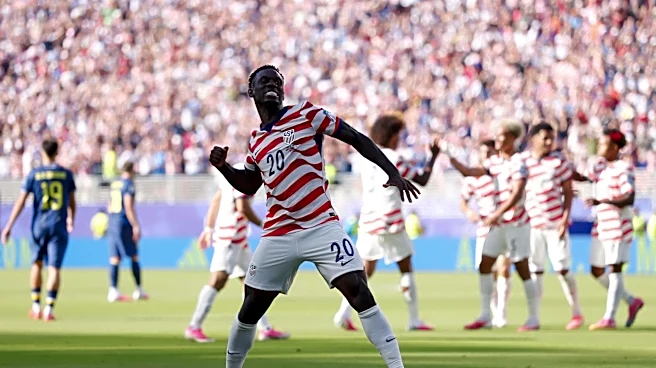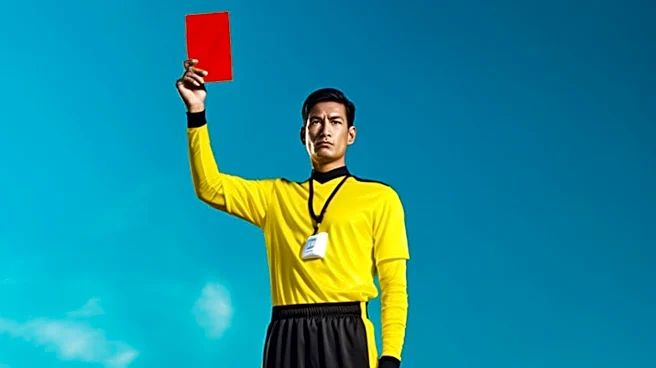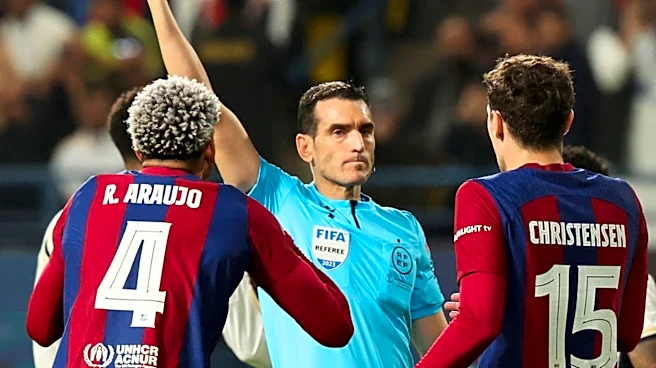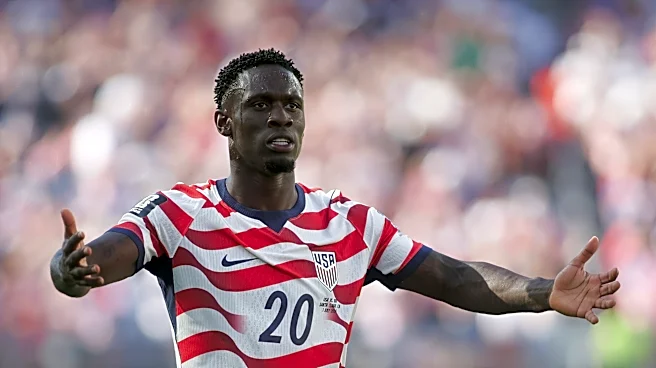




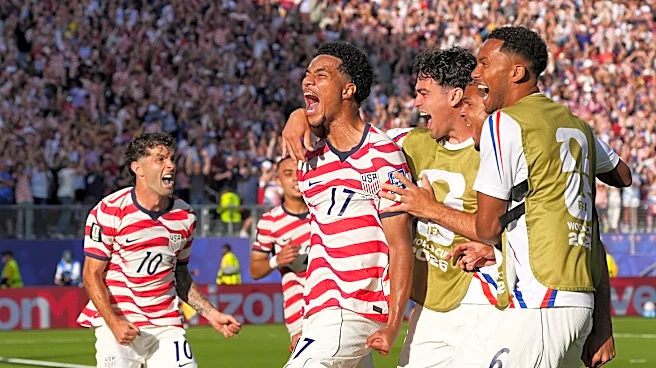


In the United States Men’s National Team’s match against Bosnia Herzegovina on July 1st, Folarin Balogun picked up a red card for a serious foul and was ejected from the game in a decision that was heavily criticized after the match. That red card came with an automatic one-game suspension that had Balogun set to miss the Round of 16 elimination game against Belgium.
However, earlier today, FIFA announced that they were suspending that suspension, clearing the way for the American striker to play
after all. FIFA issued the following statement
“By operation of Article 27 FDC, the implementation of the automatic match suspension for USA player Folarin Balogun is suspended for a probationary period of one (1) year.”
Article 27 of the FIFA Disciplinary Code allows the Disciplinary committee to review suspension decisions and suspend those suspensions in whole or in part. In this case, that one match suspension for Balogub is being held off, allowing him to play in the upcoming match. The suspension of the one-match suspension will last a year. That is essentially a year of probation where Balo will have to avoid committing any serious fouls afterwhich he will be free of the suspension entirely.
This is a major turn of fortune for the player and the USMNT. It had been previously confirmed by FIFA officials that the US Soccer Federation had no way to appeal the red card and suspension, though they could appeal any further disciplinary actions if they had been awarded by the Disciplinary Committee. However, it appears that the Disciplinary Committee acted on their own without an appeal to correct the situation.
This kind of action by the Disciplinary Committee is not unprecedented. Most famously, Cristiano Ronaldo had a 3 game suspension reduced to 2 games so that he could freely participate in the current World Cup. That decision drew scrutiny for favoring a star player. Balogun isn’t in the same category as Ronaldo, but he has been a break out talent at this World Cup and is the leading scorer for one of the hosting nations. Perhaps he got it because of his high profile status?
Alternatively, it might be implicit criticism of the initial red-card decision. It was a particularly significant call. While the result did not change, it did change the match and was set to affect the next round, so the decision carried a lot of weight. And, as it turned out, the circumstances of the call for a serious foul and red card were pretty controversial. The initial call by the center referee, the ref that is supposed to have final say, was no foul. The play happened when a Bosnian player came up behind Balogun and, after the contact, Balogun’s foot inadvertantly came down on the back of the Bosnian player’s leg. The ref initially didn’t call it, suggesting that it was initially judged as incidental contact (albeit a nasty incident) in what is, after all, a contact sport. However the Video Assisted Referee reviewed the incident in slow-motion and free-frames, before calling over the center ref and showing the same, leading to the revised decision for a red card. That is against protocol. The VAR is not supposed to review incidents in slow motion as it strips actions of their contexts. As such, the decision was heavily criticized, not just for being a bad call, but for having bad procedure.
Regardless of how the suspension of the suspension came to be, this appears to be a big win for the USMNT. What do you think? Do you think the US could have beaten Belgium without this news? Let’s talk in the comments.