







This time around, I promised something positive and in behind the team. I think I’ve found it.
How many world-class players does it take to build a great team? It’s a deceptively simple question. It has all the “bits” you would use in a Juve question — “world class players,” “great team” — bits that fundamentally speak to what we think about Juventus as a baseline.
Every Juventus fan has probably asked some version of it over the past couple of years. The answer is, obviously, “more.” But the more I’ve
thought about it, the less convinced I am that this is the right question. I may, in fact, be setting myself up to fail.
After all, when we look back at the great Juventus teams, we’re looking at finished products. We see Gianluigi Buffon lifting trophies. We see Andrea Pirlo controlling matches. We see Leonardo Bonucci, Giorgio Chiellini andd Andrea Barzagli marshaling the defence. We see big names making small work of teams lost to history.
What we don’t see, what we don’t remember, what we don’t credit, are the years before that. The years when some of those players were still establishing themselves. The years when people weren’t entirely sure what Bonucci would become. The years when Juventus lost games and we wondered whether they were truly ready to challenge again.
So, here is my theory based on the two most recent fixtures against Genoa (less said) and then Napoli (how did we do that?). We are the ugly runner. You know the story I am thinking about — a baseball coach gets offered two guys, one who can run to first base fast, beautiful and athletic; one who can run the same thing half a second slower, but they run ugly. The coach picks the ugly runner because he can coach that guy to be faster.
History has a habit of making success look inevitable. It isn’t. Which is why I think we might just be asking the wrong question about this Juventus.
The question isn’t whether they are as good as the teams that won nine consecutive Scudetti. They aren’t. My god, they are not. The real question is whether we’re comparing a team that is still being built to teams that had already been built.
And the more I think about it, the more I’m convinced today’s Juventus should be assessed alongside the Juventus of 2012-13. Why? Because both were trying to discover exactly what they could become. We forget the period before the nine straight titles. The period when some players were still proving themselves. The period when Juventus were still becoming the Old Juventus we remember.
That team had stars, sure. Buffon was already Buffon, and clearly the greatest captain in the history of any sport ever played by mankind. Pirlo was already one of Europe’s finest midfielders of his generation. Chiellini was already developing into an elite defender.
But beyond those obvious truths there were still genuinely unanswered questions. Would Paul Pogba fullfil his massive potential? Could Bonucci become a top-level defender? How high was Arturo Vidal’s ceiling? Could Antonio Conte’s aggressive, demanding football evolve into something sustainable over the long term?
Nobody knew. We watched. Sometimes we lost. Fast forward to today and some of those questions feel familiar. We beat Napoli. We had some good players make moments of magic. But no one would have bet the house on that.
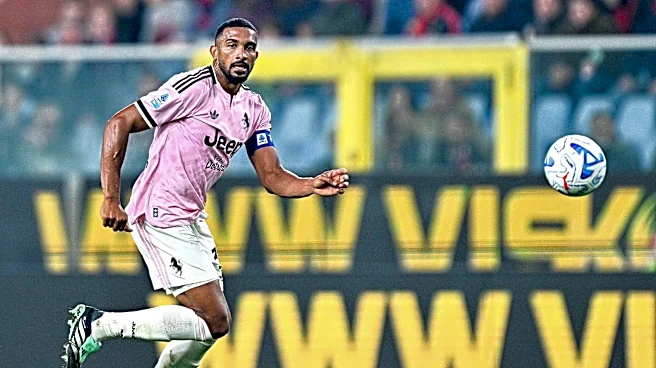
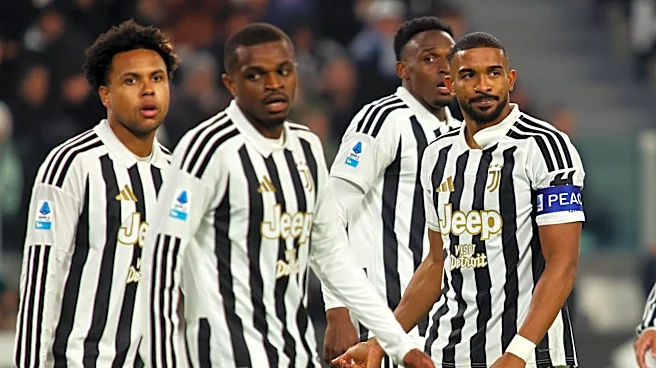
Let’s look at us now. Gleison Bremer is probably the closest thing Juventus currently have to a complete certainty, and even now he still has his moments of struggle post-ACL surgery. His level is established. Everyone knows what he is. After that, however, the conversation becomes less clear. Can Kenan Yildiz become a true global star? Can Khephren Thuram become one of the dominant midfielders in Italy? Can Manuel Locatelli evolve into the kind of leader around whom a successful era is built?
Those aren’t negative questions. In fact, tilt your head to the side, squint a bit, and you know what, they’re exciting questions. They are up and coming questions.
Perhaps we need to stop lamenting that we are not at the level we expect. Perhaps we need to embrace the fact that we are a question, not an answer. We are a team chasing greatness. Dare I say it, can we learn to love the underdog?
Now, a lot of attention has understandably focused on injuries and squad depth — I get that. No need to roll that story out again now. When you’re playing every three or four days, injuries matter. Fatigue matters. Rotation matters. But here’s the kicker. Maybe injuries reveal something deeper than a lack of depth. Maybe they’re revealing which of the club’s possibilities can become certainties. We’re watching the cauldron heat up here folks.
When Yildiz does not play, who becomes the creative focal point? When Locatelli is unavailable, who becomes the organizer? When Bremer is absent, who becomes the keeper of the line? These aren’t tactical questions. They’re questions of character. And right now we are knee deep in character. These guys will come back, and as a result of this time away we will know more about the rest — and some of them will stand up and join them on the ‘must play’ list.
Bremer is the best example. He isn’t simply Juventus’ best defender. He allows Juventus to defend differently. His pace allows the defensive line to operate higher. His ability to recover ground gives midfielders greater freedom to press and take risks. Remove him and the entire structure tends to become more cautious.
The same is true of Locatelli. There may be midfielders in the squad who can cover more ground or play more adventurous passes — OK, there are … But, what Locatelli provides is organization. He dictates tempo. He links phases of play together. He gives Juventus form. His influence is often less obvious than a goal or an assist, but it becomes apparent very quickly when he isn’t there.
And then there is Yildiz. Modern football is increasingly about structure. Pressing triggers are drilled. Passing patterns are rehearsed. Systems are designed to reduce randomness. Players like Yildiz disrupt that. He is one of the few Juventus players capable of producing something that isn’t on the coach’s whiteboard. When he receives the ball, defenders stop following the script and start reacting.
For a long time the debate around Juventus has centred on what the team lacks. Not enough world-class players. Not enough depth. Not enough experience.
There is truth in all of those criticisms. But perhaps they miss a bigger picture. A better picture. Perhaps the more important question is whether we are watching the early formation of the next great Juventus side without fully recognising it. We are auditioning the squad here and the cauldron is burning away our old expectations as well as revealing player contributions.
There have been downs (a loss to Genoa) and now an up (the 2-0 victory over Napoli). One result does not change everything. Football has a habit of punishing anyone who draws grand conclusions from a single afternoon. One win does not offset disaster.
What it can do is offer perspective.
Against one of the better sides in Italy on paper, we produced a disciplined performance and we won — when I think most of us thought we wouldn’t. That matters. Not because Napoli are unbeatable, but because performances like that force us to confront how little certainty there is when judging a team that remains under construction.
For weeks, much of the conversation around Juventus has focused on limitations. The Napoli victory served as a reminder that there is another way of looking at this squad. Nobody was talking about a dynasty in 2013. Nobody was talking about nine consecutive league titles back then. Nobody knew exactly which players would become the defining figures of an era.
The conversations then were remarkably similar to those taking place today. Was the squad good enough? Which players could make the next leap? Was this merely a competitive team, or the beginning of something more significant?
A side capable of producing a performance like the Napoli one while still carrying so many unanswered questions may not be as ‘unrecoverable’ as we sometimes imagine.
One way to look at us is to provide for the possibility that the foundations of a great team may already exist. The stars of the next era may already be here. The leaders of the next era may already be here.
Maybe, years from now, we’ll look back on this period the same way we now look back at 2012-13. Here’s my pitch team: We are not a great team, but we might just be a worthy underdog with a spine of a great team and a dynasty in the making.