

Spring is a time for new beginnings. Flowers bloom. Creatures small and large emerge from their hibernation. Birdsong returns to sunny mornings. Statcast releases new data.
I think that last one is the most beautiful of all.
Baseball Savant just released new data on the Automated Ball-Strike Challenge System for us to peruse. It’s got data on challenges at the MLB level in Spring Training, but that remains a novelty until we get enough of a sample size to start drawing some conclusions. Fortunately,
though, we need not put ABS analysis on the back burner. We’ve got a whole season’s worth of data to explore. Just not at the MLB level.
ABS was in play in AAA last season, and so we’ve got all of 2025’s challenges to play with. We also have a leaderboard, which we can sort by net overturns more than expected. Long story short, that takes a model that estimates how often you’d expect challenges to be made based on the location pitches are thrown and the situation they’re thrown in , and how often you’d expect those challenges to result in overturns, then compares a player’s actual ABS results against the expectations.
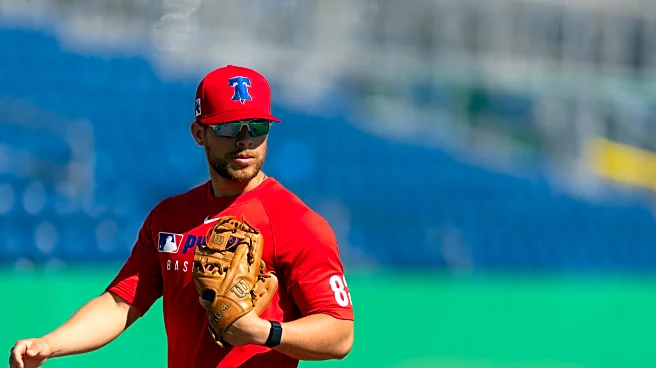
When we take a look at the leaderboard, we see a Phillies P next to the second-best user of ABS by net overturns above expected. The name next to that P is Rafael Lantigua, a second baseman who spent last season with the Lehigh Valley IronPigs. He’s no longer with the Phillies, having rejoined the Blue Jays, with whom he got his start, following his yearlong sojourn to Allentown. But while he’s no longer on the path to Citizens Bank Park, his example may have something to teach those who are.
Here’s Lantigua’s challenges in 2025. Teal is a successful overturn, and grey is an upheld call.

There’s a few things to notice. Firstly, Lantigua preferred to challenge on the top or bottom of the zone, rather than the sides. And he was much more successful challenging pitches above the zone, where he didn’t make a single incorrect challenge, than below it. That’s not terribly surprising; it stands to reason that players will have particular regions where they’re more comfortable challenging, and regions where they’re particularly good or particularly poor at judging close calls.
What does surprise is how far outside the zone many of those successful overturns are. When I saw that Lantigua was near the top of the net overturns above expected leaderboard, I assumed that meant he’d be elite at recognizing pitches that just barely miss the strike zone. And we do see a few overturns like that: note the lower two overturns on the left side (the inside of the plate for him). But most of those overturns look well out of the zone. Granted, most of those “well out of the zone” pitches were under two and a half inches outside of it. It looks easy to recognize on the chart, but it’s brutally difficult to judge those pitches in person. Still, professional ballplayers are exceptionally good at that exceptionally difficult task. So how did Lantigua accrue so many more overturns than expected, if he wasn’t challenging particularly close calls?
By being bold. Or impatient. Depending on how you want to look at it.
Statcast helpfully provides the challenge probability for each pitch that actually was challenged. And when we look at that, we see that some of Lantigua’s overturns that look like pretty easy decisions to challenge based solely on location were actually deemed quite unlikely to be challenged.
Take a look at this overturn: At 2.4 inches outside the zone, the pitch was further away from being a true strike than any other pitch that Lantigua got overturned. But at a challenge probability of just 2%, it was also the least likely challenge that Lantigua made. We’ll call this Challenge A.

Contrast with this, which we’ll call Challenge B:

That second pitch was closer to being a true strike than the first one. But it had a 38% challenge probability. Why? The model that produces the challenge probability makes its assessment based not only on the location of the pitch, but also the game situation and the number of challenges left. Challenge A was a pretty easy decision if we’re considering only the location of the pitch. But it was made on an 0-0 count, in the first inning of a game. It was not a terribly important situation in either the context of the at-bat or the larger context of the game, and the risk of losing a challenge has to be weighed accordingly. Challenge B wasn’t as obvious as A by location, but with a 1-1 count in the ninth inning, it was a much more important situation and a much more likely challenge.
Challenge A was an outlier, as the least likely challenge Lantigua made all year. He only made one other challenge in the first inning. But he did make quite a few other challenges on the first pitch of an at-bat or when ahead in the count. 11 (just over a third) of Lantigua’s challenges were assigned a sub-10% challenge probability: 6 of those 11 came on 0-0 counts, and 10 of the 11 came with no strikes at all. But 7 of the 11 became overturns.
By contrast, Bryan Torres of the Memphis Redbirds, who ranked #1 by net overturns above expected, only made three challenges with a probability below 10%, and 2 of them resulted in the original call being confirmed. Jamie Westbrook, of the Durham Bulls, made 5, with 3 staying as originally called. Lantigua wasn’t unusually daring about his challenge decisions in terms of pitch location, but he was bold in terms of game situation. And the result was that he was better than all but one player in AAA at outdoing expectations and getting calls overturned.
That presents an interesting example for teams to ponder. If you start making challenges in low-leverage situations, you’re risking losing your ability to challenge later on. But if the pitch looks like a pretty easy overturn, you might be leaving a free ball on the table if you’re saving those challenges for a rainy day. There’s a balance to be found there, and you can be certain that the legion of data scientists and strategists employed in our fair sport are already working towards finding it. Perhaps Lantigua will point the way.