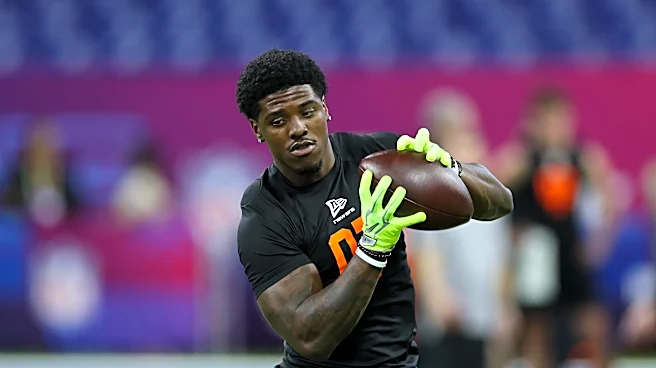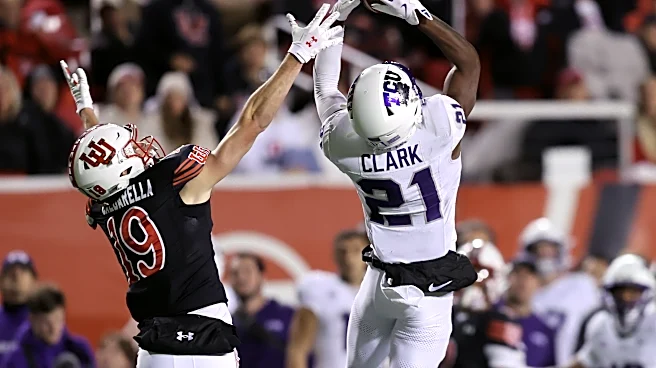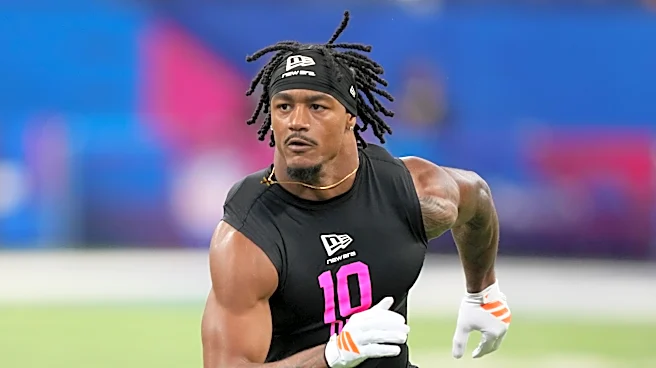





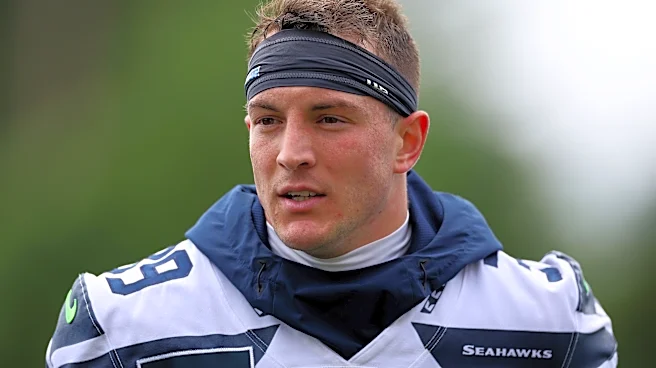
Andre Fuller immediately joins the long lineage of lengthy developmental cornerbacks the Seattle Seahawks have historically targeted, particularly when betting on traits over polish. Fuller may not have entered the process with the same level of buzz as higher-profile prospects, but the physical profile, the aggressive play style, and the comfort level in press coverage make it easy to understand why Seattle believed value had slipped far longer than expected.
He looks exactly like the kind of defensive
back that has traditionally survived — and eventually thrived — in this organization: competitive, physical, comfortable playing through contact, and versatile enough to line up in multiple spots while the finer technical details continue developing.
Is he a project? Absolutely.
But he is also arriving with a toolkit that has historically translated extremely well inside Seattle’s defensive ecosystem.
Who is Andre Fuller?
Fuller’s road to the NFL barely resembles the traditional path of a premium prospect.
Coming out of Seminole Ridge Community High School in Florida, he was essentially invisible on the national recruiting scene. No stars. No major offers. Virtually no serious NFL expectations at the time. Arkansas–Pine Bluff Golden Lions ultimately became his entry point into college football.
And honestly, you can see that background all over his tape.
Fuller plays like someone who has had to earn every opportunity at every stage of his career. There is urgency to the way he competes snap after snap. His tape rarely looks like a player relying purely on superior athletic ability to survive reps.
During his two seasons at Arkansas-Pine Bluff, the flashes with the ball in the air started showing up. He finished 2021 with three interceptions and 14 pass breakups, showing encouraging instincts and ball disruption skills even within a smaller program environment. But the transfer to Toledo completely changed the trajectory of his career.
Initially, Fuller looked stuck in that gray area between useful athlete and fringe NFL prospect. Toledo used him mostly as a depth piece and rotational safety throughout 2022 and 2023. The true breakout did not arrive until 2025, after he lost the entire 2024 season recovering from a significant sports hernia that required surgery.
That context matters when evaluating the tape.
Fuller essentially enters the NFL with only one full season as an established FBS starter. His rise into legitimate draftable territory happened fast. The 2025 film still shows a player learning some of the finer nuances of the position, but it also shows someone clearly comfortable competing in isolated coverage situations. The season was strong enough to earn First-Team All-MAC honors and firmly place him on scouts’ radar.
Breaking down the pick
According to internal reports, Seattle reportedly carried a fifth-round grade on Fuller before eventually selecting him in the seventh. That alone explains part of the decision. But the most interesting part is not necessarily the value itself.
It is the fit.
Mike Macdonald’s defense asks defensive backs to survive in multiple post-snap structures. Corners are expected to press releases at the line, rotate into deeper zone responsibilities, operate inside match concepts, tackle consistently, and handle positional flexibility. Fuller checks several of those boxes already, particularly when factoring in his slot experience and previous safety background.
He is not refined enough yet to execute all of those responsibilities consistently at an NFL level. But that was probably never the central point of the selection. Seattle likely viewed Fuller as a developmental mold-able athlete with multiple pathways toward roster viability. That matters tremendously for late-round defensive backs.
A highly physical play style
Not every tall corner knows how to use length effectively. Fuller does.
Especially in press coverage, his game comes alive quickly. He stays patient at the line of scrimmage and rarely panics against more advanced release packages. That stands out because many long corners immediately “open the gate” too early when worried about vertical speed.
Fuller usually waits. His feet stay relatively controlled through the initial release phase, allowing him to react instead of blindly guessing. When the punch lands correctly, he can immediately displace receivers and disrupt the route stem before timing fully develops. His length creates instant discomfort inside the separation window.
That shows up most clearly against vertical routes and fades. When Fuller stays in phase, he becomes extremely competitive at the catch point. His timing attacking receiver hands may honestly be the best trait on his tape. He understands how to invade the catch window physically without necessarily locating the football perfectly every time. That helps compensate for the lack of elite long speed.
Some corners play the football. Fuller frequently plays the receiver’s hands instead. And it works. His pass breakup production far outweighs his interception totals largely because he prefers physically destroying the catch window rather than constantly gambling for takeaways.
His spatial awareness inside Cover 2 structures and deeper zone concepts also looks fairly natural. He recognizes route concepts entering his area and consistently uses his frame to constrict passing lanes. That is probably part of the reason so many evaluators view him as a cleaner fit inside more zone-heavy defensive systems.
Another encouraging aspect is his willingness against the run. Fuller attacks downhill aggressively, closes space quickly, and generally arrives under control in open-field tackling situations. His 10.9% missed tackle rate in 2025 is respectable considering both his snap volume and perimeter responsibilities.
More importantly, there is actual technical control behind the physicality. He understands how to reduce space, shorten stride length, and maintain leverage before contact instead of simply launching himself recklessly into collisions.
Toledo also used him creatively as a pressure piece depending on receiver alignment and offensive structure. There were snaps where Fuller blitzed off the edge either to pressure the quarterback directly or immediately constrict space against outside runs. That versatility only expands his potential pathways onto the field, whether outside, in the slot, or potentially even in hybrid safety packages.
Limitations and concerns
The biggest factor limiting Fuller’s ceiling is probably straightforward: Recovery speed.
His 4.49 forty time is acceptable considering the size profile, but the tape suggests an athlete who is functional vertically rather than truly explosive. When he loses early leverage or misses his punch at the line, the recovery acceleration is not consistently strong enough to erase mistakes against faster receivers.
There are reps where receivers manage to stack him relatively early because Fuller takes too long reorganizing his hips and re-accelerating downfield. Without elite recovery burst, losing positioning early becomes significantly more dangerous.
The press technique itself also remains inconsistent. Even with the patience in his footwork, the hand placement can be erratic. The punch occasionally arrives late or outside the frame, allowing cleaner releases than he can afford to give up. Once that happens, the overall fluidity becomes more problematic against sharper route runners.
That issue becomes especially visible against more advanced route trees. Fuller can carry vertical stems reasonably well, but he struggles more against receivers capable of manipulating leverage, tempo, and horizontal separation. His hips do not always look comfortable handling sudden transitions or aggressive breaks at the top of routes.
Age also becomes part of the conversation.
Entering the league at 24 years old, Fuller is probably closer to his physical ceiling than younger developmental prospects drafted in the same range. And despite the age, he still essentially arrives with only one full season as a starter in a FBS level.
Final thoughts
The competition in Seattle’s cornerback room is hardly untouchable.
Noah Igbinoghene still carries the “former first-round bust” label, while Nehemiah Pritchett has yet to establish real consistency in Seattle’s secondary. After Josh Jobe, Devon Witherspoon, and Julian Neal, there are legitimate opportunities available for two or three roster spots in the defensive back rotation.
The most realistic early-career path for Fuller almost certainly runs directly through special teams.
Historically, that is exactly how many Seahawks defensive backs earned their initial roster foothold. Fuller’s nearly 400 special teams snaps likely carried enormous internal value for Seattle’s coaching staff. Late-round defensive backs need to survive first on kick coverage units, punt teams, and hybrid assignments before defensive opportunities fully emerge.
Fuller clearly offers that.
The combination of size, physicality, tackling willingness, and alignment versatility gives him a realistic chance to contribute immediately on special teams while continuing to refine the technical aspects of cornerback play.
And honestly, that versatility may already place him ahead of certain competitors on the roster. Special teams value could push him ahead of Igbinoghene. Positional flexibility could push him ahead of Pritchett.
There is a path here.