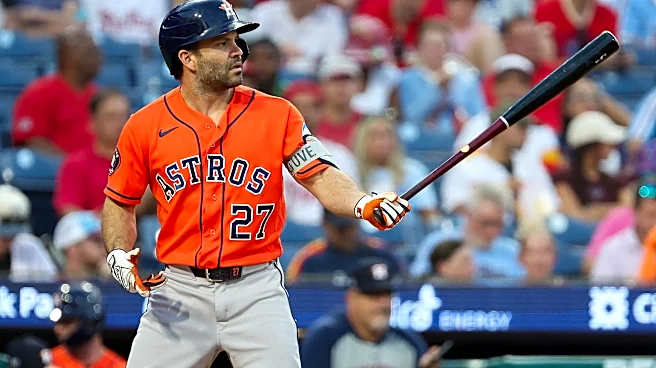

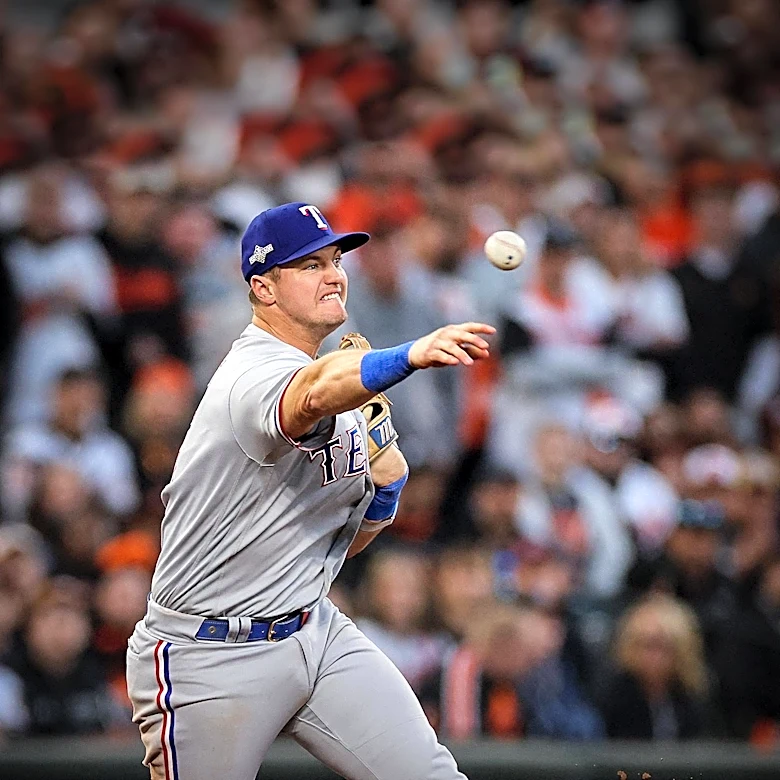

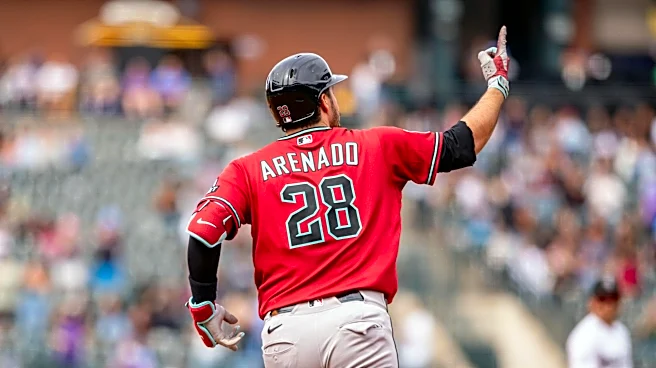

Last time, we took a look at the rank and file Hall of Famers at the second base position.We do this to provide a baseline for what we are looking for in current candidates. Obviously, there are a handful of guys with similar scores that have long since retired and are waiting their turn. We can deal with them at another time and in another place. The question before us is whether Jose Altuve is already in this group or if he has more work to do.
This will eventually be a six part series. We will do
the same at third base for Alex Bregman and at shortstop for Carlos Correa. Essentially we are looking at these players in three different dimensions. We are starting with the index and WAR. I personally love the index because I invented it. Of course, the formulas has changed over the years but the concept is the same. Still, I would never dream of relying on only the index. So, we will take a look at some other offensive numbers, defensive numbers, awards voting, and playoff statistics. We will also look the conventional counting numbers as well.
The median index for second basemen in the Hall of Fame ends up being somewhere between 220 and 230 depending on whether you include all of the outliers. The first rule is that players have to play ten seasons. I might call this the Dustin Pedroia rule. He looked like a lock after seven seasons but suddenly couldn’t remain healthy. It happens. Let’s take a look at the three prominent second basemen that meet this criteria.
Hall of Fame Index
We include both BWAR and FWAR because they treat defense differently. It is about getting a total overview of how the sabermetric community views a player. Some mathematicians will have a problem with it, but the index was never meant to rank order players. It was meant to find similarities and compare similar players in terms of value. It is similar to JAWS from Jay Jaffe and we developed our formulas at around the same time. The major differences include the ten year peak (he had a seven year peak) and the inclusion of FWAR in the formula. Obviously, I think this is more comprehensive.
Altuve is there amongst the group as he stands right now. Based purely on the index, he could retire today and likely have the credentials to get in. Obviously, every situation is complicated and Altuve’s is cimplicated on both ends by the sign stealing scandal, but also his postseason heroics. That is why we include postseason numbers as one of the tests. It all gets baked into the final casserole in the end.
Semien and Marte still need to do some work to get over the top. Marte probably still has two or three decent seasons left in him if he gets his head on straight. Based on the last couple of seasons, Semien might be done as a productive second baseman, but he can still add to his counting numbers. The peak value numbers say a lot, but we can also look at peak value another way.
WAR Seasons
All three players are a bit short here when we look at the Hall of Fame. Fortunately for Semien and Altuve they are only one and two seasons short. I seriously doubt Altuve has another three WAR season in him. Semien may be able to scrap another season out if he is lucky. Marte is the one that has some serious work to do, but that the key to the index. Let’s say he produces another ten WAR across three seasons. That would end up being an additional 20 wins on the career value side and likely another 15 WAR on the peak value side. An extra 35 wins really jumps him up the leaderboard.
This is where we have to get into the mind of the voter. There are two ways to look at these numbers. This becomes particularly important when looking at two players not in the Hall of Fame. Bobby Grich had fewer total seasons above, but most of his seasons were 5+ WAR seasons. Lou Whitaker had numerous three plus WAR seasons, but did not have as many 5+ WAR seasons. So, you do you want a player that is consistently good or someone with higher end performance?
Five win seasons don’t grow on trees and in most seasons that qualifies you as a top ten player in the league. Marte could potentially add one or two more, but it becomes less likely with each passing season, so Altuve has the advantage above. This is especially true because these are BWAR numbers and we know that FWAR liked him more overall.
WAR per 150 games
It’s a crude description, but the best I can come up with push and pull factors. Essentially, with each passing season Altuve adds to his counting numbers, but he will also see these numbers drop. That ultimately makes him very similar to Craig Biggio. He has already met the median number of games played for a Hall of Fame second baseman and he has three more seasons on his contract. If he plays in another 400 games then these numbers likely go down. Yet, he could add another 400 or so hits and get closer to 3000 career hits. It’s the ultimate trade off.
Semien will need another three seasons to get to Altuve’s level and his per 150 WAR numbers will almost certainly drop. It’s the same trade off Altuve is experiencing. Marte still has a way to go before we consider him a serious candidate for Cooperstown. Yet, if he adds another two or three seasons at or near prime then we would have to consider him as a serious candidate. I do not consider numbers not yet earned though.
Final thoughts
These are not the absolute final thoughts as we will have another battery of tests to go through. The index is never the final word on these things. It is more meant as a way to refine the debate. We will look at the Hall of Fame norms for offensive numbers, defensive numbers, awards voting, and playoff numbers. We do that to get a handle of what we should expect from our current players. Stay tuned for that on Friday.