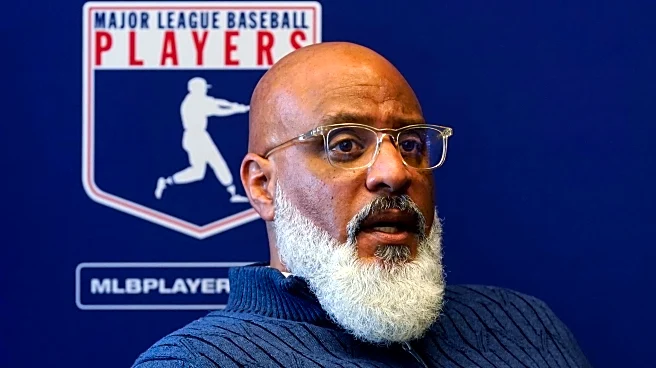

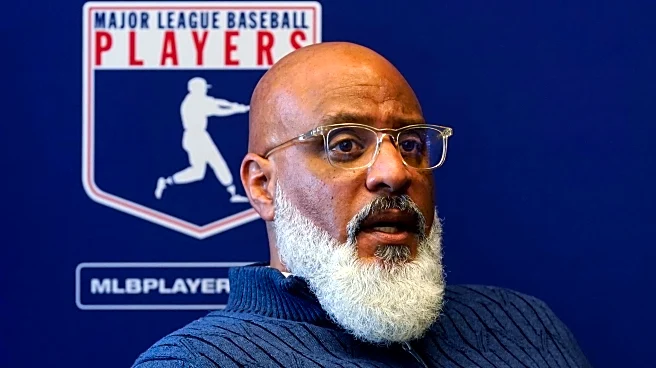
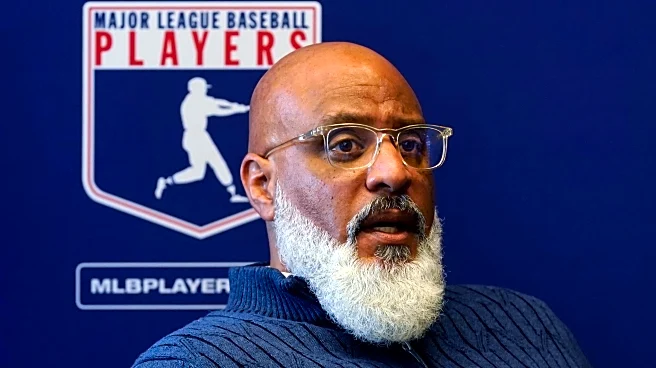
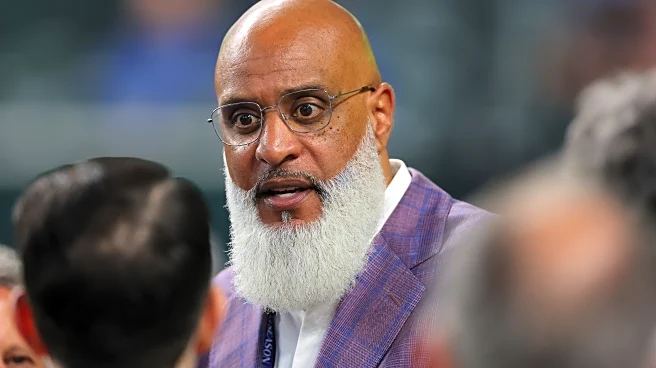
After Tony Clark was forced to resign as executive director of the Major League Baseball Players Association due to federal investigations and scandal, the question posed to players was: Who should take over on an interim basis?
Before Clark was named head of the MLBPA in 2013, the union had always been led by a labor lawyer — first Marvin Miller, followed by Don Fehr, then Michael Weiner before the latter’s untimely passing just before Clark was named.
It was felt at the time Clark was named that
having a player in charge would bring the union’s leadership closer to players. That backfired when Clark was widely blamed for an inferior collective-bargaining agreement negotiated for the 2017-21 term. Thus the union’s deputy executive director, Bruce Meyer, was put in charge of negotiations for the most recent CBA, which did result in some small gains for players — after an owners’ lockout that threatened to interrupt the 2022 season.
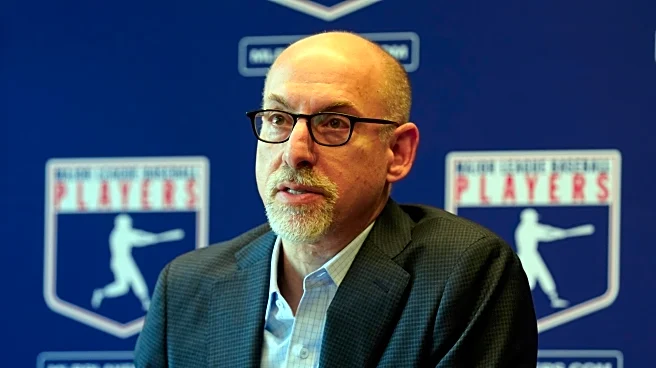
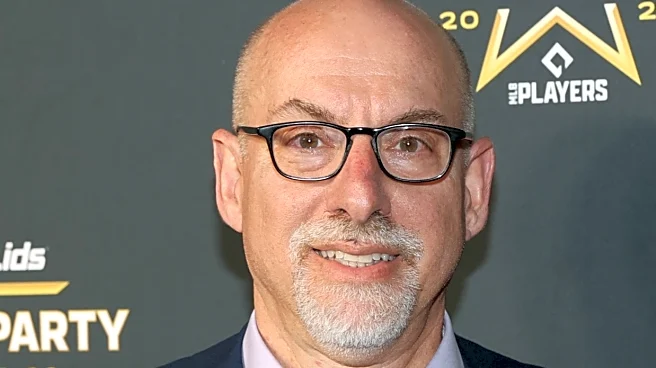
The executive committee of the MLBPA, comprised of eight current players, unanimously elected Meyer as interim executive director Wednesday, via Ken Rosenthal at The Athletic:
Baltimore Orioles right-hander Chris Bassitt, a member of the union’s eight-player subcommittee, lauded Meyer and union general counsel Matt Nussbaum for their support during the federal investigation into Clark’s handling of union finances. The union elevated Nussbaum in conjunction with Meyer, naming him interim deputy executive director.
“One of the beautiful things about this entire process and this investigation is that we found out who really had our backs through this whole thing,” Bassitt said. “At the forefront of having our backs through this whole process and trying to do the right thing was Bruce and Matt. I don’t want to speak for the investigation because it’s not over with. But they were always trying to do the right thing every step of the way.”
There had been at one time some bad blood between Meyer and the MLBPA, described here by Chad Jennings and Andy McCullough at The Athletic:
Yet a sense of distrust among some players led to an uprising against Meyer and Clark in 2024 that they eventually quelled. Along the way, people both inside and outside the union have labeled Meyer as a puppet of powerful agent Scott Boras, a charge both Boras and Meyer have vigorously denied.
Meyer’s champions call him a bulldog. His detractors call him a zealot. Which may make him ideal for the union as it prepares for what could be a lengthy, contentious labor stoppage this coming winter. Or it could make the union uniquely vulnerable as the 30 owners circle the wagons in pursuit of a salary cap. At a time when the owners have leveraged public outrage about the spending of the Los Angeles Dodgers into a push for their longstanding goal of a cap, the union was hastily calling team meetings and conference calls to figure out a way forward.
Meyer once worked for Don Fehr at the NHL Players Association, where Fehr went after leaving the MLBPA, and came to baseball from there. A couple of players gave Meyer praise after he was named interim executive director:
“I don’t think it has any impact on negotiating,” said Detroit Tigers ace Tarik Skubal, a member of the executive board. “Bruce has been our lead negotiator. He’s done it in the past. Although Tony has been the face of the PA in terms of negotiating, I’m still as confident as ever in Bruce and everyone else that we’ve got behind him.”
Added Houston Astros pitcher Lance McCullers, a former member of the MLBPA board, “My confidence in Bruce is extremely high. I think he’s fabulous at his job. He has a great understanding of how to help the players navigate these types of negotiations. He’s proven that over his career.”
To me, this is all positive news for the MLBPA. They have made their best agreements when labor lawyers who know how to negotiate with ownership head the union. The naming of Clark as executive director appears to have been a major misstep, which now is likely corrected. Here’s what Meyer said about owners wanting a salary cap:
“The salary cap is bad for players at all levels, because it converts the system into a zero-sum game, which is to say a system where every time a player gets paid a dollar, that dollar has to come from another player’s pocket,” Meyer said recently. “The middle-class players get squeezed because they pay the stars, and everyone else gets basically whatever is left.”
Here’s how Ken Rosenthal views Meyer’s role going forward:
The expiration of the CBA is nearly 10 months away. The true test of the players’ strength will come after the expected lockout begins. Meyer will be confronted with a mighty task, holding together a union that includes young players and old, highly paid superstars and minimum salaried rookies, as well as a diverse membership that, last Opening Day, featured players from 18 different countries and territories.
Some people don’t like Meyer. Some people didn’t like Marvin Miller, either. In the end, an executive director need be popular only among the people who work for him, and the players he represents. Such is the challenge Meyer faces. Like a player who elevates his game in the biggest moments, he must find another gear.
This is exactly correct, in my view. Meyer’s job now is not just negotiating for players, but leading the entire union, presumably with one voice. If he can do that, he just might wind up taking that “interim” tag off his title.
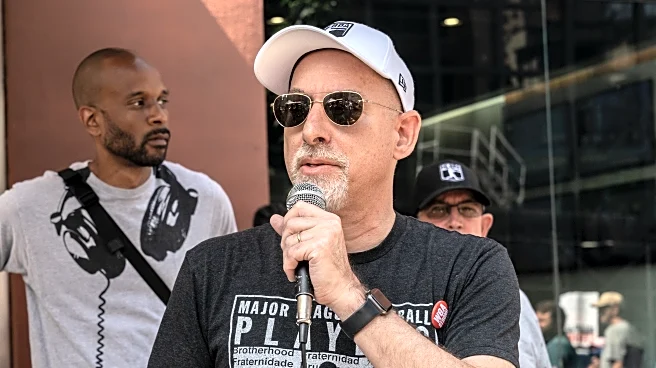
One last note regarding Meyer: He visited Cubs camp Wednesday, per Maddie Lee in the Sun-Times, and had this to say about the upcoming negotiations:
“I think a lockout is all but guaranteed at the end of the agreement,” Bruce Meyer said outside the Cubs’ spring-training facilities Wednesday afternoon, before he was unanimously elected interim executive director by the MLBPA executive board. “The league has pretty much said that. Their strategy in bargaining has always been to put as much pressure on the players as they can to try and create divisions and cracks among our membership. It’s never worked. I don’t think it ever will work.”
The last time the owners and players sat down at a bargaining table to hammer out a CBA, the sport went through a 99-day lockout before the sides ratified an agreement.
“We are ready, willing and able to negotiate whenever and wherever they are ready to do that,” Meyer said. “And if we can get an early deal and avoid the negative effects of a lockout — which is their decision — coming off a great season of baseball, great playoffs — if we can get a fair deal that avoids that, we will make every effort to do that.”
As always, we await developments.