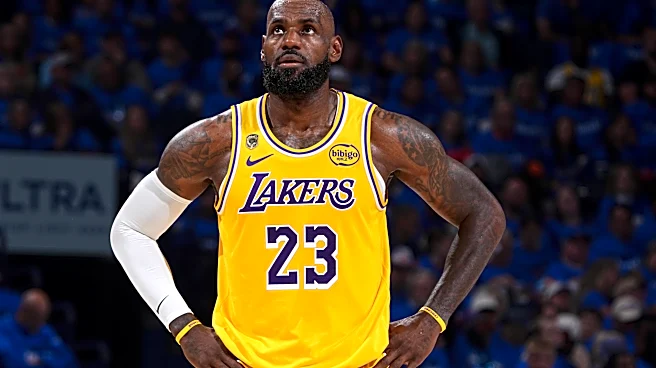





In case you hadn’t heard, LeBron James is set to become an unrestricted free agent in less than a month.
While the Lakers have repeatedly said that they’d welcome him back with open arms, there’s no guarantee that he’s in LA next year. Or on the Lakers, at least.
If this turns out to be LeBron’s final year in the NBA, he might want to conduct his farewell tour elsewhere. It depends on how serious he is about contending for a championship next year. (There’s a clear choice for him if that’s his top
priority.)
Money will also be a major determining factor. Only a handful of teams can offer him anywhere close to a max contract, and teams over the first apron can’t acquire players via sign-and-trade. That will limit his realistic free-agent options outside L.A.
With that in mind, let’s break down how he could widen his potential landing spots at each step down the salary ladder, using spending-power projections from Spotrac’s Keith Smith as our guide.
Max contract
Options: Lakers, Bulls, Nets
As of now, only three teams are projected to have anywhere near enough cap space to offer LeBron a max contract in free agency: the Lakers, Chicago Bulls and Brooklyn Nets.
LeBron could earn up to $57.75 million in 2026-27 if the salary cap lands at $165 million, although he isn’t likely to find any team willing to shell out that kind of money for him, not even the Lakers.
The Bulls and Nets are in the early stages of a rebuild, so they likely wouldn’t hold much appeal to a 41-year-old James who’s firmly in win-now territory. If James isn’t willing to take a massive pay cut from the $52.6 million that he earned this past season, re-signing with the Lakers would be his best bet… provided that they’re open to paying him that much.
Below-max contract
Options: Pistons, Hawks
Both the Pistons and Hawks can operate as cap-space teams this offseason, although neither is necessarily likely to.
The Pistons could have nearly $27 million in cap space, but that would require renouncing their free-agent rights to Jalen Duren, Tobias Harris and Kevin Huerter, among others. Unless Duren’s miserable playoff run scares them off from re-signing him (unlikely), they figure to operate as an over-the-cap team, per Hunter Patterson of The Athletic.
The Hawks are in a similar boat. They could operate as a cap-space team, but that would mean declining their $24.3 million team option on Jonathan Kuminga and renouncing their rights to both him and CJ McCollum. Instead, they likewise figure to operate as an over-the-cap team, which would likely limit them to the $15 million non-taxpayer mid-level exception.
Non-taxpayer MLE
Options: Hornets, Mavericks, Clippers, Grizzlies, Bucks, Pelicans, Trail Blazers, Spurs, Jazz, Wizards
Most of these teams are in some stage of rebuilding, although the Utah Jazz and Washington Wizards are both poised to take a major leap forward. The Jazz acquired Jaren Jackson Jr. at the trade deadline and landed the No. 2 overall pick in this year’s draft, while the Wizards traded for both Trae Young and Anthony Davis ahead of the deadline and landed the No. 1 overall pick.
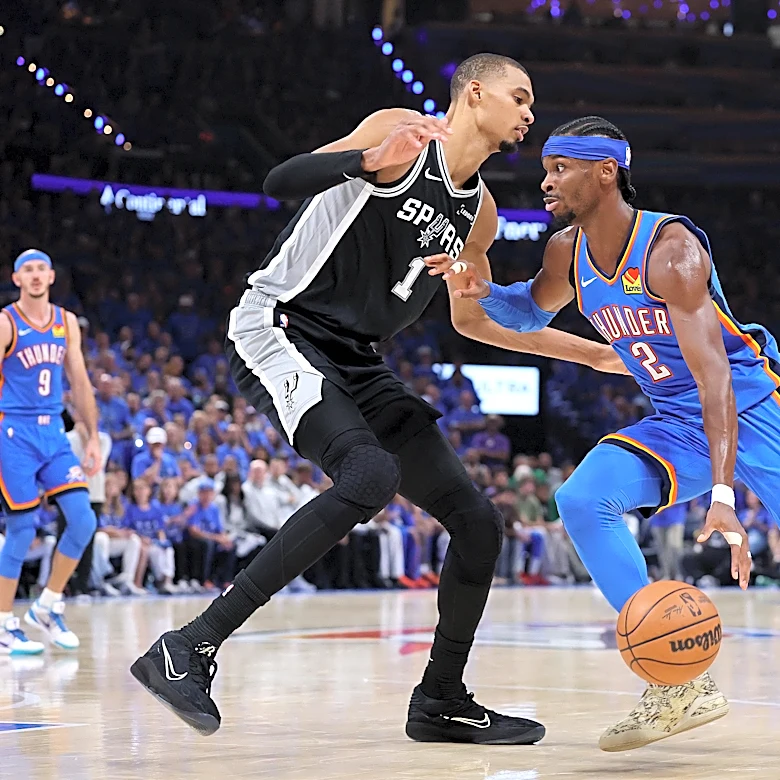
Would LeBron want to team back up with Davis and mentor AJ Dybantsa, Darryn Peterson or Cameron Boozer in the nation’s capital? Might he think the Jazz have the antidote to Victor Wembanyama and the San Antonio Spurs with their trio of 7-footers in JJJ, Lauri Markkanen and Walker Kessler (provided they re-sign him in restricted free agency)?
But why try to beat Wemby when he could simply join him instead?
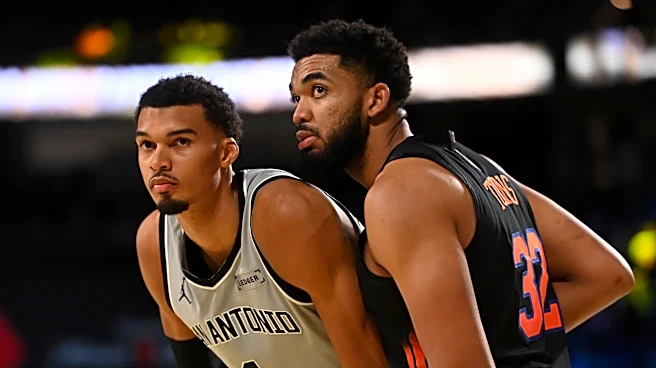
The Spurs still have Wemby, Stephon Castle and Dylan Harper on rookie-scale contracts next year, which gives them far more flexibility than a typical Finals team boasts. The Thunder are still lurking as a real threat to them — James heading to San Antonio wouldn’t quite be on the same level as Kevin Durant joining the Golden State Warriors in 2016 — but the Spurs would be clear championship favorites nonetheless.
Room MLE
Options: Lakers, Bulls, Nets, Hawks (?), Pistons (?)
Any team that operates under the cap this offseason will also have the $9.4 million room mid-level exception at its disposal. The Lakers, Bulls and Nets are all but guaranteed to have it, while the Hawks and Pistons could either have the room MLE or one of the other MLEs depending on what else they do in free agency.
It’s hard to imagine LeBron would be willing to settle for a $9.4 million salary, though, especially if these teams also have cap space to spend on him. The non-taxpayer MLE is likely his floor unless he’s looking to maximize his championship chances by taking a fraction of his actual on-court worth.
Taxpayer MLE
Options: Celtics, Heat, 76ers, Suns, Raptors, Warriors, Rockets, Timberwolves, Pacers, Kings
Some of these teams might have access to the full non-taxpayer MLE depending on what else they do this offseason, although using it would hard-cap them at the $209 million first apron. Spending the smaller $6.1 million taxpayer MLE would hard-cap them at the second apron.
If LeBron truly doesn’t care about money — after all, the man is a billionaire — being willing to take the taxpayer MLE would expand his free-agent options.
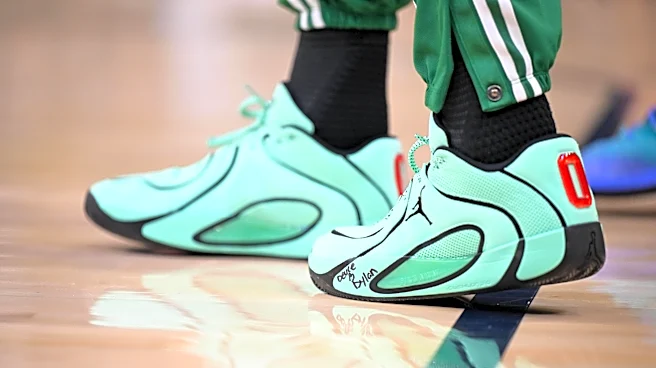
Might he want to join Jayson Tatum, Jaylen Brown and Derrick White in Boston? Could he form a Klutch Sports superteam in Philly with Tyrese Maxey? Would he want a Team USA reunion with Anthony Edwards in Minnesota or Kevin Durant in Houston? Or would he consider joining Stephen Curry, Jimmy Butler and Draymond Green in Golden State?
But if he’s willing to settle for $6.1 million…
Minimum deal
Options: Any team
A veteran-minimum contract for someone with 10-plus years of NBA experience is projected to be worth nearly $3.9 million in 2026-27. (If it’s a one-year deal, it’d only count as $2.45 million on a team’s books.) That’s not too far off from the taxpayer MLE, particularly for someone as wealthy as LeBron.
If he’s willing to take a minimum deal, he can sign with any team in the NBA, even those over the second apron. That’s his cleanest path back to Cleveland or his chance to play for the New York Knicks. He could also opt to team with Nikola Jokić and Jamal Murray in Denver if he went that route.
If LeBron is willing to take a minimum deal, he’d effectively under cut everything that NBA Commissioner Adam Silver is trying to do to increase parity throughout the league.
This is by far the funniest possible outcome.
Sign-and-trades
Options: Any team below the first apron
If LeBron wants more than the non-taxpayer MLE but wants to land on a team other than the Lakers, he could always pursue a sign-and-trade.
Teams over the first apron cannot acquire players via sign-and-trade, so that would still limit his options to the teams with the non-tax MLE at their disposal. This would also allow the Lakers to recoup something for LeBron rather than losing him for nothing in free agency.
The Cavs would have a ton of work to do to get under the first apron, but would the Lakers be interested in taking back Jarrett Allen? Would Keldon Johnson or Luke Kornet appeal to them? What about Daniel Gafford or Dereck Lively II?
A sign-and-trade might be the Lakers’ best-case scenario. They can only hope that LeBron isn’t willing to settle for less than $20 million, which would force other teams to find creative ways to pony up.
Follow Bryan on Bluesky.