
Even before trading MacKenzie Gore to the Texas Rangers in exchange for 5 prospects, the Nationals’ rotation was looking very subpar entering 2026. Following Gore’s departure, the unit now projects to be 29th
in fWAR this season, according to Fangraphs, finishing ahead of only the Colorado Rockies, not great company when talking about pitching. Foster Griffin and Cade Cavalli project to lead the rotation, with fWARs just under 2 and ERAs just above 4, but outside of those two, the rotation isn’t looking pretty, with Brad Lord projected around a 4.50 ERA, and Jake Irvin and Josiah Gray with projected ERAs near 5.
The Nats have been mentioned in the starting pitching market a few times, but never tied to any names. It is expected that they won’t want to drop a large sum of money on a pitcher, ruling out top remaining arms such as Framber Valdez and Zac Gallen, but that they would bring in a name notable enough to lock into a rotation spot over one of Jake Irvin, Josiah Gray, or Brad Lord. Let’s take a look at a few of the remaining starting pitchers on the free agent market and find one or two who would best fit in the Nats rotation in 2026.
RHP Lucas Giolito
The best available free-agent starting pitcher in the Nationals’ price range is likely Lucas Giolito, the former Nats top prospect who was shipped to the White Sox for Adam Eaton before the 2017 season. After stops with 4 other clubs, including 3 teams in 2023, Giolito now hits the open market, following a 2025 campaign where he posted a 3.41 ERA and 2 fWAR in 145 innings pitched.
While Giolito was the most productive of any free agent arm in the Nats’ price range, there is a few reasons I would be hesitant to pay him. For starters, while the surface-level numbers looked strong for Giolito, a peek under the hood suggests regression coming for him in 2026. His FIP was 4.17, a respectable number, but far off from his 3.41 ERA, and his expected ERA was even worse, sitting at 5.06, in the 12th percentile among all starting pitchers in 2025.
Giolito’s peripherals also don’t suggest his 2025 success will translate so easily to 2026. With his 22nd percentile average exit velocity, 28th percentile strikeout rate, and 30th percentile walk rate, it’s hard to imagine a world where Giolito can be worth whatever the Nats would pay him this winter. Still, perhaps Toboni believes some change Giolito made during his time in Boston can translate long-term, and their connection from that time can get a deal done.
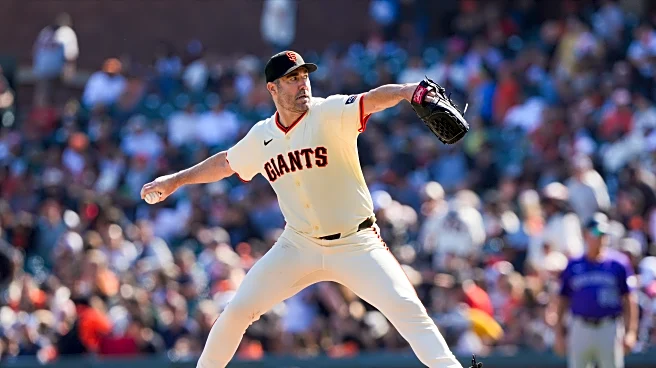
RHP Justin Verlander
After a shaky first half to Verlander’s age-42 season in which he posted a 4.70 ERA and 4.22 FIP in 76 2/3 innings pitched, it looked like the future Hall of Famer’s career may have been coming to a close. Then suddenly, in the second half, Verlander flipped a switch, posting a 2.99 ERA and 3.47 FIP in 75 1/3 innings pitched, showing he still has what it takes to pitch in the big leagues for at least one more year.
Verlander likely hopes to pitch for a contender in 2026, but if no contender is willing to take a chance on him at the moment, perhaps starting the year with the Nationals and being traded to one at the deadline could be what he’s looking for.
Proof that an old dog still can learn tricks is Verlander adding a sweeper to his arsenal in 2025. He used the pitch primarily against right-handed hitters, throwing it to them 13% of the time, and it was a huge success, with a .135 opponents’ batting average. If Verlander is a National in 2026, as the Nats coaching staff, I’d be looking to increase his usage of that pitch even more against righties, making it one of his more used pitches.
RHP Aaron Civale
Like Verlander, Civale got roughed up in the first half of 2025, but found another gear in the second half, posting a 3.58 FIP in 49 1/3 innings pitched. The difference between Verlander and Civale, other than Civale being 12 years younger, is that Civale finished the season as a relief pitcher, making it risky for the Nats to try him out again as a starter.
Civale did a strong job of limiting hard contact in 2025, posting a 69th percentile average exit velocity. He also does a solid job of limiting free passes, with a 59th percentile walk rate in 2025. Civale doesn’t get a lot of swing and miss, so he’s at his best when he keeps the ball out of the air and on the ground, and that was exactly the case in 2025, as when he cut his fly ball rate by 10% and raised his groundball rate by 8% in the second half of 2025 versus the first, his performance greatly improved.
While the 3 pitchers here would be my preference for rotation upgrades in 2026, I am open to whatever moves Paul Toboni and his staff believe they need to make. The new coaching staff specializes in unlocking players’ hidden potentials, and perhaps they see something in a pitcher none of us are thinking about that they can unlock.