

Heading into the 2026 season, all eyes were focused squarely on Nolan McLean as the Mets’ best young arm with the brightest future. Following his brief but eye-catching stint with the club in 2025, he was seen as the de facto future ace of the rotation and the team’s top pitching prospect. Furthermore, Jonah Tong had rocketed up the prospect rankings and debuted himself in 2025, and names like Jack Wenninger, Jonathan Santucci, and Zac Thornton had Mets fans excited about the team’s future.
As a result,
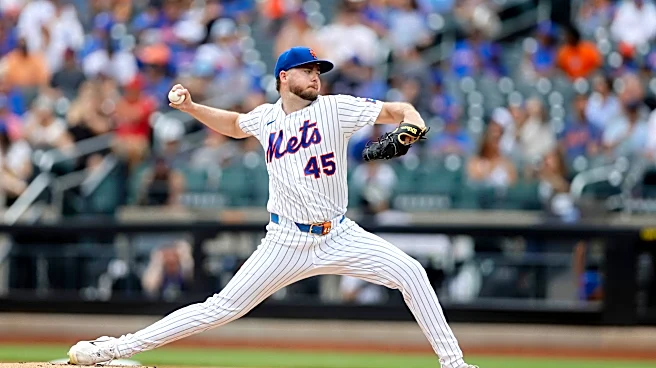
Christian Scott flew under the radar. It’s not necessarily surprising: He last suited up for the team in 2024 and missed all of 2025 after undergoing a combined Tommy John surgery and internal brace procedure. Memories are short in the sports world, and it’s easy to forget Scott was the team’s fifth-best prospect (by Amazin’ Avenue’s rankings) heading into the 2024 season. That’s the year he got the call to the show, and while his numbers weren’t anything to write home about—a 4.56 ERA, a 4.60 FIP, and a 1.24 WHIP in 47 1/3 innings across nine starts—he enjoyed some really great starts (including his debut, which saw him allow one earned run over 6 2/3 innings) and did enough to warrant some anticipation and buzz.
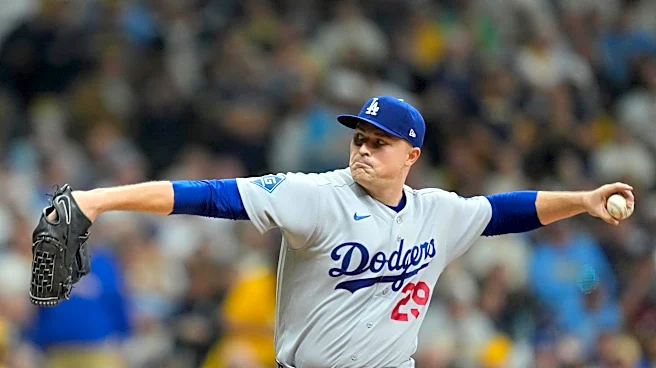
Fast forward 18 months, and Scott was finally ready for his big comeback. Pitchers returning from Tommy John Surgery is always unpredictable, so it’s hard to know if the glimpses Scott showed in 2024 would still be there again. Scott, unsurprisingly, did not break camp with the club, but it didn’t take long for the right-hander to get his chance. Scott got the call to start on April 23 and stuck with the team throughout the remainder of the year, establishing himself as one of the Mets’ more reliable rotation options.
His first game back was a modest one, as he went 1 1/3 innings against the Twins as he allowed one run, walked five and struck out one. After that, however, he performed well, making 23 starts and posting a 3.85 ERA, a 3.61 FIP, a 1.27 WHIP, 134 strikeouts, 47 walks, and 1.7 bWAR in 110 innings of work. Across the board, he was a much better pitch and improved in some key areas of his game that he struggled with in 2024.
If there’s one thing you could point to as an area for improvement for the right-hander moving forward, it was the walks, which was noticeable from that very first start. Among 120 major league starting pitchers with at least 100 innings under their belt in 2026, Scott had the 18th-highest BB/9 (3.85) and the 19th-highest BB% (9.9%). In his 23 starts, he walked at least three batters six times, and at least four batters four times. Contrast that with 2024 (albeit in a much smaller sample size) when he posted a 2.28 BB/9 and a 6.1% BB%.
Walks aside, he had a really solid year. He worked around trouble a lot and saw a lot of traffic on the basepaths, which is something to work on moving forward, but he was generally great about run prevention (someone alert David Stearns) and kept damage to a minimum. In fact, he did not allow more than four runs in any of his nine 2024 starts, and he kept that streak going throughout his comeback season. He allowed exactly four runs in three of his 23 starts, three runs in eight of his starts, and two runs or fewer in the other 12. When all was said and done, he set a franchise record for most consecutive starts allowing four runs or fewer to begin a major league career, an ongoing mark which now sits at 32 games. Scott also, importantly, stayed relatively healthy after losing almost two full seasons, though his season did end early due to knee inflammation. Beyond that, he stuck around and pitched every five or six days as expected, setting a new benchmark by throwing 110 innings.
Another area where we saw a big improvement from Scott was his ability to limit home runs. In total, surrendered 12 homers across his 23 starts, and finished the year with a 0.98 HR/9. That mark is 40th among the 120 starters with at least 100 innings, and it’s an especially big improvement from his 1.52 HR/9 from 2024. In fact, he surrendered eight home runs in just nine starts, and 18 long balls combined between 18 major league and Triple-A starts. That’s something you love to see from a guy who struggled with surrendering home runs in the past, and is a trend you hope to see continue.
And that brings us to the last eye-catching number from Scott’s 2026 season: the strikeouts. Scott struck out 14 across his first two major league starts in 2024, but sat between two and five punch outs in each of his next seven. He finished that year with a 7.42 K/9 and a 19.8% K%, which is fairly respectable. However, he saw a huge improvement in his ability to strike out batters, finishing 2026 with a 10.96 K/9 and a 28.3% K%. Going back to our trusty rankings of major league starters with over 100 innings in 2026, he was eighth overall in K/9 and 15th in K%. He matched his single-game high with eight strikeouts twice and struck out at least six batters in 16 of his 23 outings.
Scott’s four seam fastball remained his primary pitch, and he utilized it quite effectively this season. He utilized it 47.1% of the time in 2026 while posting a 27.6% Whiff% and 21.6% PutAway% on the four seamer (comparatively, he threw the four seamer 52.9% of the time in 2024, with a 22.0% Whiff% and a 20.5% PutAway%. The pitch was especially effective against right-handers, though slightly less so than in 2024. This year, his four seamer carried a Pitch Run Value of +2, compared to +4 in 2024, and it remained a -1 both years against lefties. One of his best weapons was his sweeper, which he selectively used 22.8% of the time (an increase from 18.8% of the time in 2024) but was one of his deadliest pitches. He posted a 30.9% Whiff% with his sweeper, the best among all his pitches, to go along with a 23.6% PutAway% (compared to a 23.5% Whiff% and 12.0% PutAway% in 2024.
Where Scott really excelled was with a pitch he hardly used in 2024: his cutter. He only threw the cutter a total of two times at the major league level in 2024, but it became an extremely effective tool for the right-hander. Scott tossed his cutter 23% of the time against lefties (+6 pitch run value) and 12% of the time against righties (+1 pitch run value). He used it 18.9% of the time overall and had a 25.0% Whiff%. However, it was his best put away pitch, as he finished the year with a 25.7% PutAway% with the cutter. His Cutter had his best Run Value among any of his pitches at 8. He also introduced a Curveball for the first time, though it was one of his less effective pitches, with a -3 Run Value, a 14.8% Whiff% and a 12.5% PutAway%, his lowest among his 2026 pitches.
Overall, Scott demonstrated marketable improvement in several areas, including Whiff% (21.7% in 2024 to 27.0% in 2026, Barrel% (10.5% in 2024 to 6.1% in 2026), and average exit velo (89.2% to 86.8%). In each of these areas, he went from poor/average to great, and his Baseball Savant page showcased him jumping to much more elite metrics across the board.
Scott has certainly positioned himself for a spot on the team’s 2027 rotation alongside McLean and some of the team’s other young arms, like Zac Thornton. There are a couple of areas you’d like to see him improve upon, including the walks and his ability to pitch deep into games. Because he ran such high pitch counts, he ended up only pitching into the sixth in seven of his 23 outings, and he failed to complete five innings of work in 12 of his 23 appearances. You’d certainly like to see him get beyond the fifth inning a lot more frequently, but beyond that, there’s a ton of positives to take away from Scott’s season, and if he can remain healthy and build upon his success, Mets fans should get used to seeing a lot more of him on the mound in the future.