

The Wizards will be better in 2026-27 than they’ve been the previous three seasons. Low bar, I know. But at least they were trying to be bad unlike a previous season almost 20 years ago where the basketball operations group were tasked by ownership with competing for a championship and assembled a roster that was so bad the only sane move was to trade away all the veterans. They finished the season 19-63.
That’s the reason I’m a Bullets fan…
sigh
The official over/under betting line is 33.5 wins, which
seems perfectly calibrated for wagering because who the heck really knows what this team will do. Under is plausible — a couple injuries to key guys (hi there Anthony Davis and Trae Young) a few youngsters who don’t progress as hoped, and voila we’re watching 28 minutes a night of Anthony Gill for the final 17 games of the season.

The over is also seriously plausible because the team is so young. My research into “typical” NBA career patterns (which is similar to research by others) shows that players make their biggest improvements at ages 20-24 — biggest jumps coming at ages 21, 22, and 23 (in order).
Here are Wizards players in that age group expected to be on the roster this season:
- AJ Dybantsa | 20
- Will Riley | 20
- Tre Johnson | 20
- Alex Sarr | 21
- Bub Carrington | 21
- Bilal Coulilbaly | 22
- Tristan Vukcevic | 23
- Kyshawn George | 23
That’s half the roster. Some are more likely to leap than others, and some won’t. One or two might jump big. One or two might regress hard. I put “typical” in quotes above because career trajectories are averages based on a large sample of players. When it comes to individuals, there’s variation — lots of it. So these average effects are best guesses based on historical patterns. Players can (and will) defy the averages for the good and bad.
For example, a couple seasons ago, Sarr posted a 77 PPA as a 19-year-old rookie. (For the uninitiated, PPA is my all-around production metric, which accounts for things like pace, role, and defense. In PPA, 100 is average, higher is better, and replacement level is 45.) The forecast using my career trajectory calculator guesstimated his year two PPA at 85 — a modest improvement.
Sarr’s PPA last season: 132. A big jump a year or two ahead of “schedule.” That jump bumped his guesstimated peak from multi-time All-Star and borderline All-NBA type to someone who could be a genuine MVP candidate for a few seasons. Heady stuff.
If he makes the “regularly scheduled” age 20 to age 21 improvement, he’ll be an All-Star knocking on All-NBA status this season. If he jumps like that, going over 33.5 wins would be child’s play.
Coulibaly is an interesting case. He posted a near-replacement level 49 PPA as a 19-year-old rookie. The career trajectory calculator suggested he’d improve modestly the following season (54 PPA) — with gains continuing to an average season at age 22 (this season) and a career peak as a solid NBA starter.
Except, Coulibaly’s production climbed to a 75 PPA in year two, which boosted his “forecast” to a likely All-Star and maybe All-NBA type in his peak years. Last season, his PPA was 101 and The Calculator’s updated guesstimate keeps the All-Star and drops the All-NBA from his future.
George entered the NBA a couple years older — he was 21 as a rookie, posting a 53 PPA. With the biggest jump year already in the rearview mirror, The Calculator suggested he’d spend his career as a useful but a bit below average reserve. He improved more than is “typical” — leaping to an 87 PPA, which boosts the guesstimated forecast to that of a solid starter at his best. He could be average next season.
With Tre Johnson, I’ve written in the past about worries I have about deficiencies in his game. Guess what: that’s all normal for a teenager in the NBA. He posted a 61 PPA as a 19-year-old rookie, which suggests someone who could peak at a borderline All-Star level. If he’s “typical,” next season will see modest improvement (think a PPA in the high 60s or 70s), he’ll reach average the season after, and then…who knows.
A guesstimate like that suggests he won’t drive much winning next season. But a bigger leap (similar to those for Sarr and Coulibaly) is possible.
Johnson’s year two could be more like Carrington’s who posted a respectable 59 PPA at age 19 and then improved less than is “typical” — reaching a 61 PPA last season. A more “typical” progression from this point would still suggest Carrington as an above-average starter in the best years of his career.
This is the same basic trajectory guesstimated for Riley, who produced a 57 PPA as a 19-year-old rookie. If he follows the average improvement track, he’ll be in a mid-60s PPA range next season and progress to a solid starter in a few years.
The last three — Johnson, Carrington and Riley probably won’t drive winning next season, though they could be low-end contributors. Investing in them might pay off in a few years…right around the time Young is entering the age-related decline portion of his career.
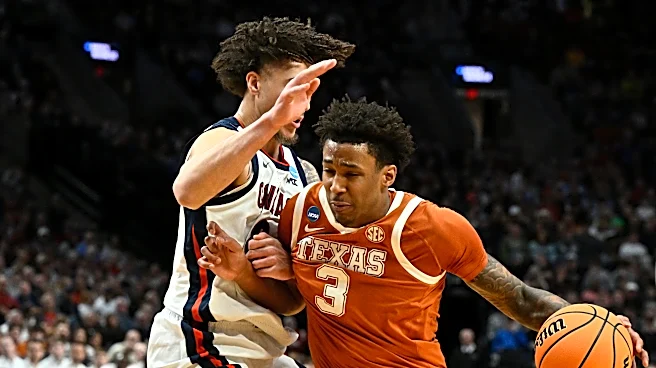
So far, there’s one major youngster I haven’t talked about: AJ Dybantsa. It’s difficult to predict how good anyone so young will be as a rookie, though Dybantsa was a special prospect — a deserving number one overall pick.
My best guess is he won’t be terrible (like say Devin Booker, who put up a 45 PPA at age 19) and maybe won’t be great (like his teammate, Davis, who posted a 178 PPA at 19). But it’s reasonable to think he could be around average by the end of the year. And it’s not unreasonable to think he could be better than average — perhaps rating around 120 or higher, which is right around where LeBron James was as a rookie.
What the Wizards can reasonably expect next season would be All-Star level play from Davis, above-average starter production from Young, strong backup big man play from DeAndre Ayton, and then…wildcard stuff from the kids.
Sarr will probably be good and perhaps entering the All-Star conversation. Coulibaly could be an above-average starter. Mix in average-to-average plus production from Dybantsa and George, and some decent contributor minutes from some mix of Carrington, Johnson, Riley, and veteran Khris Middleton, and it’s not unrealistic to think the Wizards could be a better than .500 team, even in a competitive East.