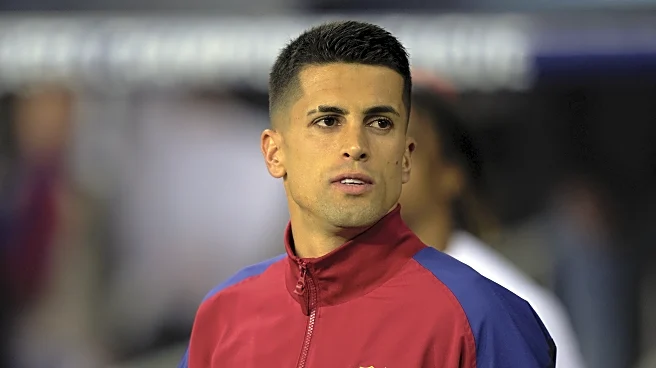

João Cancelo is back at FC Barcelona, and with him come questions and opportunities again. The club know exactly what kind of player they’re getting, and so do the supporters. That’s what makes this move so interesting. There are no illusions here, just a calculation.
The terms of the deal help explain why Barcelona went down this road again. Cancelo arrives from Al Hilal on a free loan until the end of the season, with a salary that has been heavily reduced to make the numbers work. According to Marca,
the player had been pushing for a return even before Andreas Christensen’s injury, and his desire to be back in Europe, with the 2026 FIFA World Cup in mind, played a major role. For a club still operating under financial pressure, a deal with a player who already knows what it’s like at Camp Nou is hard to dismiss, especially if it comes without a transfer fee.
From Hansi Flick’s perspective, the appeal is mostly practical. Cancelo can play on either side of the defense, which immediately creates room to move pieces around. Jules Koundé can slide inside when needed, Alejandro Balde does not have to carry the load every three days, and the squad suddenly has more ways to patch things together without improvising. Marca’s reported noted that the top brass would still have preferred to sign a pure centerback, but Cancelo’s versatility and experience ended up carrying more weight.
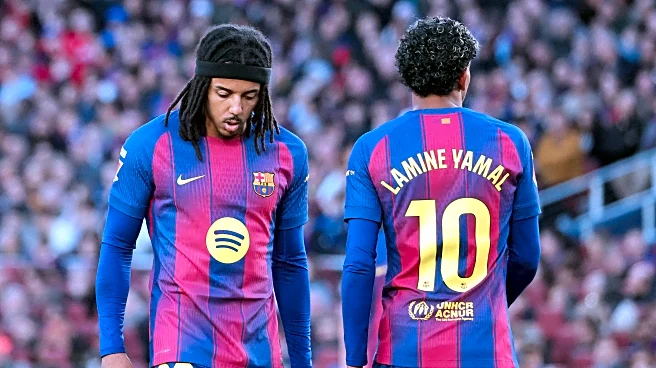
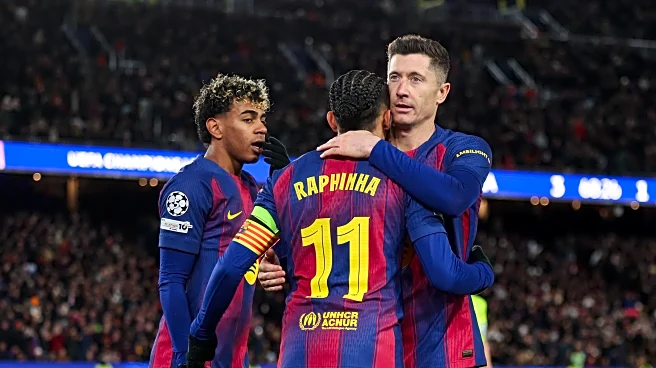
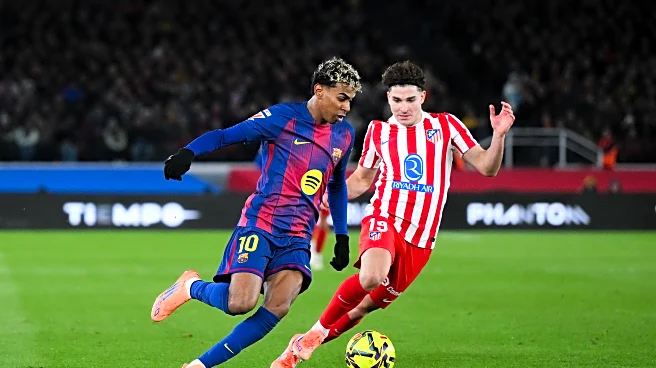
Where Cancelo really changes things is with the ball. Barcelona have sometimes looked short of ideas down the right, especially in matches where Lamine Yamal is doubled up and left without support. Cancelo brings movement, overlaps, and the option to drift inside, all of which can help break open low blocks in La Liga. Even taking the skeptical point of view, one could say he can be useful in specific moments, not as a constant presence, but as a way to tilt a game that is going nowhere.
But none of the doubts around Cancelo have disappeared. His defensive lapses are not still fresh in the memory, even. The end of his previous spell at the club included costly mistakes and erratic performances, particularly in high-stakes matches against Paris Saint-Germain and Real Madrid. Flick’s system asks a lot from full backs during transitions, often leaving them exposed if the structure breaks. Cancelo’s tendency to switch off defensively is still the biggest question hanging over this move. Cancelo can win games, and be brilliant at times, but he can also lose them for you.
You could say that Cancelo’s return is something of a controlled risk. If he is used selectively, rotated properly, and protected within the system, Barcelona can squeeze value out of this loan. If circumstances push him into a central role week after week, the same arguments that ended his first stint may resurface quickly.
The fullback turns 32 in May and has signed only until June 30, 2026, with no option to buy. So this is not a signing that settles anything long term. It fills a gap and buys time, but it does not answer the club’s ongoing need for defensive stability.
From that perspective, the biggest issue with the signing is not what it is, but what it is not. It is not a signing that balances the team and helps solidify the defense, which has struggled to cope with the absence of Iñigo Martínez. However, considering the numbers, Barcelona are hoping they will be thankful for what it is, not what it isn’t.