

Welcome back to another Behind the Steel Curtain Mock Draft Monday. I hope all of you had an enjoyable weekend.
Every Monday, we’ve been providing you with new and original mock drafts from BTSC staff members, and that will continue right up until the week of the draft. As we’ve been taking these in turns, this will be my last mock draft until April 20, just three days before Night One of the NFL Draft. Knowing this, I made a post in The Feed last week asking the community members of BTSC to come
up with and vote for a scenario they wanted to see play out, or a specific rule about the mock I had to follow.
Our winning submission comes from AmpersandSteel:
Don’t use a simulator and actually go off where you believe players will be available.
In terms of position, I’d say:
- LT (developmental)
- LG (potential day one starter)
- QB (toolsy)
- WR (potential WR1)
- WR (foil for the above; i.e. smaller slot + bigger outside option)
- ILB (partner for Queen/Wilson)
- CB (developmental outside CB)
- NCB (potential year one contributor)
- S (partner for Elliott/Brisker, under 24 y/o)
- DT (pass rusher)
- DT (run stuffer; can be combined with the above)
- OLB (depth: Stephen Daley)
- TE (high ceiling, developmental TE)
Simple, really. They just need to get better and younger everywhere.
Not only did AmpersandSteel give me a rule to follow, but I was also provided a checklist to follow with archetype suggestions for the positions. Fortunately, I love a list, and having one heading into a mock is akin to some of the soundest advice I’ve ever received: Don’t go to the grocery store hungry. Know what you want and don’t get distracted, or you’ll end up with a bunch of junk in your cart.
While I followed the rule of no draft simulators, I did keep the NFL Mock Draft Database Consensus Big Board handy to keep myself honest. Like any draft, there will be some valuations that end up askew because some NFL front offices might value a prospect higher than others, but it’s proven to be a useful tool in recent years.
1.21 DT Peter Woods, Clemson

Checklist item: DT pass rusher/run stuffer; can be combined
Last summer, Woods was at the top of most big boards as a potential No. 1 overall pick. After a disappointing season for Clemson and posting Combine numbers that weren’t awful, but also not what you’d expect from a Top-5 pick type of talent, Woods has seen his draft stock steadily decline, at least in the eyes of the public. He’s currently number 22 on the Consensus Big Board, which lines up perfectly for the Steelers picking at 21.
The Steelers approached free agency in a way that should keep them flexible with their first pick. Without being pigeonholed into drafting for a specific need, they have the freedom to take the “best player available.” Woods had a down year by his standards, but having turned 21 years old less than three weeks ago, I lean toward believing the special player on tape in 2023 and 2024 is still in Woods. And with Derrick Harmon and Cam Heyward set as starters, Woods will ideally get a year to contribute in a backup role, much like Heyward did at the start of his career.
To me, the market is overcorrecting on Woods, and the Steelers would be wise to buy the dip if he’s still on the board at 21.
2.21 CB Keith Abney II, Arizona State
3.76 OG Keylan Rutledge, Georgia Tech

Checklist items: NCB (potential year one contributor), LG (potential day one starter)
Our pick in round one did a lot to shape how the next two picks went for the Steelers. Olaivavega Ioane is the only guard who is a lock for the first round, and I’m almost certain he’s the Ravens’ pick at 14. With him off the board, that meant my options for Day 1 starters at the guard position essentially boiled down to taking one of Emmanuel Pregnon or Chase Bisontis in the first — essentially paying a premium for two players I think should go in the first 15 picks of the second round — or what I ended up doing: ride it out and take one of my third-tier guards whose value lines up for in the third round.
That opened up our second round choices considerably. After quickly consulting our other items on the checklist, the only other position that AmpersandSteel indicated he hoped was a Year 1 contributor was nickel corner. That lined up perfectly for me to select one of my favorite prospects in the entire draft in Keith Abney II. Abney has inside-outside versatility, but his shorter arms and stature (5’10, 187 pounds, and 30” arms) have some evaluators thinking he’ll be better suited in the slot as a pro. Another prospect freshly turned 21 (his birthday is in January), Abney is a two-year starter who had five interceptions and 17 pass breakups over the past two seasons. On top of that, he’s a sound tackler (4.3% missed tackle rate in 2025, 7.1 % career) who doesn’t allow a lot of completions (44.4% completion rate in 2025, 51.3% career).
Moving on to the third round, Keylan Rutledge is an athletic guard with a mean streak. Basically, everything you want in a Steeler offensive lineman. He played primarily right guard at Georgia Tech, but he did have snaps at left guard on offense and special teams during his college career — as well as a few at left tackle — so I’m not concerned, as some of you might be, about which side he lines up on. Plus, Mason McCormick was a left guard in college, so if it is an issue, the Steelers can just move him back to his original position.
3.85 WR Ted Hurst, Georgia State
3.99 CB Julian Neal, Arkansas

Checklist items: WR (potential WR1), CB (developmental outside CB)
There will undoubtedly be some readers shaking their heads that I don’t have the Steelers taking a wide receiver until Pittsburgh’s fourth selection, and in the middle of the third round, but I think you could frame this in a positive light. For starters, the Steelers’ acquisition of Michael Pittman Jr. gives them a proven, competent second fiddle to DK Metcalf, meaning the Steelers won’t have to rely on an unproven rookie as heavily. Throw in that they can draft three potential Year 1 starters and still draft a receiver with the traits to develop into a WR1 — that’s an excellent outcome.
I’ve previously called Hurst the drama-free, small school version of George Pickens, so that should give you an idea of the skillset Hurst is working with. He’ll need to make some adjustments to the pro level, just like any rookie, but he held his own at the Senior Bowl, so I have confidence that he has the makeup to develop with the right coaching.
With the final third-round pick in the Steelers’ war chest, I went back to the cornerback position and Pittsburgh another tall, long-limbed press corner in Arkansas’ Julian Neal. The Steelers have had two Washington corners with similar builds in for visits (Tacario Davis and Ephysians Prysock), so they clearly have interest in continuing to stock the roster with players of that build and archetype. Davis (123) and Prsyock (162), however, are valued in a portion of the draft where I’d like to attack some other areas on our checklist, so I decided to go with the player I prefer that is expected to go earlier than either of them.
After three seasons at Fresno State, Neal (6’2, 203 pounds, 323/4” arms) spent his final season with the Razorbacks, allowing just a 56.3% completion rate, intercepting two passes, breaking up eight more, and generating 11 stops on a 7.3% missed tackle rate.
4.121 QB Cole Payton, North Dakota State

Checklist item: QB (toolsy)
This one was a hard one to fulfill on our checklist, as there aren’t many quarterbacks I would consider “toolsy” in this draft — and yes, I hear you, Drew Allar stans.
I’ll instead select the quarterback I prefer of the two passers (the other being Miami’s Carson Beck) that the Steelers have already had in for a visit. I don’t see Payton as ever being more than an NFL backup, but that’d be the same for any quarterback selected in the mid-rounds. These are passers where you hope you get lucky, but are more likely to add a guy to the room who can help prep the team as a scout quarterback and another set of eyes in the weekly quarterback meetings.
Payton is a lefty with just one year as a starter on his belt. Being an NDSU signal caller, he was heavily involved in the rushing attack, and asked to manage the game as a passer. The Bison found ways to involve him as a runner even before he was the starter. Payton had 894 rushing yards and 13 rushing touchdowns in 2025, but for his career he totaled 2,069 rushing yards and 31 rushing touchdowns.
As a passer, Payton completed 71.2% of his 226 attempts for 2,719 yards and 16 touchdowns against four interceptions. If you want to see toolsy, check out this impossible throw he made while we were down in Mobile, Alabama for Senior Bowl Week.
And if you want to learn more about Payton, check out Ryland Bickley’s draft profile on him!
The back half of the draft

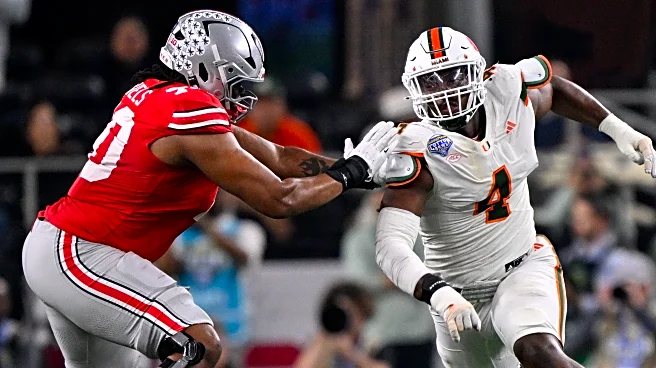
4.135 OT Markell Bell, Miami
Checklist item: LT (developmental)
Mountain of a man (6’9, 346 pounds, 363/8” arms), Bell is a player the Steelers have brought in for a pre-draft visit. The starting left tackle for the national title runners-up, Bell is a traitsy developmental player that you want to bet on as we reach the middle rounds.
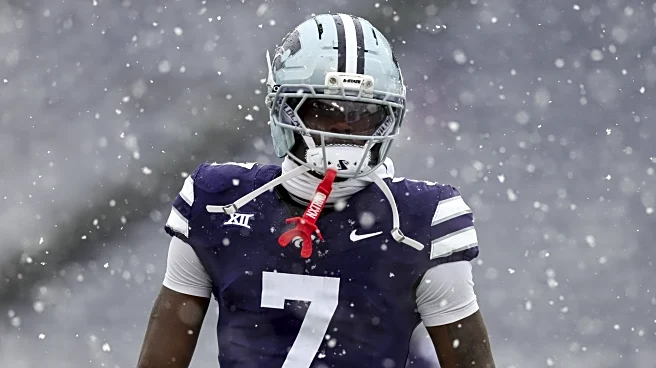
5.161 S VJ Payne, Kansas State
Checklist item: S (partner for Elliott/Brisker, under 24 y/o)
One of my favorite players and values in the draft, Payne is a long, rangy safety with equal time split between the box, deep, and as a split safety.
TRADE!
Steelers get 6.185, 7.219, 7th (2027)
Las Vegas gets 7.216, 5th (2027)
6.185 WR Kendrick Law, Kentucky
Checklist item: WR (foil for previous WR selection i.e. smaller slot )
Twitchy slot receiver with a limited route tree that the Steelers have already had in for a pre-draft visit. Think of him as off-brand Zachariah Branch. This isn’t my favorite archetype of receiver, but fits the checklist requirement and is clearly a style the Steelers have shown interest in, also having dinner with Branch following Georgia’s Pro Day.
7.219 OLB/ILB Trey Moore, Texas
Checklist item: ILB (partner for Queen/Wilson)/OLB (depth)
Tweener type (6’2, 243 pounds) who played off-ball linebacker and edge in college. We’re throwing darts this late in the draft and looking for versatility and athletic upside. Moore had 33 career sacks in college and 102 of his 106 career tackles registered as “Stops,” a PFF metric that measures tackles that result in a “failure” for the offense.
7.224 OLB/ILB Jack Kelly, BYU
Checklist item: ILB (partner for Queen/Wilson)/OLB (depth)
A similar story to Moore, in that Kelly played both off-ball linebacker and edge, but is a bit undersized (6’2, 240) to be a traditional edge. Kelly put together 31 sacks in his college career and 103 of his 137 tackles registered as Stops.
7.230 DT Jordan van den Berg, Georgia Tech
Checklist item: DT (pass rusher/run stuffer)
Traitsy defensive lineman who is hoping he can translate his potential into more production at the NFL level.
7.237 TE Lake McRee, USC
Checklist item: (high ceiling, developmental TE)
We had to fudge a little somewhere, so while I took a developmental tight end, you can argue if this is a “high ceiling” prospect. McRee had pretty average athletic measurables, but when I watched him on tape, he seemed to be a decent blocker with good hands and enough yards after the catch ability that I believe he can stick to an NFL roster as a TE3. With Pat Freiermuth and Darnell Washington ahead of him, he wouldn’t need to be a Pro Bowl-level talent immediately. Behind potential first-round pick Makai Lemon and Ja’Kobi Lane, Mcree had 30 receptions (4th on the team) for 445 yards (4th) and four touchdowns (2nd) in 2025.
How did I do? Did I do a good job with AmpersandSteel’s checklist? Do you want to yell at me, instead? Let us know what you think in the comments. Be sure to bookmark Behind the Steel Curtain for all the latest news, breakdowns, and more!