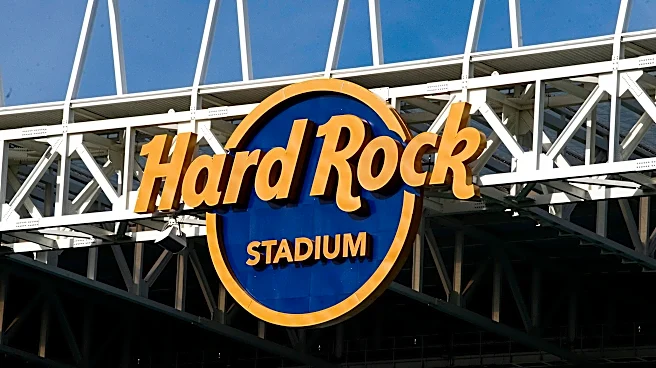

Miami haters love to mention that the University of Miami plays at a professional football stadium rather than on campus. Miami “rents their stadium” is a go-to insult for rival fans. Never mind that Miami’s on-campus football facilities are state-of-the-art on one of the most modern, beautiful, resort-like campuses in the nation. Playing on-campus supposedly is critical to having a successful football program.
Without an on-campus stadium, recruiting apparently suffers. After all, former University
of Utah coach Urban Meyer said he recruited against Miami by arguing that Miami was the school of “have nots” principally for not having an on-campus stadium.
But since Coach Meyer retired from college coaching almost a decade ago, Miami has upgraded its on-campus facilities, and there’s this little thing called NIL that Miami is standing toe-to-toe with other top programs. According to Rivals and On3, Miami currently has the No. 3 ranked recruiting class in 2027, and Miami had the numbers 9, 14, and 5 ranked classes the three years prior. So surmise all you want why Miami is consistently fielding blue chip recruiting classes (not to mention elite transfer portal additions every year), but having an on-campus stadium is not preventing the Hurricanes from acquiring premier talent.
In fact, building a stadium near campus would be an astronomical cost. USF is building a modest 35,000-seat stadium in the significantly lower cost suburbs of Tampa for about $350 million. The cost for Northwestern’s new 35,000 stadium was $862 million. If Miami were to build a roughly 50,000 capacity stadium at Tropical Park or someplace near campus (like Sunset Place) it would surely run a price tag north of $1 billion.
A $1 billion expense would tank the Miami athletic department budget just like what’s happening at Florida State, who’s now too poor to fire their coach. FSU entered the year with nearly half a billion dollars in debt thanks in great part to a $265 million multi-year renovation of Doak Campbell Stadium (that still had a nationally embarrassing power outage on opening night). In fact, when you combine the stadium budgets with the fact that FSU has to pay players NIL now, FSU’s deficit has exploded from $17 million in debt to $435 million in debt in just five years.

It’s unlikely Miami could meaningfully recoup the high price tag of building and operating its own stadium. For fiscal year 2025, Miami reported $230.48 million in total revenue across all athletics, which ranked first in the ACC and twelfth nationally. That’s including revenue from Hard Rock Stadium without the costs of operating Hard Rock Stadium, yet alone the $350 million renovation costs the stadium required a decade ago. That 2025 figure does not include the majority of the $20 million in CFP money that Miami was allowed to keep.
And what happens when the Hurricanes are not playing football? Let’s say an ideal stadium size for Miami is around 50,000 seating capacity. The lowest attended home-game last year was 59,157, and the lowest average annual attendance at Hard Rock / Sunlife / Landshark / Joe Robbie / Dolphin Stadium never dipped below 46,299. South Florida is a major host of sporting and concert events, but a UMiami stadium would also face significant competition from nearby venues, namely: Hard Rock Stadium (64,767 capacity); LoanDepot Park for the Marlins (about 40,000 concert capacity); Nu Stadium for Inter Miami CF (26,700 capacity); Amerant Bank Arena for the Florida Panthers (23,000 concert capacity); Kaseya Center for Miami Heat (20,210 concert capacity); and Pitbull Stadium at FIU (20,000 capacity). This doesn’t count the Homestead Speedway that could, but rarely, hosts non-racing events.
If University of Miami built a 50,000 seat stadium it would be targeting a very niche market of artists that feel Hard Rock Stadium is too big (or too far north) but Marlins stadium is too small for their event. It’s a huge gamble to believe that Chris Brown / Usher or Karol G or Bruno Mars or Pitbull or Rascal Flatts (all artists who performed, or will perform, at Hard Rock Stadium in 2026) would had booked a hypothetical UMiami stadium instead.
The analysis might be different if Miami was seeking to build a smaller stadium, like USF’s 35,000 seat stadium in Tampa or Northwestern’s recently completed 35,000 seat stadium near Chicago. Those are medium size stadiums in metropolitan markets that are not competing with the local NFL stadiums for concerts and non-football events. Northwestern and USF might do fine with a 35,000 stadium, but that’s way too small for Miami.
So the risk that a University of Miami stadium sits vacant most of the year is very high, and the revenue to justify the stadium will almost exclusively come from football games. True to form, state universities have to operate large capacity stadiums in relatively small college towns knowing that the stadiums will be empty most of the year. Some examples:
University of Florida – Ben Hill Griffin Stadium
In 2004, the Gainesville Sun asked a question that remains unanswered 22 years later: “Where Have all the Concerts Gone?” This past year just one tour used the 88,548 capacity stadium – country music star Morgan Wallen and his “Still the Problem Tour.” The last concert in the Swamp before that was Garth Brooks in 2019. So just two country music concerts in 7 years.
University of Alabama – Bryant-Denny Stadium
Guess who performed at Alabama’s stadium last year…that’s right, Morgan Wallen! And only Morgan Wallen. That was the first headline concert at Alabama in over 30 years!
University of Georgia – Sanford Stadium
The Georgia Bulldog’s 93,033-seat stadium is a 1 to 1.5 hour drive from Atlanta (depending where you’re starting from). For some reason Morgan Wallen shunned this North Georgia venue, but Sanford stadium did host one concert this offseason headlined by country music stars Jason Aldean and Luke Bryan. Guess how often Georgia’s stadium hosts headline concerts? That was Sanford Stadium’s second concert in the stadium’s 100 history! The last was a 2013 concert also featuring Aldean and Bryan…and Ludacris for some reason.
All together, it makes zero sense for Miami to build an on-campus, or near-campus, stadium of its own – even if it could find a location, which is no guarantee. Invest in the coach’s salaries and the NIL fund. Invest in the on-campus experience, like athletic facilities, residential housing and dining, recreational and study areas, classrooms and labs, along with other investments like an on-campus hospital that is revenue generating and would improve the entire University of Miami experience.
Why mess with a good thing? The focus at Miami has been on things other than a stadium, and that focus has elevated its crown jewel football program the past four years.
Bottom line: keep renting the stadium so that Miami can live rent free in its rivals’ heads.