
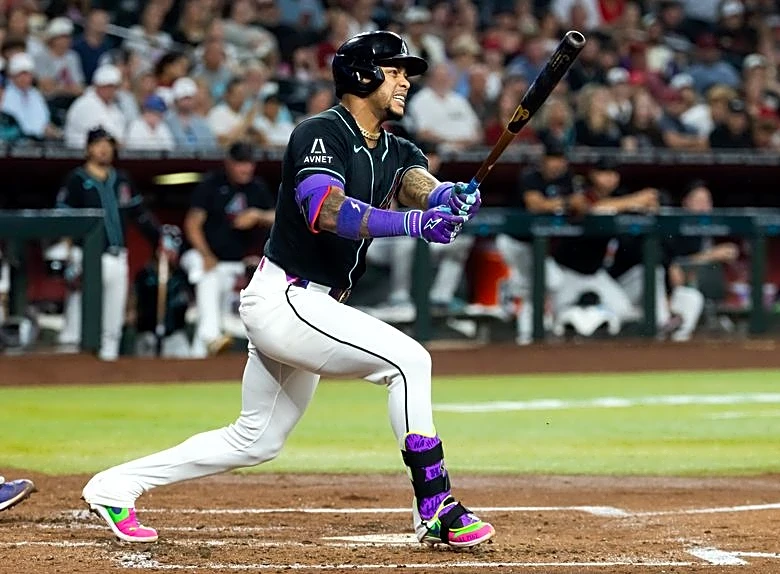

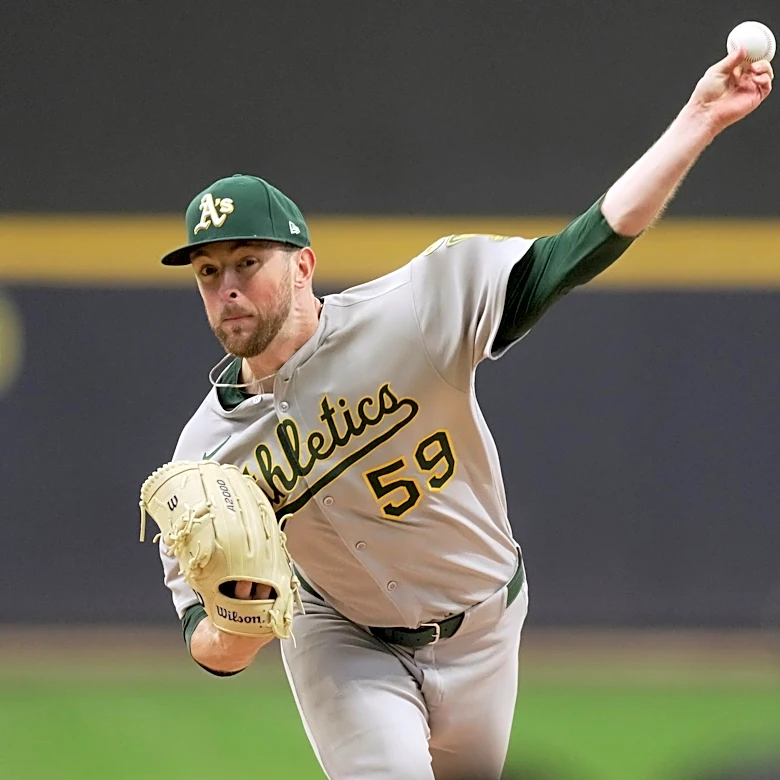
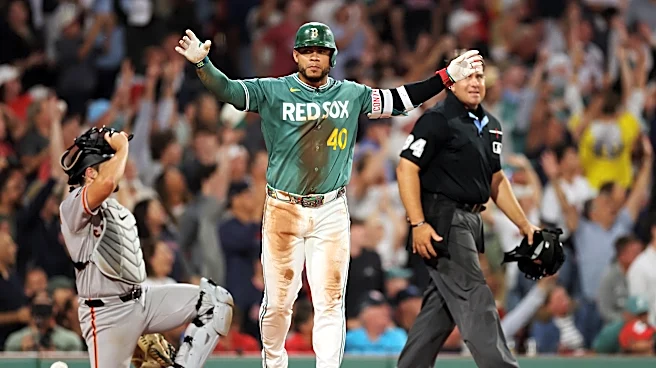
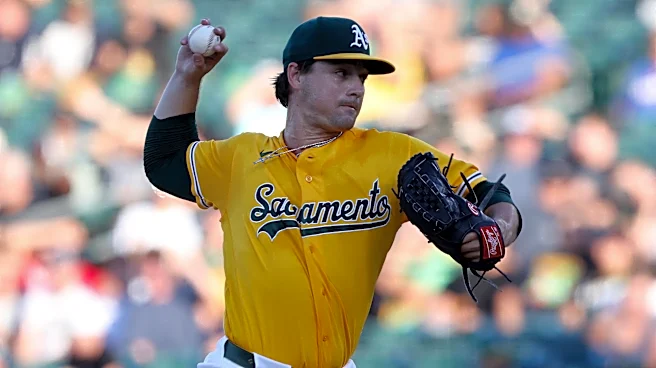
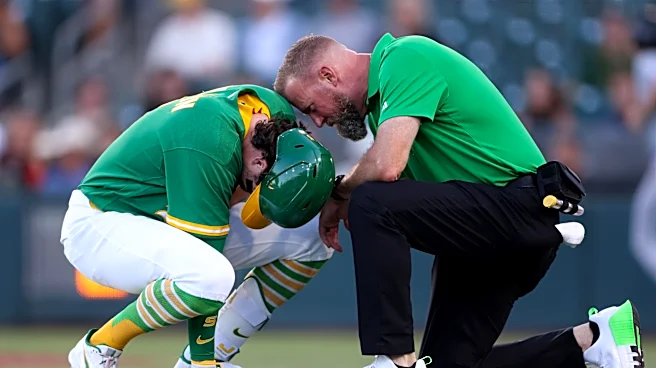
At 38-38 it wasn’t just a “contending year” it was “on pace to win the AL West,” as it turns out. Then came a long and fugly spiral to the current 52-80 making it squarely a “see what we have” kind of second half.
What do we have, exactly, amongst the many reserves thrust into the spotlight thanks to injuries that have ended seasons early for Nick Kurtz, Shea Langeliers, Jacob Wilson, Joshua Kuroda-Grauer, Tyler Soderstrom, and Luis Severino? The answer is not as easy as it seems.
Several players are
difficult to weigh including some who are important to the A’s fortunes in 2027…
Henry Bolte
Sliced into thirds, Bolte’s season has been “great/awful/great” and given that he is just turned 23 with all of 88 games under his belt one easy analysis would be “2 out of 3 ain’t bad!” What it has all added up to so far, statistically, is promising: .270/.345/.369, 103 wRC+ with 14 stolen bases, +4 DRS/+2 OAA in CF.
So why the uncertainty as to whether Bolte is a budding star you can build your outfield around? First off I think the notion that this is his floor is misguided: a player’s floor isn’t “what he has already shown he can do” as players can take big steps backwards, see Gelof, Zack or Butler, Lawrence. Bolte’s floor has him unable to consistently master lifting the ball, has his K rate creeping back up to the 30s, and renders him too close for comfort to Denzel Clarke.
But the ceiling is alluring for sure. I might give Bolte a 25% chance of becoming an “All-star caliber” every day OFer, a 50% chance of becoming a solid every day OFer, and a 25% chance of regressing to become more of a useful 4th OFer. Why the measured optimism?
Under the hood come some warning signs that the stats in aggregate aren’t necessarily indicative of a player who has proven he can thrive consistently over time.
Much of Bolte’s success at the plate has come at home (.313/.380/.422, 124 wRC+), but outside the friendly confines of Sutter Health Park he has hit just .226/.311/.315, 81 wRC+.
Also Bolte has started out with some L/R splits worth watching. Splits take a long time to stabilize but here they are so far: vs. LHP .274/.333/.442, 116 wRC+ and vs. RHP .267/.353/.322, 95 wRC+. The big gap comes in the slugging and is partly a result of so many of Bolte’s hits against righties being choppers on the infield he beat out.
Bolte’s potential is sky high. Much of it will depend on how he progresses with regard to hitting away from SHP, slugging enough against RHP, and cleaning up the many unnecessary errors from bobbles and the occasional flat out dropped fly ball. (Bolte has already been charged with 6 errors in CF, continuing a pattern from the minors.)
Jack Perkins
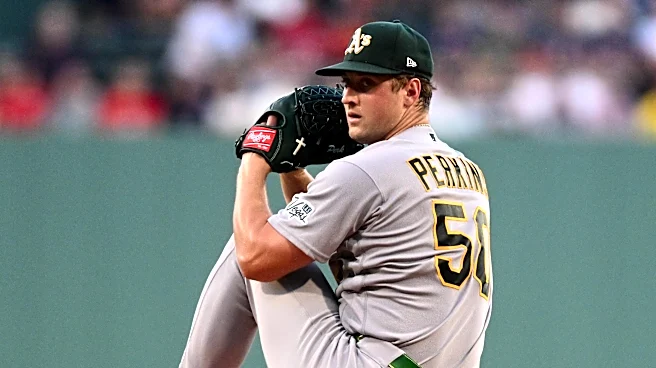
Talk about an enigma wrapped in a riddle. Perkins brings #2-#3 SP stuff to the mound but has only been able to parlay it into a 6.68 ERA in 90.1 IP. Why? Perkins’ control comes and goes and there is a sense he pitches best once the pressure is off — which has sometimes meant giving up a crooked number early before settling in.
There are plenty of positives to be found in Perkins’ 2026 season. One is that he has stayed healthy pretty much for the first time in his pro career. Another is that his K rate (10.36/9 IP) reflects his ability to miss bats and tie hitters up.
Consistency, however, is not his middle name. Witness yesterday’s “bulk” appearance in which Perkins threw 5 IP. In the first one he walked 4 batters, forcing in a run with the last one. Then he was unhittable for a couple innings. Then his defense betrayed him, an E-6 on Darell Hernaiz that prolonged the inning, which Perkins followed up by serving up a 2-run HR. Both runs unearned but realistically one falls on Hernaiz and the HR is on the pitcher.
Will Perkins’ plus stuff, combined with experience, get him over the hump to be a quality pitcher either in the rotation or bullpen? Or does he just not have the command and/or mentality to offer any semblance of reliability?
Donovan Walton
If I had to pick out one hitter I wish other batters would watch and emulate it would be Walton. His PAs have been that good in terms of process, grinding out at bats, being discerning even after falling behind 0-2, patient enough to produce an elite 16.9% BB rate since joining the A’s, spraying the ball to all fields.
If you’re thinking in terms of a utility infielder to complement Gelof, Wilson, and Kuroda-Grauer in 2027, Walton is tempting and offers the only LH bat in the mix (unless the A’s re-sign Jeff McNeil after undoubtedly declining his club option).
Trouble is Walton does not play good defense, which is a priority for a back up infielder. He has negative career marks at 2B, SS, and 3B, including -11 at 2B. He also is having an offensive season that belies his entire track record prior to 2026.
Here are Walton’s batting averages before this season, beginning in his rookie 2019 campaign: .188, .154, 206, .158, .136, .125. Did he, at age 32, suddenly figure something out in a big way? That’s a lot to bet on. I’d bet Alika Williams, smooth at SS with a plus glove at 2B as well, to win the utility infielder role for 2027 unless the A’s are dead set on a LH bat.
But Walton has been, for whatever reason, really impressive at the plate — the key question being “Who is the real Donovan Walton?”
Wheat? Chaff? Chweat? Giraffe? You tell me.