


UNC’s been odd this season. Its best football arguably came against its strongest opponents. Billy Edwards Jr. and the offense had their best game of the season against Miami, scoring 35 points on seven possessions. UNC’s defense played its best game under Bill Belichick against Louisville, holding the explosive Cardinals to some its lowest outputs of the season. Meanwhile, UNC has two inexplicable losses, one to Clemson and one to Syracuse. Clemson’s offense might be its worst in this century, ranking
121st, 119th, and 110th in FEI, SP+, and FPI, yet the Tigers somehow blasted the Tar Heels for nine yards a play in the second half. Syracuse also overcame a big deficit in the second half behind QB Steve Angeli, currently ranking third-to-last in the ACC in both QBR and passer rating.
In short, UNC seems to play up or down to the competition. With the exception of three games – ETSU, Notre Dame, and UConn – every game ends up a one possession nail-biter, both for an elite team like Miami, a very good team like Louisville, or weak competition like Syracuse and Clemson.
So, how might that play out in Charlottesville on Saturday?
Can UNC run on Virginia, and might Travis Burgess lead that charge?
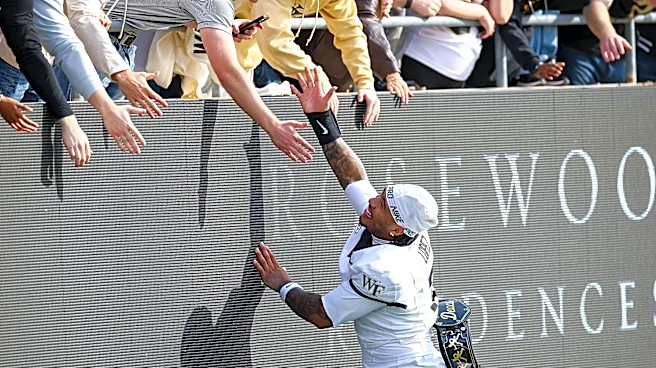
Virginia’s two worst losses of the season came courtesy of Wake Forest (51-7) and Florida State (38-7). Wake Forest ran 309 yards, and FSU ran for 281. Drilling down even further, FSU QB Ashton Daniels proved unstoppable against the Cavaliers, with 136 yards rushing and five touchdowns. Gio Lopez led a slightly more diverse rushing effort, with eight Demon Deacons contributing 15 yards or more and reaching the end zone five times as well.
West Virginia’s defense didn’t dominate like FSU’s or Wake Forest’s in their game against Virginia, but their offense did. Again, the QB, this time Michael Hawkins, gashed the Wahoos for 123 yards on the ground and three touchdowns. The Mountaineers rushed for 247 yards, three for 190 more, and scored 38 points to win 38-27. So, three dual-threat QBs spearheaded offenses that lit up the Cavaliers to the tune of 1,439 yards and 127 points.
Does UNC have an athletic QB who can both run and pass?
The key difference here would be the experience of Daniels, Lopez, and Hawkins. Daniels is a 6th-year player, Lopez a four-year starter, and Hawkins a third-year guy. They’re not just athletic, dual-threat QBs; they’re established college players who collectively turned the ball over only once during those offensive onslaughts. Part of being a successful dual-threat QB is reading defenses and avoiding bad plays, which comes with experience.
That poses an interesting question to the UNC coaching staff. Travis Burgess physically fits the profile of the kind of QB Virginia struggles to handle. Virginia’s defense tends to fare better against offenses with pocket passers, limiting SMU and Duke to 23 and 19 points respectively (SMU’s Jennings only attempted four rushes in that game). How will UNC’s offense choose to attack the Virginia defense?
Can UNC’s defense make the Cavaliers offense one-dimensional and then throttle it?
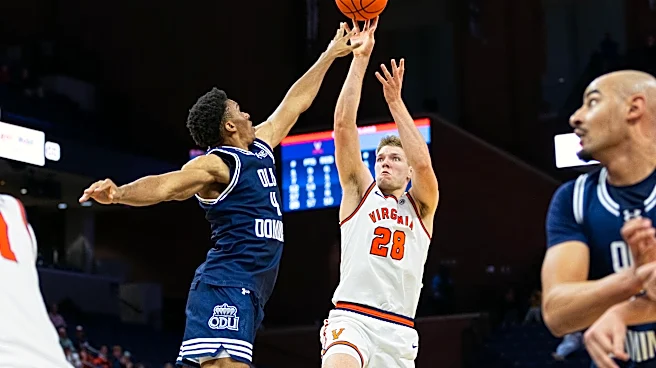
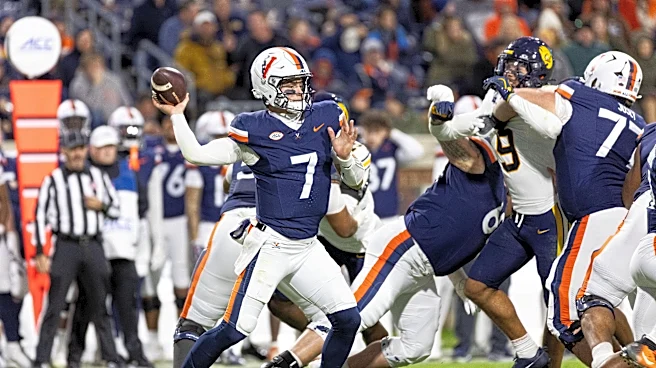
Virginia’s offense has struggled this season outside their season opener against NC State. FSU held them to 2.9 yards per play and 37 yards rushing, while Wake Forest held them to 16 yards on the ground. The Seminoles sacked Virginia QB Beau Pribula 10 times for -61 yards. Duke sacked him five. Pribula’s had two good games this season: NC State to open and Cal last weekend. In the eight games between, he’s rushed for a total of 85 yards (counting sacks), and that includes games against Norfolk State and Delaware. If you don’t know Pribula’s calling card coming into this season, it was running the football.
Virginia’s the second-worst FBS offense UNC’s faced this season. Pribula hasn’t come close to matching the success Chandler Morris had last season. Beau’s QBR of 52.8 mirrors that of Gio Lopez last season, ranking 12th in the ACC and 75th nationally. Virginia’s leading rusher (Jekail Middlebrook) ranks 13th in the ACC, and their leading receiver (Da’Shawn Martin) ranks 29th. After holding a potent offense like Louisville well below its normal output, UNC’s defense on paper should dominate a Virginia offense that’s been largely toothless this season.
Stop Pribula from running the ball, and Virginia’s offense grinds to a halt.
Who plays for Virginia?
Virginia’s suffered a ton of injuries this season. Example: Virginia had 28 players out against Wake Forest. By last weekend against Cal, that number was down to 14. Everyone’s dealing with injuries by this point in the season, and UNC will be without safety Greg Smith for the first half due to an ACC suspension for fighting at the end of the Louisville game. (Update: Smith has been listed as out for the entire game on last night’s availability report.) It’s hard to know how significantly the injuries impacted Virginia across the course of the season. Not all players “out” are necessarily two deep contributors. It’s entirely possible UNC’s facing a much different team that the one FSU and Wake Forest dominated. Two or three key guys, especially along the line of scrimmage, can radically alter a team’s fortunes.
What will you be matching for Saturday, as the UNC Tar Heels try to become bowl eligible for the first time under Bill Belichick?