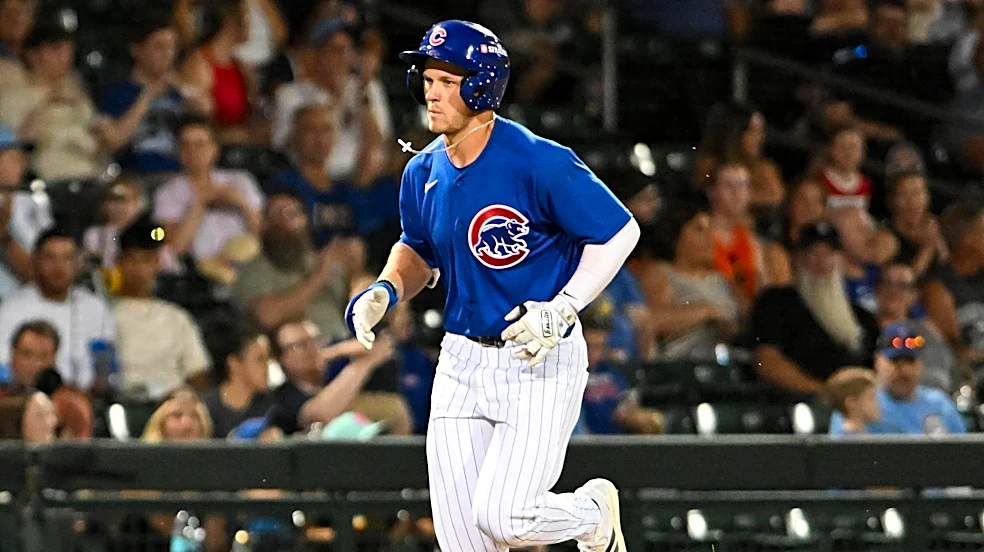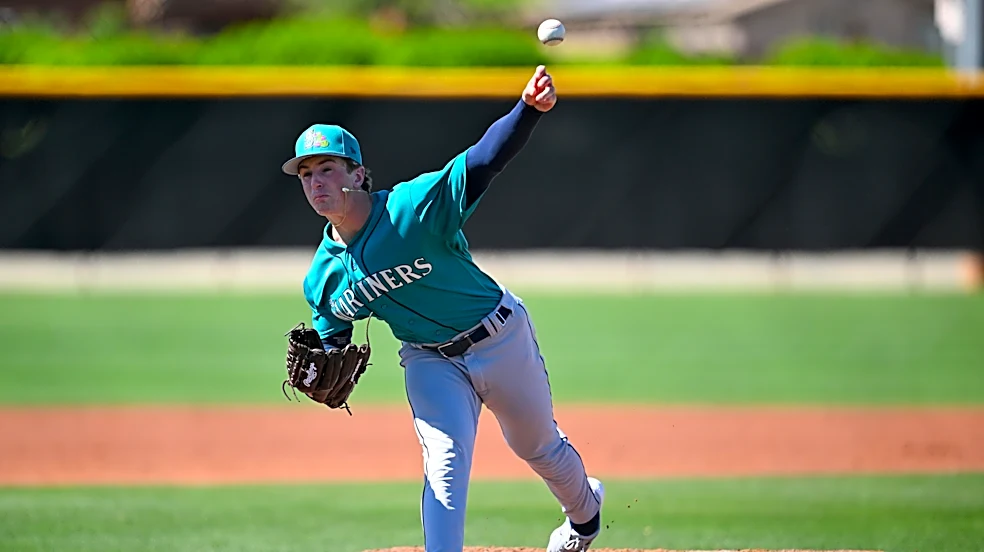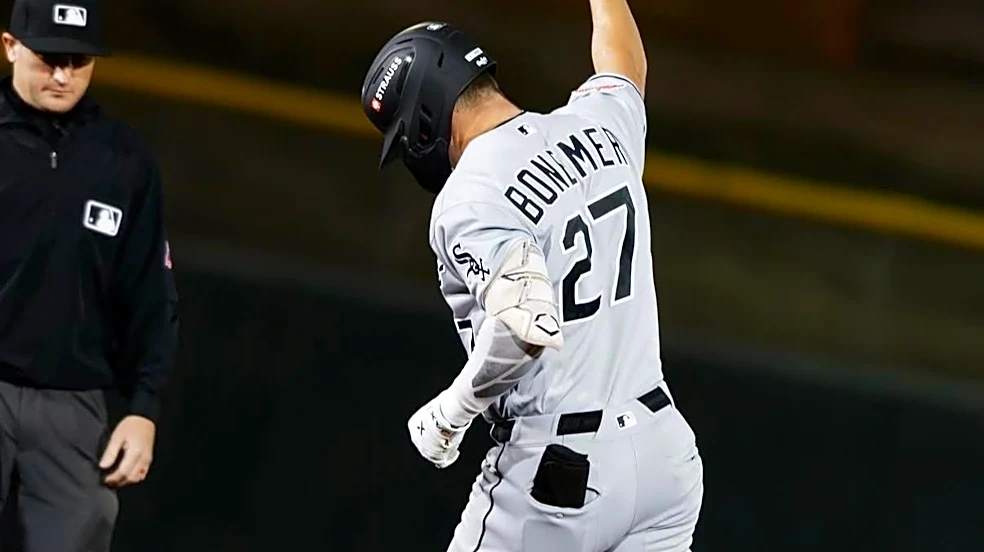




Caleb Bonemer spent the summer giving baseballs a one-way ticket out of the yard. Now, the White Sox are trying to figure out where to put his glove. After a 37-homer season between High-A Winston-Salem and Double-A Birmingham, Bonemer has made a pretty convincing argument that his bat deserves attention. Finding a place for it in Chicago is the next part of the assignment, and some extra mileage in the outfield could help.
That work has continued in the Arizona Fall League, where Bonemer is getting
more opportunities to learn the grass while giving Glendale plenty to like at the plate. The Sox haven’t settled on his defensive home, but they’re giving themselves options. With an increasingly crowded infield, that’s probably a good idea.
Bonemer finished the regular season with a .251/.380/.550 slash line and a .930 OPS across the two levels. Along with those 37 long balls, he drew 84 walks in 595 plate appearances, good for a 14.1% walk rate. There’s power here, obviously, but there’s also a willingness to take the free pass when pitchers won’t give him something to hit.
And the production continued after his promotion to Birmingham. That matters. Beating up on High-A pitching is fun, but carrying an offensive profile into Double-A gives the Sox more reason to consider how soon he might help the big league club.
Of course, there’s still some swing-and-miss to address. Bonemer struck out 161 times during the regular season, a 27.1% rate. More than a quarter of his trips to the plate ended without a ball in play, and better pitching will keep testing that part of his game. The goal is to make more contact while keeping the damage that makes him dangerous. The walks help, but getting a hittable pitch and doing something with it will become increasingly important as he moves closer to Chicago.
So far, the fall has offered encouraging results. Through 39 at-bats, Bonemer has hit .282/.349/.590 with a .939 OPS, four doubles, a triple, two home runs and nine RBIs. He has also drawn four walks against eight strikeouts. It’s a small sample, because pretty much everything in the AFL is a small sample. Still, we’ll happily take the extra-base hits.
The more interesting development, though, might be what happens between his plate appearances. Bonemer’s outfield experiment began before he arrived in Arizona. He worked with Doug Sisson in Birmingham in late summer and made his first center field appearance on Aug. 26, giving him some experience before taking the assignment to Glendale. He started nine games in center for Birmingham, handling all 28 chances without an error over 79 2/3 innings.
That makes the AFL an extension of work already underway. One of the biggest reasons for sending him was to get more defensive reps, and he has spent time at all three outfield positions, mostly in center. There’s plenty for the 21-year-old to learn. Reading a ball off the bat, choosing an efficient route and knowing when to call off another outfielder take practice. So does getting the ball back to the correct base without giving runners an extra 90 feet.
Bonemer has one error in eight chances this fall, but that tells us very little about how the transition is going. An error total won’t tell you whether a late jump turned a catchable ball into a double or whether a good route made a difficult play look routine. Those are the details worth watching.
Maybe an offseason conversation with Tristan Peters would help, too. The former Savannah Banana gets some terrific jumps, and Bonemer could do worse than picking the brain of the guy currently patrolling center on the South Side. Peters also complicates any assumption that Bonemer’s assignment comes with a future starting job attached. Chicago’s rookie center fielder hit .265/.337/.437 with a .774 OPS, 12 home runs, 56 RBIs and 31 doubles while making the All-Star team. The Fielding Bible credited him with five Defensive Runs Saved. That’s a pretty solid case for keeping his spot.
The corners offer more questions. Braden Montgomery finished with zero DRS in right and had his struggles at the plate. Sam Antonacci, another infielder learning the outfield, finished at -9 DRS in left. That gives the Sox reasons to keep developing alternatives. It doesn’t tell us which player, if any, Bonemer might eventually replace.
Josh Barfield told Scott Merkin that outfield work adds versatility; Bonemer remains an infielder. Keeping both possibilities alive makes sense. With the big league infield crowded, the outfield could offer Bonemer a quicker route to Chicago, an opportunity he has acknowledged and embraced. A player who can handle multiple positions is easier to work into a lineup, particularly when his bat gives the manager a reason to find room. But he has to be able to handle them. Writing three extra positions next to his name won’t help much if the Sox can’t trust him to play there.
There’s also the trade question. A power bat with several possible defensive homes could interest another organization, and maintaining his infield work preserves those options. That’s a potential benefit of the development plan, though there’s no reason to treat it as evidence the Sox are preparing to move him. For now, there’s enough to follow without trying to predict a transaction or pencil him into the 2027 lineup.
Watch where Bonemer gets his remaining AFL starts. Watch whether his reads, routes and throws become more comfortable as the innings accumulate. At the plate, watch whether he keeps pairing power with walks while cutting down the Ks. Then comes his assignment to open next season, which should give us another clue about how close the Sox believe he is.
Bonemer has already given Chicago a reason to think about finding room for his bat. The work now is making sure his glove gives them somewhere to put it.