




September 16, 2000, was meant to be a straightforward early-season cup fixture, but it quickly devolved into pure, unadulterated Italian football chaos. Fresh off signing the headline addition of the summer transfer window — 22-year-old French hero David Trezeguet — Juventus traveled to the Stadio Mario Rigamonti to face Brescia in the first leg of the Coppa Italia round of 16. What transpired over the next 90 minutes was a surreal blend of extreme weather, simmering revenge, and an explosion of red cards
that made for one of the most bizarre debuts in club history.
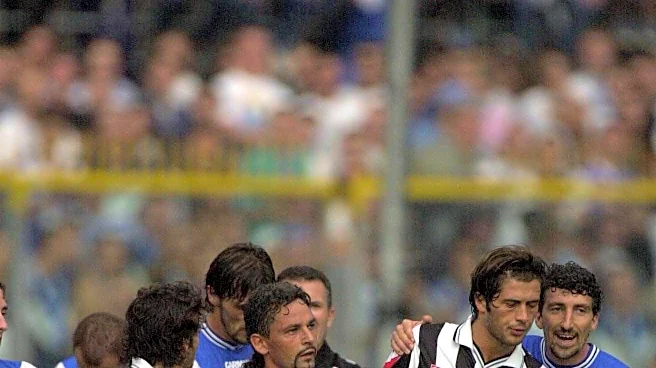
To understand the intense friction on the pitch that afternoon, one needs to look back just four months earlier. On the final day of the 1999–2000 Serie A season, Juventus famously lost the scudetto on a rain-soaked pitch in Perugia. Over the summer, Brescia had appointed Carlo Mazzone — Perugia’s manager that fateful day — and brought over three Perugia players in Alessandro Calori, Pierpaolo Bisoli, and Massimiliano Esposito. The lingering resentment from that infamous afternoon in Umbria poured right onto the Mario Rigamonti pitch, turning every tackle into a flashpoint.
Carlo Ancelotti deployed a side structured around creative fluid movement, pairing Trezeguet up front with Darko Kovačević while Alessandro Del Piero pulled the strings behind them. Though team sheets like transfermarkt often listed Del Piero as part of a central midfield trio in a standard 3–5–2, he played as a classic trequartista, floating freely between the lines to feed the new French frontman.

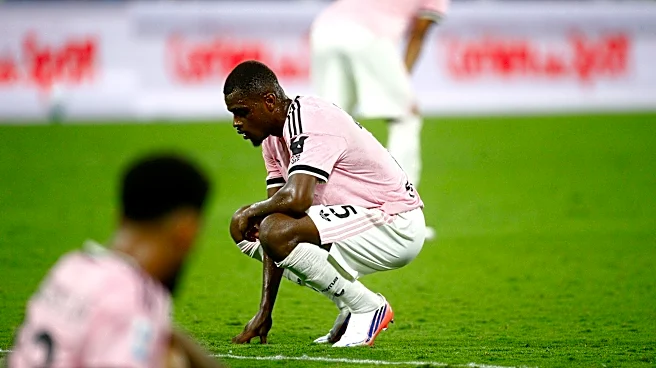
Yet any tactical rhythm was quickly derailed when nature decided to join the fray. In the 31st minute, the match was halted for 15 minutes as a sudden, violent whirlwind swept across the stadium, tearing through equipment and sending debris flying across the pitch. When play resumed, the match descended into absolute mayhem. A total of five red cards were brandished: Brescia manager Carlo Mazzone was sent off alongside players Andrés Yllana and Massimiliano Del Nero, while Edgar Davids and Ciro Ferrara were dismissed for Juventus — Davids receiving a straight red late in the match after having only subbed on a few minutes prior.
Lost amidst the chaos of the 0–0 draw was the official competitive debut of David Trezeguet, who started up front alongside Kovačević before being substituted for Zinedine Zidane in the 81st minute. It was a violent, tempestuous introduction to Italian football for the young Frenchman, but it proved to be the opening chapter of a legendary ten-year love affair in Black and White.
Over the next decade, Trezegol — as he’d come to be known — redefined what it meant to be an elite penalty-box assassin. He was a pure, cold-blooded finisher whose movement required minimal touches to inflict maximum damage. Over 320 official appearances, he racked up 171 goals — a staggering tally that makes him the highest-scoring foreign player (and 4th highest scoring player overall) in Juventus history. Formidable partnerships with both Alessandro Del Piero and Zlatan Ibrahimović yielded multiple scudetti, a Serie A top scorer award in 2001–02, and iconic European moments that firmly established him among the elite strikers of his generation.
Yet what elevated Trezeguet from a club legend to an immortal figure was his unyielding loyalty when the foundation crumbled. Following the forced relegation to Serie B in 2006, when world-class talent fled Turin, Trezeguet stood shoulder-to-shoulder with the core leadership to fight in the second tier. His goals powered the immediate return to Serie A, cementing a bond with Juventini that went far beyond trophies.
September 16, 2000, may have introduced Trezeguet to the storm of Italian football, but over the next decade, he became the ultimate focal point of Juventus’ attack — a ruthless goalscorer and an everlasting icon of devotion for the Bianconeri.