
Usually, these sorts of lists have minor, incremental changes from one release to the next. That’s usually informed by a promotion here and there and perhaps an occasional trade. A long-term injury can sometimes drop a prospect a bit. This update though, it’s pretty big. Arizona has promoted or traded a number of names from their top-30, have drafted a few names to add, and have also seen one of the bigger prospects on the list take a massive jump in the standings while last season’s top entry on this
list has taken the biggest fall of all (Slade Caldwell falling from the pinnacle out of the top-20 entirely).
Did I mention that injuries can impact these lists? Because injuries can impact these lists. Like, a lot. This year’s Diamondbacks entry is proof of that. The organization should have been set up nicely by drafting the likes of Jordan Lawlar, Tommy Troy, Druw Jones, Slade Caldwell, and others. All four of those first selections have lost major development time to injury, preventing the likes of Jones or Caldwell from ever finding their groove. Numerous injuries on the 26-man roster have made it necessary for the Diamondbacks to promote aggressively from their farm system just to field a team. Five players on this list have already made their MLB debuts. Another handful have recently been promoted off this list having exhausted their rookie eleigibility. By the next time OPening Day rolls around, this list will likely look very different than it does right now.
Without further ado, here is the updated top-30 prospects list. Where applicable, I have listed the Baseball America, MLB Pipeline, and Fangraphs rankings. Pipeline rankings do not include the addition of this season’s draft picks.
The Prospects 11-30
30. Jose Fernandez – 1B/DH (BA NR, MLB NR, FG NR)
29. Jusang Eom – SS (BA 21, MLB 19, FG NR)
28. Yassel Soler – 3B (BA 27, MLB 30, FG 20)
27. Carson Kerce – SS (BA 13, MLB NR, FG 33)
26. Spencer Giesting – LHP (BA 24, MLB 24, FG 27)
25. Jose Cabrera – RHP (BA 18, MLB NR, FG NR)
24. Dean Livingston – RHP (BA14, MLB 12, FG 14)
23. Junior Ciprian – RHP (BA 20, MLB 16, FG 15)
22. Slade Caldwell – OF (BA 22, MLB NR, FG 19)
21. Brian Curley – RHP (BA 19, MLB 14, FG 21)
20. Albert Barriga – C (BA 23, MLB 13, FG 34)
18. Wellington Aracena – RHP (BA 8, MLB 15, FG 13)
17. Blake Bryant – RHP (BA 6, MLB NR, FG 11)
16. Cristofer Torin – INF (BA 15, MLB 10, FG 25)
15. Druw Jones – OF (BA 17, MLB 23, FG 26)
14. Ashton Izzi – RHP (BA 16, MLB 1, FG 9)
13. Manuel Pena – 1B/OF (BA 25, MLB 25, FG NR)
12. Carlos Virahonda – C (BA 7, MLB 9, FG 27)
11. Patrick Forbes – RHP (BA 13, MLB Not Ranked, FG 14)
The Prospects 1-10
10. Kohl Drake – LHP (BA 29, MLB 21, FG 7)

Standing 6’ 5” and throwing from the left side, Drake once, not long ago, represented the top arm in the system. Acquired at least season’s trade deadline, Drake brings above average command and improving velocity. Since being drafted, Drake has added roughly three miles per hour to the average velocity of his fastball. Problematically, Drake has not show the ability to maintain that velocity bump in 2026, where his velocity has now been somewhat all over the place. His fastball now has an uncertain range between 91-95 mph, with it looking more and more likely that he will finally settle in as a 91-93 mph arm that has a bit of reach-back available when necessary. Drake also sports a good curve, which is his best secondary pitch, while also featuring a changeup with about 10 mph of separation from his fastball. Drake works up around the letters to make his fastball play up. This results in Drake giving up a higher than average number of home runs. This has not been too much of an issue so far as he tends to miss up instead of down if he misses his spot. After some velocity and injury concerns, Kohl Drake was one of a number of players given the MLB nod ahead of schedule. The results have been mixed as Drake’s stuff is more of the good variety than it is of the great variety. He gets by mostly through unfamiliarity at this point, but has already flashed some signs that he could indeed stick as a back of the rotation starter.
9. Mitch Bratt – LHP (BA 12, MLB 8, FG 18)

Bratt’s fastball sits just 91-93 mph but he got a well above-average 31.8% whiff rate with it in 2025. He creates deception with the angles he throws from, and not only does he locate it well, but he is also fearlessly willing to attack hitters with it. He is just as aggressive with his mid-80s cutter, another pitch he uses to pound the zone and elicit whiffs (29.6%). He also throws a curveball and changeup, though the latter remains a work in progress, a tough pitch to master given his arm angle. He is an elite strike-thrower, issuing zero or one walk in 19 of his 24 outings in 2025. He earns high marks as a competitor and worker. That’s the good news, which is also a big part of the less than good news (but not necessarily bad).
This is where looking at minor league track records and extrapolating future success gets rough. Bratt is yet another prospect pressed into early service at the Major League level. Thus far, the results have been mixed, but largely positive. As expected, Bratt’s propensity to fill the zone with strikes (but not elite spin or velocity) has resulted in plenty of hard contact at the top level. His command is still elite, but his control has turned into something he is going to need to work on some more. The middle of the zone is not going to do Bratt any favours now that he is facing hitters who can identify the pitches more readily than those he faced in the minors. In the Majors, Bratt’s walk rate has exploded to over five. This, paired with a 1.34 HR/9 has resulted in some rough innings for the young lefty. Still, while pressed into service ahead of schedule, and facing some of the stiffest competition he could be asked to face, Bratt has acquitted himself nicely thus far, posting a 113 ERA+ across his first seven outings.
With upcoming potential roster crunch, it remains to be seen if Bratt, who profiles as a future #4/5 starter, will finish this season on the 26-man roster or not. Whether he does or not, he will almost certainly be on the shortlist for pitchers to fill out the rotation next season, as the rotation will feature at least the departures of Zac Gallen and Michael Soroka.
8. LuJames Groover – INF (BA 5, MLB 5, FG 8)

When Groover was first selected in the second round of the 2023 draft, he was considered one of the more polished hitters in the class. The questions regarding Groover mostly revolved around his ability to play the hot corner, a position he only moved to during his final season at NC State. Groover’s development was sidelined for a bit by a broken wrist suffered in one of his first professional games. While Groover got off to a bit of a slow start with the bat, his defense at third has improved dramatically and there is now a good chance he can stick at the hot corner. Over the last 18 months, Groover’s bat has taken off. Once he found his groove (no pun intended), Groover began to hit the ball with authority in the minors. Groover has a clean, direct bat path and little wasted movement in his swing. He has low swing and chase rates and rarely swings and misses. His lack of impact has long been a concern for evaluators; those concerns were exacerbated after he slugged only .434 with just 12 homers in 470 at-bats at hitter-friendly Amarillo. Some in the organization trust more power will come as he adds strength and experience; others believe he needs to make trade-offs to create more leverage, possibly at the expense of batting average. He has improved at third but still projects as fringe-average there.
An injury-induced cup of coffee in the Majors earlier this season showed that Groover needs to show he can hit for more power—and hit righthanded pitching better—in order to profile as an everyday player at either corner. But his hit tool gives him a good foundation and should earn him plenty of opportunities to improve moving forward. The current lack if in-game power is likely the reason that Groover does not land on most top-100 lists.
7. Jansel Luis – INF (BA 11, MLB 6, FG 2)

Given the way in which Mike Hazen has gone about stocking the organization from top to bottom, it will likely surprise no one to hear that Jansel Luis is an athletic, toolsy, switch-hitting infielder. Luis employs a simple swing from both sides of the plate and collects hits by virtue of his good hand-eye coordination. However, his propensity to swing at most anything he can reach does his overall production no favors. Not only does he feature a poor chase rate, he also swings at a high number of pitches in the zone, including some that aren’t in his best interest to attack. The overall result of this aggressive approach is it impacts his quality of contact, and his raw power might be a grade higher than what he exhibits in games as he simply does not barrel the ball as much as he probably should. After hitting .304 in High-A Hillsboro in 2025, he has come down to earth as he faces stiffer competition in Amarillo, where he has yet to be able to take advantage of the hyper-offensive conditions of the park and league. Luis still does not have a settled position defensively. He has the arm necessary to man third. He can and has played short and second. Some feel his best position may still b a move to the outfield. For now, it seems the Diamondbacks are more concerned about getting Luis’ bat going again, as he is getting plenty of looks at DH for now.
6. David Hagaman – RHP (BA 4, MLB 3, FG 10)

Hagaman has had loud stuff dating back at least to college, but he not only took it up a notch in 2025, he also paired it with a newfound ability to pump quality strikes, something the Arizona farm system can appreciate, given its many struggles in that area. His fastball averages roughly 94 mph with 18 inches of carry and comes at hitters from an elite level of extension of seven feet. His heater tops out in the 97-98 mph range, but evaluators say they wouldn’t be surprised if he eventually sits comfortably in the upper 90s as his arm strength and endurance increase. Hagaman’s curveball is a hard one, coming in at up to 86 mph, but he maintains consistent depth with it. His mid-80s changeup has late movement and looks a great deal like a hard sinker. He also throws a slider that flashes average. He attacks hitters and shows no fear of being in the zone. The 6-foot-4 righthander has a loose, stable delivery that allows him to get down the mound with ease. Hagaman did not throw more than five innings or 65 pitches in an outing in 2025, so he will need to show he can maintain both his caliber of stuff as well as the same quality and quantity of strikes over a full season. So far in 2026, it has been more of the same though. Only recently promoted to AA Amarillo, Hagaman dominated Hillsboro and will now need to start putting in the work necessary to get stretched out more as he is still a five and dive pitcher at this stage. Expect Hagaman to be assigned to Amarillo again next year, but to be on track for a mid-season promotion to Reno if he can get his arm stretched out enough before being placed on the doorstep to the Majors.
5. J.D. Dix – SS (BA 10, MLB 4, FG 1)

Dix was taken with the 35th pick in the 2024 draft and was subsequently convinced to forego his commitment to Wake Forest. Dix has the size, athleticism, hands, and footwork that can play anywhere on the dirt. Most evaluators feel he has plenty of arm and range to stick at shortstop long-term. However, given Arizona’s glut of infield prospects, Dix’s positional flexibility will only help him. Still not old enough to legally drink, Dix is just finally growing into his impressive 6’2” body. Dix filled out nicely over the course of the last year and it has resulted in Dix flying up the prospect rankings. Dix is a switch-hitter who swings more comfortably from the left side. Dix already demonstrates above average gap-to-gap power, leading many to see the potential for him to reach true plus gap-to-gap power as he finishes filling out and he continues to work with professional trainers and conditioning coaches. Dix is currently showing off all his tools in Hillsboro, where he has been playing second base. Diamondbacks fans are already familiar with having a slick-fielding, switch-hitting, power bat at second base. Should Dix not find a home at shortstop for some reason, he could continue that legacy. Enjoy a highlight from the eve of the last season’s trade deadline.
4. Ryder Helfrick – C (BA 2, MLB NR, FG 4)

Helfrick was the surprise pick by Arizona with the 15th overall overall selection in the draft. Helfrick is a glove-first catcher out of James McCann’s alma mater, the University of Arkansas. Helfrick was a highly-regarded high school prospect in Northern California who elected to head to the competitive SEC rather than remain in California where there was also premium competition. After struggling as a freshman, he had a power-hitting breakout as a sophomore before then struggling with Team USA during that summer. He then made the necessary adjustments to hold his place on the squad as a junior, with a .283/.417/.562 line and slightly fewer strikeouts than the year before. Overt physicality, power, and steady catching defense (especially his framing) give Helfrick a floor of sorts as a quality back-up catcher who can control the running game. It is not uncommon for big league catchers to hit around .200 and little to be thought of it. That seems to be a likely outcome for Helfrick, who swings over the top of a lot of soft stuff in the bottom of the zone. However, with professional coaching and an opportunity to refine his craft full-time could result in Helfrick becoming a more dangerous sort of player. Helfrick possesses borderline light tower power which should allow him to crush quite a few high fastballs to his pull side and slug impressively, even though he will probably strike out 30% of the time in pro ball.
On defense, Helfrick’s size and strength help make him a quiet, subtle receiver around the edges of the zone, and he’s a skilled, mobile ball-blocker. He has an above-average arm that, unfortnately, currently plays down somewhat because his exchange mechanics take too long. This is a very coachable issue and should be easily remedied early in his professional development. Luke Stevenson went 35th overall in 2025 after striking out more often than Helfrick did as a sophomore, and Helfrick is a better defender, giving him extra padding for his potential floor.
3. Kayson Cunningham – SS (BA 3, MLB 2, FG 5)

Taken with Arizona’s first pick in last season’s draft, Kayson Cunningham represents yet another dynamic infielder with high upside and above average tools across the board save his arm, which is average. Cunningham had the distinction of being the starting shortstop for USA Baseball’s 18U National Team on a team stacked with impressive prep shortstop talent. A strong argument can be made that Cunningham was the best pure hitter to be found anywhere in his draft class, an early evaluation that seems to be holding up a year on. After tearing up Visalia for about half a season, Cunningham has taken his talents to Hillsboro, where he has settled in nicely. He likely finishes this season in A+ ball and will be an interesting decision for he next season’s roster assembly. He could repeat A+ for a bit to make sure he gets plenty f runway to finally take off. Or, if he continues to be essentially a league average hitter in A+ ball, he might get a bump up to AA Amarillo to see if his bat can be sparked awake by getting to face tougher competition. Thanks to a quick and efficient left-handed swing, Cunningham has explosive hands, quick enough to snatch fastballs at the top of the zone. Cunningham also exhibits great body control, allowing him to be adept at adjusting the posture of both his upper and lower body to move the barrel all over the place. Cunningham has very special feel for hitting and brings a surprising amount of power for his 5’10” size. Cunningham has all the tools necessary to remain at short, but his average arm profiles him better for second base (a problem to be sorted at a much later date). Cunningham also features very good speed, getting out of the box quickly and moving well in the field. While it is not currently a big part of his game, he profiles as a 20 steal threat.
2. Demetrio Crisantes – 2B (BA 1, MLB 1, FG 3)

At this point last season, I and a few others decided to aggressively rank Crisantes on the strength of his plate discipline and his batted ball numbers. All he has done since then is rake. He is now by and large considered Arizona’s top prospect. Crisantes is going to go as far as his bat will take him. He is an average fielder at second, but makes all the plays one would expect. He lacks any true standout tool in the field, but he does all the little things the right way, maximizing the results from his average fielding, arm, and speed. At the plate, Crisantes makes borderline elite contact on swings in the zone, which is a good thing as Crisantes loves to swing at strikes in the zone. Crisantes features a very simple, repeatable and direct swing that starts with a minor leg lift to as he begins his load. With a good understanding of the zone and an aggressive in-zone approach, Crisantes not only has an above average hit tool, but projected plus power. Injury derailed Crisantes’s development in 2025, limiting him to only 151 plate appearances. Returning from injury, Crisantes picked up right where he left off. Crisantes managed to remain above average at the plate after his promotion to AA Amarillo. His performance there incentivized the organization to promote him yet again, to AAA Reno. In Reno, Crisantes has finally hit his first major challenge. While his overall numbers are down since the promotion to Reno, there is still plenty to like. Crisantes has become more patient since his promotion. He isn’t getting the walks he used to, but he is also striking out far less. He has become better at offering at pitches inside the zone and has chased outside less frequently. With AAA being Crisantes’ third level of competition faced in 2026 alone, it is unsurprising that he finally found a level that will take a bit of an adjustment period. Assuming no team pries Crisantes away via trade, the Nogales, Arizona native will open his next campaign in AAA again. How long he remains in AAA will depend almost entirely on him. If he continues to refine his craft the way he has so far, he’ll be making things difficult for the decision makers by this time in the next full season.
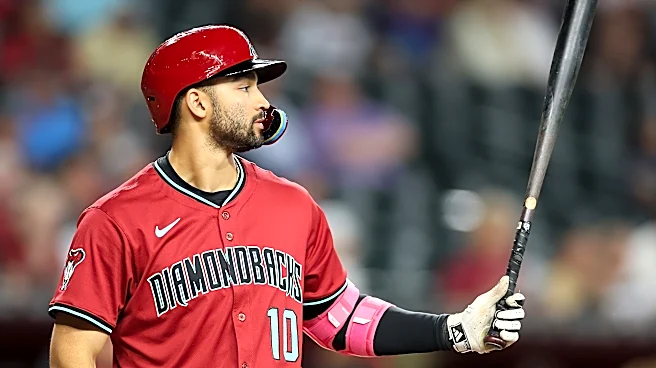
1. Tommy Troy – OF/INF (BA NR, MLB NR, FG NR)

Listen, I get it. Most everyone has removed Tommy Troy from prospect rankings at this point. However, when crunching the numbers over the last few weeks, one thing jumped out at me. Tommy Troy does not yet have enough at-bats to lose his rookie eligibility – not yet. Given that Troy is only just now in Bridge Camp , getting himself ready for a rehabilitation stint in the minors, there is a very real possibility that the upcoming roster crunch results in Troy not seeing another Major League at-bat in the 2026 season. If that remains the case, then Tommy Troy will actually enter the next baseball season with his rookie eligibility intact. With that being the case, he’s still marginally a prospect in my book. With two more starts, Troy likely accrues enough at-bats to lose eligibility. However, with the roster crunch and his pre-injury struggles, I think, at this point, it is more likely than not that Tommy Troy heads back to Reno once he is deemed healthy enough to resume full baseball activity.
That said, Tommy Troy has passed the eye test and appears to be MLB-ready. Don’t let the 83 wRC+ fool you. Troy has looked comfortable at the plate and has kept the defense on their toes. Troy has wheels and he knows it. He uses that fact to draw defenses in with the threat of bunting to hit. But Troy also has decent pop in his bat – especially against fastballs, even elite ones. Troy’s reputation for being a fastball killer turns out to be well-earned. On the other hand, Troy is still struggling with elite spin on breaking pitches, especially hard sliders. It is an issue that MLB pitchers have exploited thus far. Then, just as it looked like Troy might be making the necessary adjustments, he fell injured – again.
Honorable mentions: Christian Cerda, Yassel Soler, Caden Grice, Grayson Hitt
This list will no doubt change after the Arizona Fall League plays and Mike Hazen makes his offseason moves to restock the 26-man roster. I expect those moves and some graduations from and drops off to have this list looking very different come time for the March update.