




They predicted a firm Los Angeles Lakers loss to the Houston Rockets in the First Round of this year’s NBA playoffs. Without two of their three best players (Austin Reaves, out with an oblique injury and Luka Doncic, out with a hamstring strain), they had no chance against the talented young Rockets, most media members in an ESPN survey said.
Actually, 15 of 16 believed that Houston would win comfortably.
And you can’t really blame them. Statistically, their chances of winning
was 14 percent, according to Polymarket. That equates to “no chance”, according to Legion Hoops.
But the Lakers still won the series – and pretty convincingly at that – getting up 3-0, which is basically unbeatable historically.
That begs the question of how much attention we should give numbers and stats, especially in the playoffs.
Here’s why.
Numbers are great at calculating how to get the most efficient shots, finding weak points and so much more. But they can’t stand alone. They can’t tell you about chemistry and they can’t predict the big moments of a playoff series. In order to get a full picture of a player, a team, a series, you have to look up from the stats sheet.
Momentum, the intangibles in between possessions, rivalries, chemistry between certain players, trust in each other – and the opposite – overall team connection, leadership, mental toughness – no one can measure these things.
But it is, however, right here that the real story of a game takes place. The story of winning – or losing – of personalities and the biggest moments.
Most things worth experiencing are not quantifiable. It is in between all the numbers we track that the greatness of basketball is found.
Right there, when numbers just won’t cut it anymore, we have only emotions left. In those cracks and in between our logic and reasoning, basketball forces us to feel. The good, the bad, the sad, the disappointment, and the elation.
All of those feelings which we often are afraid to feel in our normal lives, because it would mean we lose control. But when we watch basketball, all of these feelings are acceptable, even applauded. And in that, basketball becomes a vent for all of our big feelings, which most people spend so much energy bottling up to get through the day.
According to a Freudian psychoanalytic perspective on fandom, sports provide a rare, socially acceptable place for behavior that would otherwise be unacceptable. Fans can be loud, boo and scream, and be hostile towards the opponent. That leaves a place to get the aggressive, primal urges of the id (from Freud’s theory) out in a way that’s acceptable by our social norms and the superego, in which our moralistic nature resides. The id’s raw energy is channeled into a civilized activity that we like to call fandom. Sports help us get an emotional release for pent-up tension. And basically, that’s why it feels so important – and gratifying – to be a sports fan.
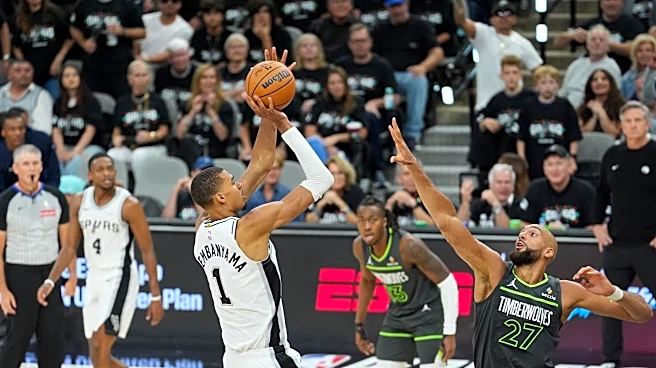
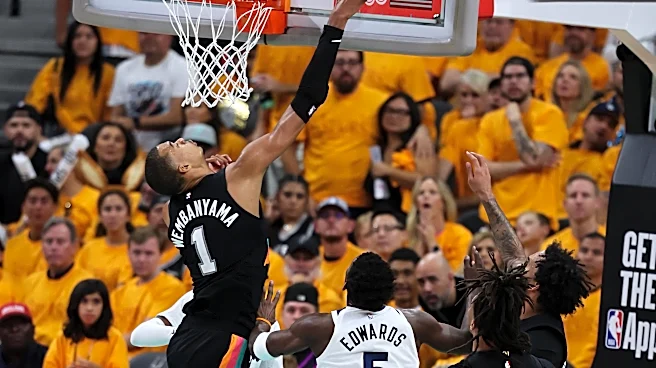
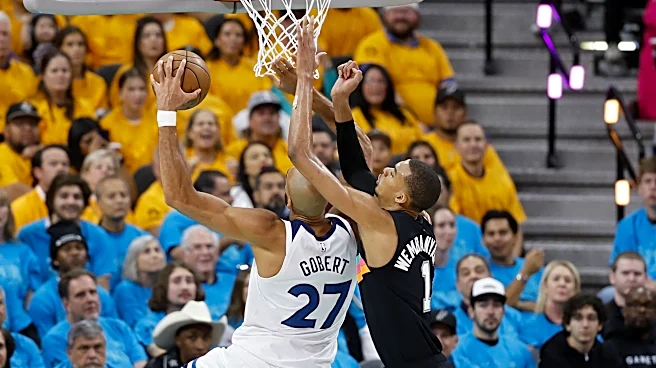
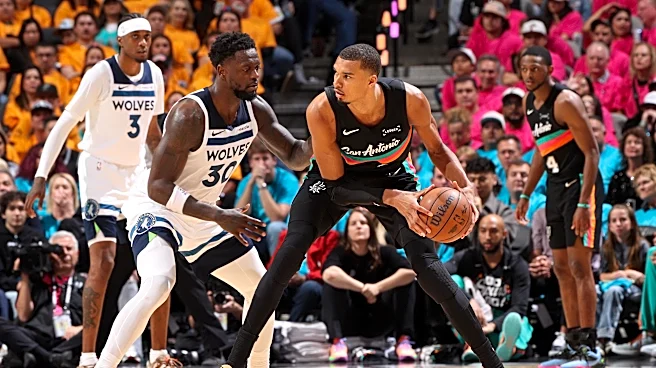
That leads us to the future of the NBA, and a pretty good representation of the next generation generally, it seems: Victor Wembanyama from another playoff contender, the San Antonio Spurs. Just last week, Wemby talked about how he isn’t interested in trying to hide his emotions or consider it a weakness, which has been the predominant culture in the sports world, and generally, up until now. But that may be about to change.
“I refuse to carry the burden of having to hide my emotions,” he said in an answer to a question about whether being emotional is weakness.
If sports, fandom and basketball help us cope with life, find balance and release pent-up feelings of the past, that is a powerful conclusion and a meaningful purpose.
This piece started as a reminder to look up from the stats sheet – and perhaps your phone, as well – and how basketball is less about numbers and more about moments and all that comes in between. But as it turns out, it’s a lot about feelings, too.
Sure, for some, it’s about money mostly, but for fans, players and people around the teams, who put so much time and effort into this sport, it comes down to feelings.
Like someone used to say all the time (it was me), basketball is all about feelings. And maybe I was right. One thing I know, though, is that numbers can’t predict heart – so look up, or you might miss it.