

For these Orioles, after the rotten 2025 they had, one thing was supposed to be true this year: this would be a lineup that could weather bad injury luck. Mike Elias signed Pete Alonso to a five-year, $155 million deal, added competent veteran outfielders in Taylor Ward and Leody Taveras, and supplemented the infield depth.
That plan sounded fine, in theory, but in truth, these signings could never fully compensate for the bottom falling out when it comes to homegrown players. There are a few places
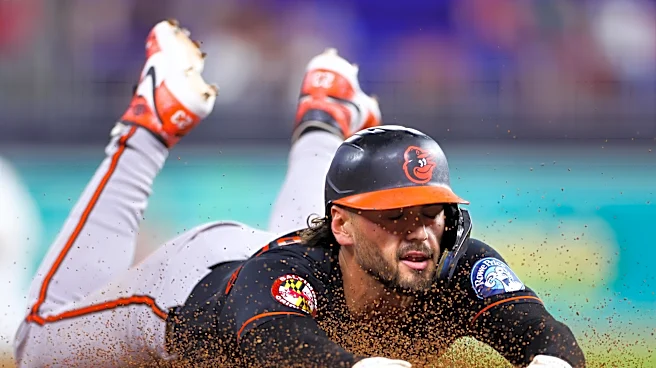
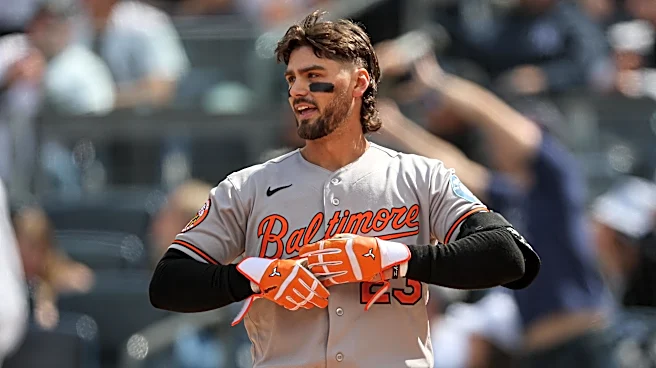
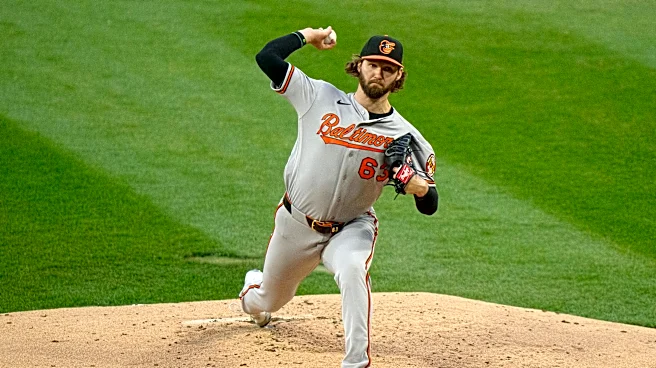
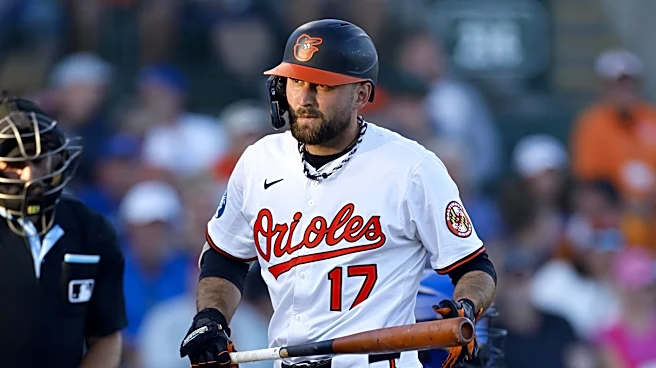
you could point to, but no hiding the ugly truth: Colton Cowser and Coby Mayo are, at the moment, the team’s most conspicuous weak points. Mayo holds a .152/.218/.283 line, while Cowser sits at .179/.282/.209. Those are brutal numbers, and for two bat-first players, they demand scrutiny.
As prospects, both Cowser and Mayo crushed minor league pitching, but the transition to MLB has been rough for both. A first-round pick in 2021, Cowser hit .300 (.916 OPS) in three MiLB seasons, then came out guns a-blazing as a rookie, slashing .242/.321/.768 with 24 home runs and 69 RBIs over 153 games in 2024. But in 2025, the Milkman suffered a fractured thumb, broke some ribs in a wall collision, and sustained a concussion that limited him to 92 games. His numbers have gotten worse since. Mayo, meanwhile, signed well above slot for $1.75 million after scouts saw elite raw power in his 6’4” frame. Mayo tore through the minors, a career .905 MiLB hitter, but his early MLB exposure has not been encouraging—he’s batted .193 in 134 games while playing a ham-handed third base, the position he came up playing.
Both Cowser and Mayo hit Triple-A pitching for the same fundamental reason: they have plus raw power and can punish mistakes. Triple-A pitchers make mistakes frequently—they leave fastballs over the plate, hang breaking balls, and miss spots on offspeed pitches. A hitter with Cowser’s bat speed or Mayo’s raw power can feast in that environment even with significant swing-and-miss in their profiles, because the mistakes are frequent enough to keep the barrel busy.
But at the major league level, the margin for error disappears. Cowser handles fastballs well, but he’s posted a whiff rate north of 40% against breaking balls in each of the past three seasons. Predictably, opposing pitchers have fed him a steadily mounting diet of breaking and offspeed pitches, down and away. For Mayo, the challenge is slightly different: scouts have long noted that his plus-plus raw power requires a swing that is sufficiently short and smooth to make contact. Perhaps for that reason, he’s selling out on fastballs right now, to the detriment of his ability to hit offspeed pitches.
Are things as bad for both hitters as the data seems? Peripheral data complicates the story for one hitter, not the other. Cowser’s expected numbers are barely better than his actual, with a wOBA of .213 but an xwOBA of .249, and batting average of .189 versus an expected average of .204. His batting average on balls in play (BABip, a test of luck) is .279, meaning that his hitting about as well as he should. Meanwhile, Mayo has a .244 wOBA against an xwOBA of .277, and an actual batting average of .164 versus an expected average of .221, a 57-point gap that is one of the largest on the entire roster. His BABip, .186, is terrible. That is the kind of statistical disparity that suggests bad luck on balls in play, which for him is good news.
One more comparative angle to note is the teamwide one. The Orioles, as a unit, are the sixth-most strikeout-prone unit in baseball: in the AL, only Chicago, Seattle and Los Angeles whiff more than them. This is problematic, to say the least. So there could be an approach problem not the fault of either hitter. Cowser and Mayo strike out closer to as many times as Gunnar Henderson (all between 30-31%), with Blaze Alexander and Samuel Basallo (25.9%) close behind. On the other hand, when it comes to isolated power, Basallo, Henderson, Adley Rutschman and Pete Alonso all exceed .200, an excellent mark. Meanwhile, Mayo sits at .130 (below average) and Cowser’s .030 mark is what Fangraphs calls “Awful.” A 30% strikeout rate with little power is not doing much in the lineup, to state the obvious.
So should these two youngsters get ticketed for the Norfolk shuttle? I’m not sure, frankly. For Mayo, the case for patience is twofold: one, the demonstrated gap between his actual and expected results, and two, the absence of realistic options at third base, with Jordan Westburg still working back from a partial UCL tear in his right elbow with no timetable, and Blaze Alexander confirming that he’s utility piece, not an everyday answer. Jeremiah Jackson has hit well this season, but he’s primarily a middle infielder.
For Cowser, the case is getting tougher, but he is a high-ceiling prospect deserving of some margin. At the same time, his hitting data here suggests he’s not underperforming; he’s just not hitting. A team trying to salvage its season can’t exactly give him infinite rope. Dylan Beavers is not exactly knocking on the door, but while Leody Taveras has essentially been a backup since 2024, he’s producing positive value right now, and may be worth riding as a CF option for as long as the team can.
In the end, it seems that optioning Cowser and Mayo wouldn’t solve anything, because there aren’t great replacements for them at any level in this organization. What this roster really needs is for Henderson and Alonso to heat up, for the balls Mayo is hitting to start falling in, and for Cowser to spend lots of time in the cage on his timing. Probably, at the present time, the team will give it another few weeks. If Mayo is still in the .160s and Cowser is still whiffing at breaking balls with no power in sight, then the conversation changes. Right now, sending Mayo and Cowser down just means Blaze Alexander starts at third base and Leody Taveras starts in center. That could be an upgrade in the short-term, but does little to answer this team’s larger questions.