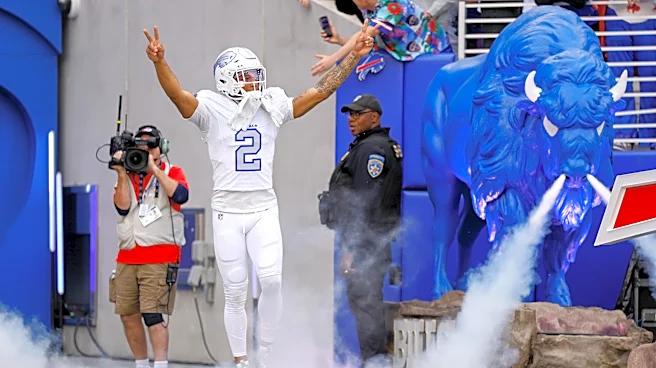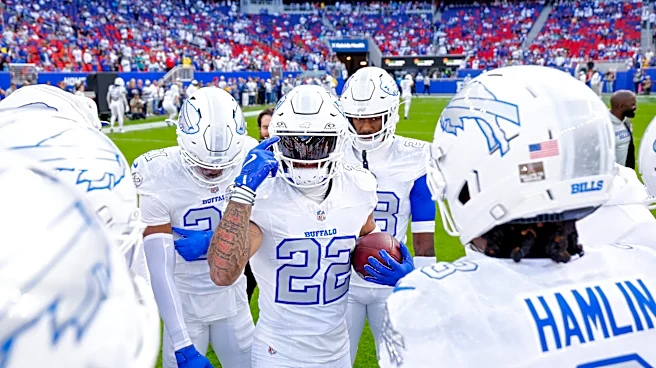

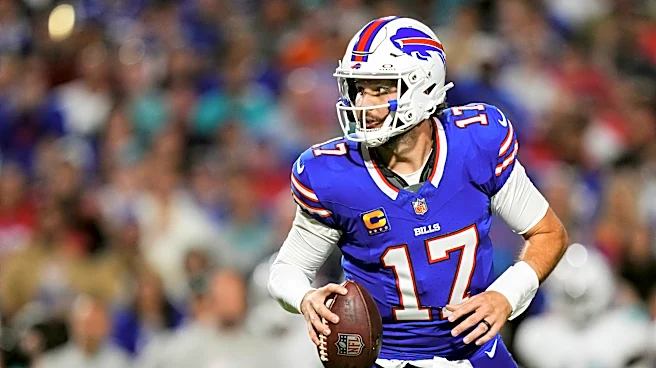
OK, we have to talk about the Buffalo Bills electing to take the football to begin games this season.
While it does seem to perfectly align with the aggressive vibe of the team’s head coach, let’s work to get as close as possible a determination of whether or not it’s a good idea for the Bills to be operating against the grain on this front.
Now, of course, Buffalo can’t simply decide to take the football to begin each game. But Brady is electing to take it if his team wins the coin toss, and if the opponent
wins it, it seems as though every other team will gladly defer to receiving the football at the start of the third quarter.
Therefore, through 10 games, the Bills have been able to count on receiving the football to start the game.
Earlier this season, I published two corresponding studies that examined how scoring right before the end of the halfand “double-dipping” correlate to winning. I used a dataset that features all regular-season games from 2001 to 2025 and, at time of publication, the first three weeks of the 2026 season.
This was the major finding from the first study:
- Teams that outscored their opponent in the final two minutes went on to win 64.5% of the time
And the biggest revelations from the second study on double-dipping, that matter here:
- Teams that double dipped, which included a score of any kind, won at a 73.7% clip
- Those double dips occurred in 13.6% of the games
The last sentence I wrote:
“So, yes, teams should make a concerted effort to double dip. It correlates rather strongly with winning the football game.”
And everyone would seemingly agree there, right? The double dip has become a phenomenon fans and media regularly mention as an objective teams should strive for in each game. And of course by taking the football to start the game, the Bills are eliminating their chances at said double dip.
But note the second major takeaway from the double-dip study. The double dip is decently rare, something that happens in just a little under one out of every seven games. Part of the reason they don’t happen often because the double-dip opportunity only has about a coin-flip’s chance of materializing before halftime.
From 2001 through Week 10 in 2026, the team that does not get the opening kickoff only had the football on the final drive of the first half 49.3% of the time. Even when kneeldowns were excluded, that number is essentially unchanged at 49.1%.
So the presumption that a team starting the game with the football thereby leads to its opponent getting the ball last in the first half is quantifiably false.
I also studied whether or not getting the ball first tends to lead to more overall possession in a game — which would be significantly valuable. It does not — which is probably expected — but there’s one notable aspect on this front.
In that same enormous sample of over 6,600 games since the start of the 2001 season, the team getting the ball first averages 11.44 possessions per game while the other team averages 11.43. Let’s call that no difference.
However, the first half tells a different story, and this is where things get interesting.
The team receiving the kickoff averaged 5.93 offensive possessions in the first two quarters compared to just 5.42 offensive possesses for the team that did not get the ball to begin the game. That 0.51-possession difference is rather massive across such a large, 25-plus season sample.
From that, rather unsurprisingly, the team that received the opening kickoff had an average halftime lead of +0.60 points and were leading in 47.7% of the games compared to the team not getting the ball first leading at the half 44.7% of the time.
Of course, if kicking the ball first — to get the ball to begin the half — actually aids in a team’s chance to win the game, despite the rarity of a double dip occurring, the Bills have been doing it all wrong.
Using that same dataset, I aimed to identify if there is any advantage to be had either way.
When adjusting for the game’s point spread — to determine team quality — and home-field advantage, the team receiving the ball first won 49.8% of the games compared to a win 50.2% of the time for the club that kicks off to start the game, which does not create a convincing case whatsoever that kicking off or receiving the ball first impacts win probability.
Brady’s put the ball down vibe aligns wonderfully with his to date steadfast decision to take the football to begin the game. And now we know that decision is analytically defensible.