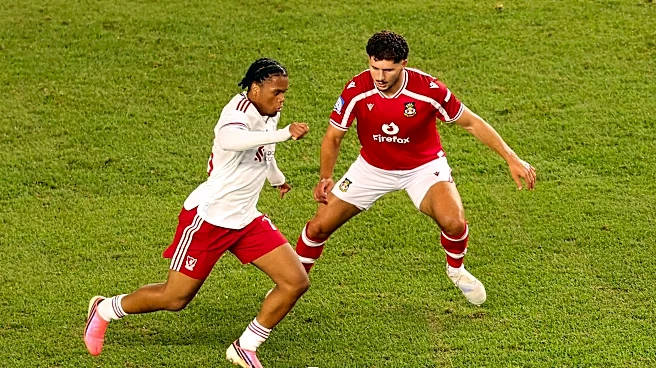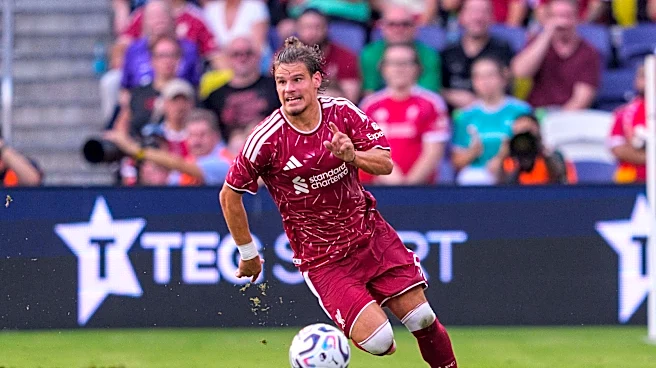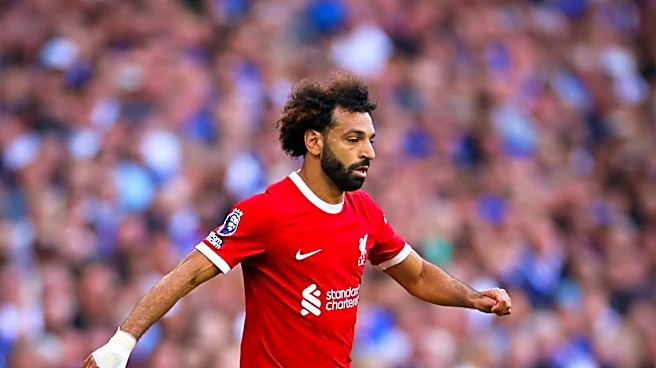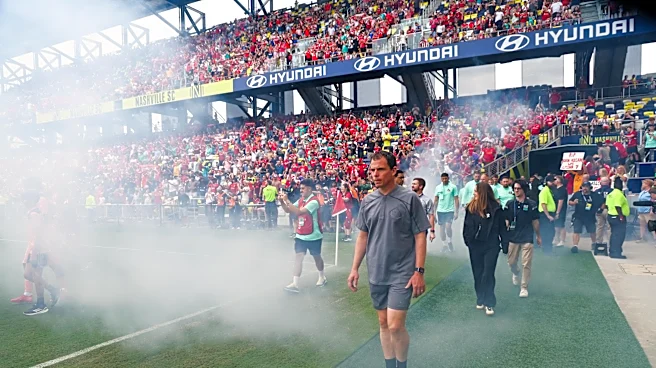

Sunderland kicked off their 26/27 pre-season tour of the USA & their mini ‘Premier League Summer Series’ with an oSunderland kicked off their 2026/27 pre-season tour of the USA and their mini ‘Premier League Summer Series’ with an opening fixture against Liverpool in Nashville, Tennessee, on Saturday evening local time. With both sides operating under depleted squads due to World Cup participation, a variety of players were able to rack up some match fitness in the increased humidity, resulting in a game
of two halves.
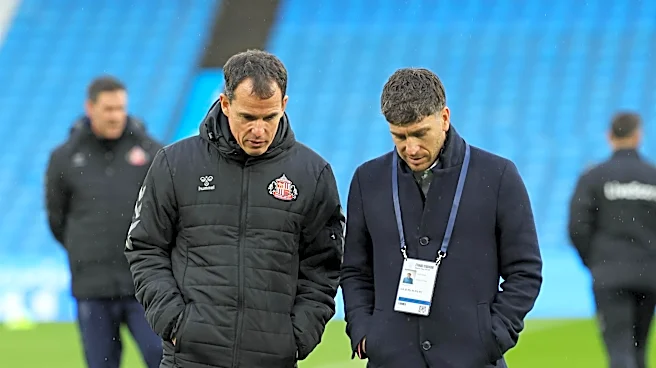
With Sunderland likely to field a vastly different side against Ipswich come August, there isn’t much to read into with pre-season. However, we did get a glimpse of how Régis Le Bris has tweaked his system and how he approached his first encounter with Andoni Iraola as Liverpool’s new manager ahead of the Premier League season.
Despite there being limited data available following pre-season friendlies, let’s have a look at how Le Bris looked to build on the foundations laid last year with his style and shape.
Sunderland line-up
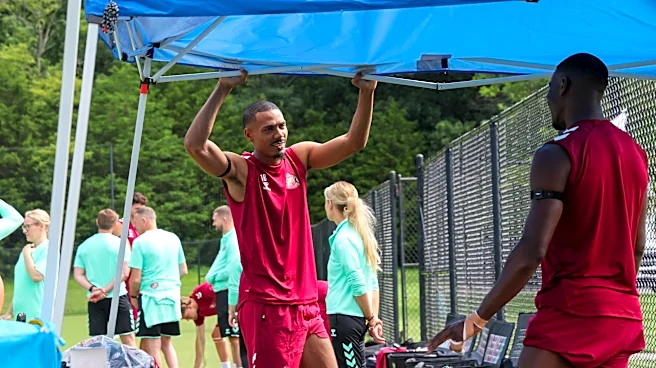
With much of our core XI still on holiday following their extended involvement at the World Cup, Le Bris named as strong a first-half XI as he could, with Dan Ballard and Romaine Mundle both deemed fit enough to start from the off, while Wilson Isidor returned straight to the line-up following his slightly earlier return from international duty with Haiti.
Elsewhere, Chris Rigg, Enzo Le Fée and Alan Browne made up the midfield three, whilst Trai Hume was given licence to operate as the starting right winger following his brief foray in the position at times last season.

From a tactical perspective, without his usual midfield anchor in Granit Xhaka, Le Bris still opted for his standard 4-3-3 shape, which drops into a more compact 4-5-1 when out of possession. Hume was able to tuck inside whilst Sunderland were in possession, allowing Nordi Mukiele to overlap down the right flank and provide the natural width.
With no traditional ‘six’ starting for Sunderland, Alan Browne and Chris Rigg operated as the two more advanced central midfielders, whilst Le Fée once again became Le Bris’ utility man by dropping into the base of the midfield triangle to help bridge the gap between the defence and midfield.
As has become a staple of the way Le Bris organises his pre-season games, mass changes occurred at half-time and Sunderland essentially split the match into two 45-minute contests in order to build match fitness whilst maintaining a similar shape throughout.
Opposition line-up
Liverpool entered the Summer Series in a similar position to Sunderland, with several high-profile absentees due to the World Cup. However, Iraola took a more blended approach when selecting his starting XI, opting to split his senior players between the first and second halves.

First-team players such as Curtis Jones, Jeremie Frimpong and Joe Gomez all started the first half, whilst the likes of Miloš Kerkez, Federico Chiesa and Dominik Szoboszlai all featured after the break.
Lining up in a traditional 4-2-3-1, as he did throughout his three-year tenure at Bournemouth, Iraola likes to utilise pressing triggers to force turnovers high up the pitch before breaking quickly in transition through a series of rapid passes and switches of play to create overloads on the far side. We got to see some early examples of that approach here.
Opening period
Sunderland started the game well and enjoyed more possession than they would normally expect against a team of Liverpool’s quality. Dan Ballard was able to step into midfield with the ball on several occasions in an attempt to break Liverpool’s defensive lines, much like Luke O’Nien did so effectively during Sunderland’s Championship campaign.
Both central defenders combined for 53 successful passes from 57 attempts, with O’Nien recording a 97% pass completion rate during the first half.
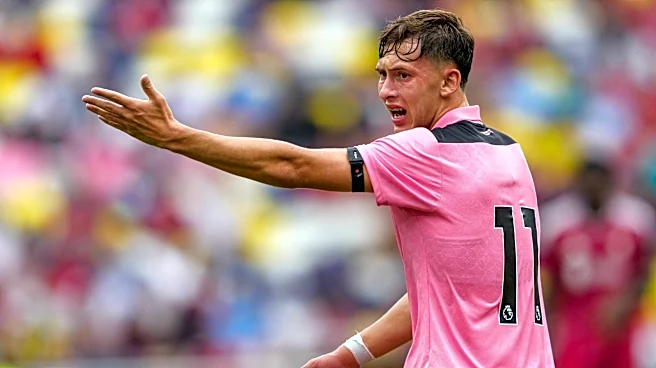
After several early efforts at goal, the scoring was ultimately opened by the hosts after just 13 minutes. Kieran Morrison drifted inside from the right to slot home and give Liverpool the lead from one of the transitional moments mentioned earlier.
Truth be told, given the physical conditions and the nature of pre-season, both Harvey Elliott and Morrison were able to drive forward largely unchallenged in situations that would probably have been defended much more aggressively in a competitive fixture. As a result, there isn’t too much to read into Sunderland’s defensive intensity.

Sunderland were presented with an opportunity to equalise not long afterwards as an overextended Liverpool side were caught in possession by Chris Rigg. The teenager broke into acres of space before sliding the ball through to Enzo Le Fée, whose left-footed effort from the edge of the box flew past Giorgi Mamardashvili and into the top corner just before the half-hour mark.
It’s worth highlighting two aspects of this goal that illustrate how Sunderland may continue to evolve tactically this season.
Firstly, Rigg’s ability to win possession and drive forward through the middle of the pitch will be key to how Sunderland look to exploit transitional opportunities after absorbing pressure in a low block. His confidence carrying the ball centrally is likely to be particularly important whenever Habib Diarra and Noah Sadiki are unavailable, allowing him to remain Sunderland’s primary ball-progressor during what promises to be a demanding campaign.

Secondly, whilst Enzo Le Fée’s long-range strike is unlikely to become commonplace given Le Bris’ preference for creating high-quality chances, the fact he showed the confidence to shoot from distance perhaps reflects a slightly more aggressive attacking mindset heading into the new season.
Having already attempted a greater volume of shots from range during Sunderland’s opening pre-season fixtures – both resulting in goals – there is reason to believe he has been given greater licence to take on lower xG opportunities rather than always searching for one extra pass.
Second-half substitutions
As the second half began, Sunderland made wholesale changes, with Liverpool following suit.
In somewhat contrasting fashion, however, Iraola strengthened his side by introducing more established first-team players, whilst Le Bris effectively handed the second period to Sunderland’s Under-21s in order to provide valuable game time for the club’s younger players..

Despite the personnel changes, Le Bris retained the same tactical shape for consistency, even at the expense of positional suitability. Youngsters such as Tom Proctor were asked to operate much deeper than their natural attacking midfield roles, whilst Finn Geragusyan started on the right to accommodate Trey Ogunsuyi as the lone striker.
Despite the changes, Sunderland’s young side combined well and fashioned an early second-half lead. A neat move involving Proctor and Jaydon Jones allowed the latter to slide a reverse pass into the path of Timur Tuterov, who arrived in the box to score his second goal of pre-season and put Sunderland ahead.

The lead did not last long, however, as Liverpool’s experienced players eventually took control. Goals from Dominik Szoboszlai and Federico Chiesa, just 16 minutes apart, completed the turnaround before Lewis Koumas capitalised on tiring legs late on to make it 4-2.
All in all
With the first of Sunderland’s Premier League Summer Series fixtures now complete, several more members of the squad have joined up with the group ahead of Friday’s meeting with Leeds.
That should provide a much better indication of where Sunderland are, with several senior players returning to increase competition for places whilst also allowing the core of the squad to build further match fitness.

Despite not reading too much into pre-season friendlies – particularly those this early in the summer – it was worth noting the clear intention to apply greater attacking pressure under Le Bris.
If sustained, it could represent a subtle but significant evolution from some of the more conservative attacking displays Sunderland produced during the first half of last season.