




Sometimes, hot dogs can go to hell, because it’s language itself that is a sandwich.
Piracy is known today by its two modern utilizations – the crime of attacking ships at sea to rob them, and the illegal copying of media with the purpose of publication and sale. The former is a profession and a way of life that can present a rudimentary outline of the ever-growing nature of human and cultural morality. Far from the delightful, coded vocation of Disney prominence, piracy has historically been something
its purveyors just did. Perhaps once, perhaps for a time, perhaps forever. Its reputation has fluctuated across geography and chronology, from something as virtuous as any other means of carving a living against nature and the rest of humanity, to a vicious and unsavory rejection of civilized, organized society, to a rejection of ruling excess and overreach.
It’s that latter definition that aligns with the more technologically familiar variation of piracy. Combatted by a mild variation of the Mandela Effect in a 2000s PSA, perhaps You Wouldn’t Download A Car, but the might of Eastern Streams and other predecessors and descendants have made it possible for many to follow sports, movies, books, and media of all kinds. It is, in a sense, the dream of the internet, an egalitarian belief that information deserves to be free for all. For the cost of 2-5 pornographic pop-ups, much can still be yours in this way.
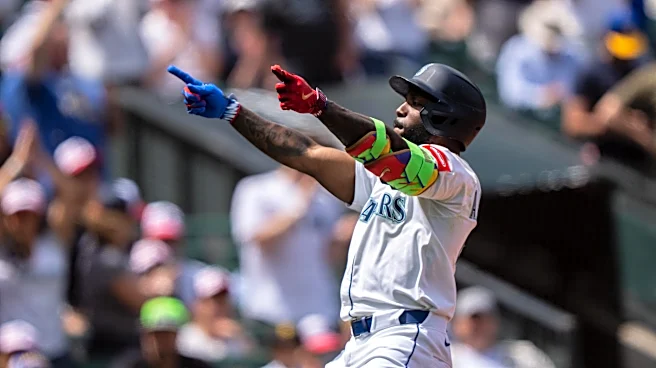
Egalitarianism is not the term that comes to mind for the Pittsburgh Pirates, a club defined in recent decades by pinchpenny ownership and stars reared to be dealt away, with little of the overachieving savvy ascribed at least to clubs like the Tampa Bay Rays or Milwaukee Brewers. Indeed, the club ranked second-worst in the recent Athletic player poll regarding franchise reputations, ahead of only the long-suffering Rockies. No Seattle Mariners enthusiast could reasonably lash out at the Pirates without recourse, but it is fair to acknowledge that whatever baggage Seattle fans may carry, Pittsburgh can see rhyming rough seas.
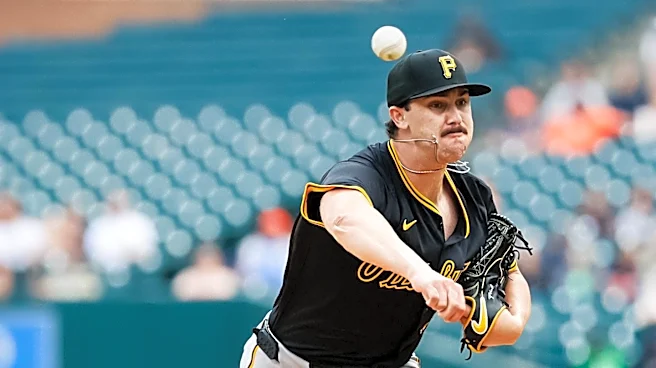
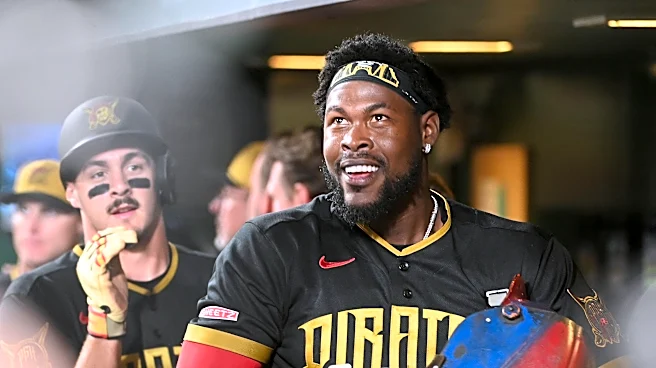
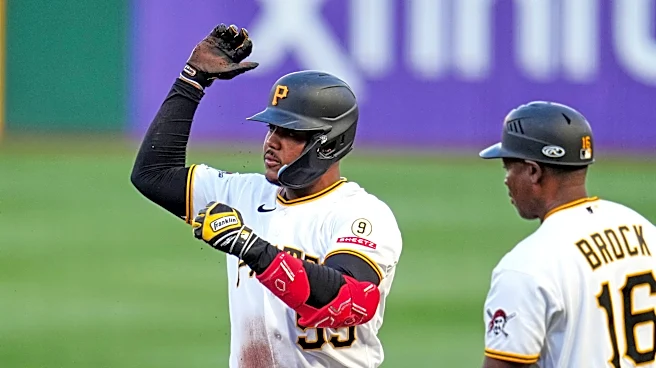
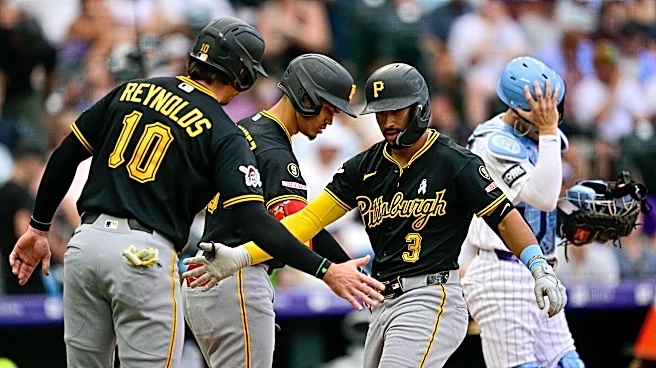
But other than giving to other clubs in unequal measure to their own return, the Pirates don’t match this electronic understanding of piracy. Watching Wednesday’s 11-1 drubbing delivered by the boys in yellow and black could be tied to the broader, historical term, but Pittsburgh hardly robbed anything. Indeed, they took what was given. They tried, and were rewarded.
Bryan Woo pumped the zone as usual, but was punished on his bread and butter four-seamer. To glance at the box score might raise concern that Woo’s miracle pitch has lost its steam, but what Woo struggled with most was location. The heaters that were punished were belt-high or lower, realms wherein his invisiball is a naked emperor. Pittsburgh whiffed at a rate that could have easily still resulted in a strong start, but when they weren’t missing they were firing blasts across Woo’s bow. There was a wall-hugging fly ball that Randy Arozarena exasperatingly pulled up on – yes I would prefer healthy Randy for a full season but WOW this stretched the limits of patience – to become an automatic double in Pittsburgh’s big five-run inning. Arozarena’s injury came earlier in June on a play he was going full bore, so it’s hardly fair to complain about a player so recently punished for maximum effort taking a cautious approach.
But piracy’s earliest roots are not malicious, or even specifically grandiose. Per our friends at Oxford, English’s “pirate” stems from its true Latin cognate, “pirata,” in turn an outgrowth of Greek’s “peiratēs” which is now a broader term for robber or brigand in modern day. But in ancient Greek, there are interpretations that see it more broadly, to “peirá,” a term merely for try, attempt, or experience. Indeed, peiratēs were those who tried.
The rest of Wednesday night was, appropriately, a celebration of piracy at this ancient root. Pittsburgh swung 46 times at 86 Woo offerings, undeterred by any struggles and aggressive on a night Woo was particularly prone to working in the zone. They racked up 15 hits, just three free passes, six doubles, a triple, and a steal, going 9-14 with runners in scoring position. While the final line got away from the M’s thanks to running out their C and D bullpen (they lack a B pen at present), Seattle saw a club who’s been defined by balls in play all season succeed against them on just that recipe.
It was a shame, given the M’s entered the night in promising position. Save for the absence of Brendan Donovan, the M’s were facing a RHP with essentially their best possible lineup all healthy. Three straight hard-hit singles yielded a run in the first. They’d not manage another run all night, nor would they scrape across a single walk all night. Nick Davila yielded his first through fourth earned runs of the year, and the M’s saw the back five of their lineup scrap together just one hit.
“Try me,” has been a challenge utterable for many years to someone you oppose. It is, in many ways, the crux of Bryan Woo’s success. He fills the zone with familiar offerings and by and large overwhelms opponents. And yet, perhaps they should’ve known better than to try the original Triers on Wednesday at PNC Park. At the halfway mark of 2026, the Mariners are in first place, 41-40, and will try again tomorrow.