

After playing 120 minutes in the sweltering heat at the age of 39, Lionel Messi stood there silently, with tears in his eyes and a silver medal draped around his neck. Not in the way he had done so 12 years earlier. Not in the way the incessant, incomprehensible media campaign we saw against the greatest player of all time would suggest, either. He just stood there, taking it all in one more time. Eventually, he sat down on the grass, the very same grass he walked off a decade before convinced that
international success would forever elude him, and unlaced his boots for the last time as an Argentina player.
In his trademark, unmistakable fashion, Messi exits his international career stage-left. There was no “Last Dance” documentary, no big interview, not even a word until the tournament ended. But this is no surprise, because ever since he was four years old, deemed too small to play with the older kids in Rosario, he has always let his game do the talking on his behalf.
Following an international career spanning more than two decades, 207 matches, nine finals and four major trophies—culminating in the biggest one of them all in 2022—Messi has officially announced his retirement from the Argentina national team. His story ends with a loss to a far superior Spain, but its ending cannot take away from his incredible tournament, nor indeed his fairytale career.

As we sit here in 2026, with the 39-year-old having achieved everything he ever dreamed of, it’s almost difficult to remember that for so many years, his most prominent criticism was his lack of international success. Yes, he can do it for Barca, but why can’t he do it for his country?
These jabs came from rivals, but they also emerged within his own nation. Messi and his family faced backlash, disrespect and outright hate from sections of Argentine supporters and journalists alike, many of whom now praise him so profusely. It took four consecutive lost finals, years of constant heartbreak, even a later-reversed decision to retire after losing against Chile in 2016, but eventually the tide began to turn.
Alongside the likes of Lionel Scaloni, Rodrigo De Paul, Cristian Romero and Emiliano Martinez, with help from the old guard of Angel Di Maria and Nicolas Otamendi, Messi and Argentina assembled a special team. In 2021 at the home of their fiercest rivals, the dam finally burst, and once the floodgates opened, man did they open.
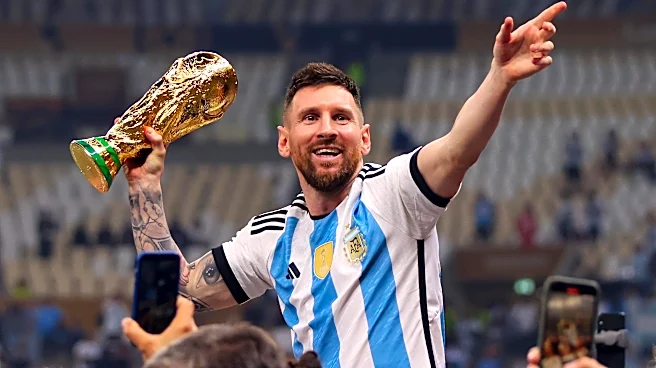
New faces such as Enzo Fernandez and Julian Alvarez joined the ranks as Argentina became a powerhouse, demolishing everyone in their path (bar Saudi Arabia) on the way to three further trophies, including of course, the 2022 FIFA World Cup. La Scaloneta became a team that nobody wanted to play against, spearheaded by the ultimate leader and an army playing for their idol.

Fast forward to today, and Messi leaves his national team having presided over its greatest-ever era, among the elite sides in history. Before this final, second graders had never witnessed their country lose an elimination match because of him. The man who was once labeled an international failure now has a trophy cabinet so wide that those same people claim international football is rigged for him.
It goes without saying that football’s biggest stage is losing its star player. An incredible 91 goals in a calendar year, eight Ballons d’Or – four by his 25th birthday – 1,348 goal contributions, 44 trophies. All records, and countless others, that will stand the test of time. But what football more so loses is a piece of its soul, because in the end it’s not a science—it’s an art, and Messi embodied that more than anyone.
He may be the most talented player ever, but talent alone doesn’t explain how he dragged his team to the World Cup’s pinnacle match once again, outplaying superstars closer to his kids’ age than his own, with his father on his deathbed. It does not explain how a man who has conquered this sport several times over still plays every game like it’s his last.
It is impossible to truly express the impact Messi has had—journalists far more talented than I have tried and failed. But maybe there is a reason for this, the same reason football lovers the world over collectively roll their eyes when hearing terms like overrated and overhyped: his greatest contribution to the sport has nothing to do with statistics.

Every fan has experienced his career differently, and everyone will remember him differently when he ultimately retires. Some will remember his solo goals against Madrid, Athletic Club and Getafe. Some will think about the cutbacks from Jordi Alba, the MSN link-up, or his connection with the greatest midfield trio in history. Many will memorialize the moments they saw him lift the Champions League, countless La Liga trophies, and finally the World Cup.
La Pulga has left us thousands of moments on the field to remember forever, but for me, the premier value he brought to the beautiful game is the feeling of watching someone who has absolutely mastered their craft; someone who sees, plays and understands the game better than anyone else. Billions of people have kicked a football, but the passion, emotion and pure elation that he brought to the sport is truly unique, incomparable.
Whether you had the luxury of rooting for him as he represented your country or you simply tuned in to see the best player in the world, watching him in action was an exhibition of genius. Something as simple as a first touch into space, a quick layoff, a body feint or a dummy would leave you speechless, because he made the impossible look effortless. Then there were the passes only he could see, the angles only he could find, the defenses only he could unlock. Oh, and on top of that he also happens to be the greatest scorer of all time.

His retirement is one of few situations in life where a crying toddler’s reaction resonates fully with grown adults. Growing up, going to school or getting a doctorate in psychology can’t explain it. Football is a kids’ game that adults get paid unthinkable money to play, coach and analyze, and one man was able to perfect it. However, behind all the tactics, the strength training and the logistics that go into it, its core never goes away. It just takes someone like Messi to remind us of that, and reinstill that childlike wonder in everyone who gets the chance to celebrate his goals. Nobody wants him to leave, because everybody wants to keep enjoying his magic, and in many ways we are still that kid begging him to stay.
Very few players in history have possessed both the talent to be an icon and the wisdom to lead like one. And Messi, through his footballing ability, but also his passion, humility and pure love of the game, inspired a generation.
That generation sold their possessions to fly across the world for the opportunity to see him play. That generation ran home from school not to miss a minute of his masterclasses at the old Camp Nou. That same generation rose through the youth ranks of Argentina’s national team. And those kids who grew up watching him on TV, dreaming of the chance to one day even train with him, left their lives on the pitch in every single match to help their hero finally raise the trophy that was his birthright.
Many people say football owed Messi a World Cup, but it was the players that actually had to step up—it’s a team sport, after all—and they knew they were playing for something far greater than themselves. Growing up, they saw him move heaven and earth attempting to bring glory to his national team, the heartache of coming up short time and again, and the pride, passion and sheer determination it took to keep going back to the well for more.

Perhaps the biggest tribute one could pay to Messi is that despite everything he’s done on the pitch for club and country, the messages pouring in from those who played with him are celebrating the person he is outside of it. As a captain, a leader, a teammate and a friend, he not only redefined the sport for himself, but he also inspired and improved those around him. Beyond his one-of-a-kind talent, it is his selflessness that makes him so easy to root for—both for players and fans— and in many ways is what has enabled him to retire from international football as an undisputed champion.
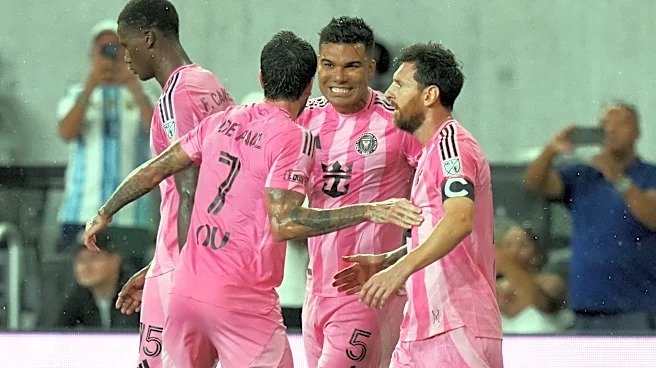
While his career is far from over, he has likely played his last game on the global stage. Though people will, and certainly should, watch him wind down his career in Miami (in a manner of speaking, he scored four goals last week) playing with his best friends, the World Cup final seems to have been his last true high-leverage match. It feels unfair, because for all the talk about his other attributes, he also showed the world that at 39 he is still the best f*****g player on any pitch, but he has nothing left to prove, to himself or anyone else.
When it’s all said and done, the only thing I can say is thank you. I was one year old when you made your international debut. I have never known an Argentina squad without you, nor did I ever want to. You are the reason I am a Barca fan, and in many ways the reason I am a football fan. Growing up watching you week in, week out has been a privilege I do not take lightly. Your legacy in sport, and in life, is truly eternal.
Muchas gracias, Leo. Todo lo mejor siempre.