

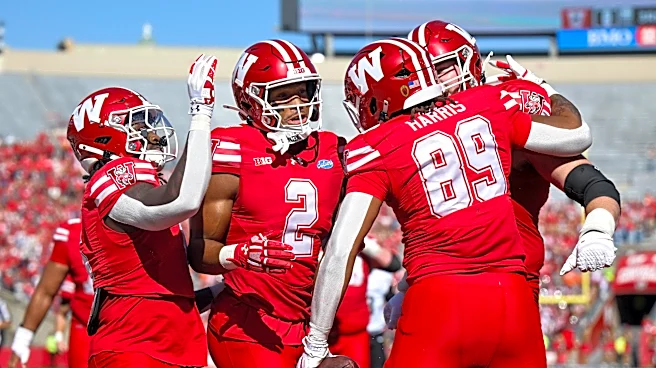
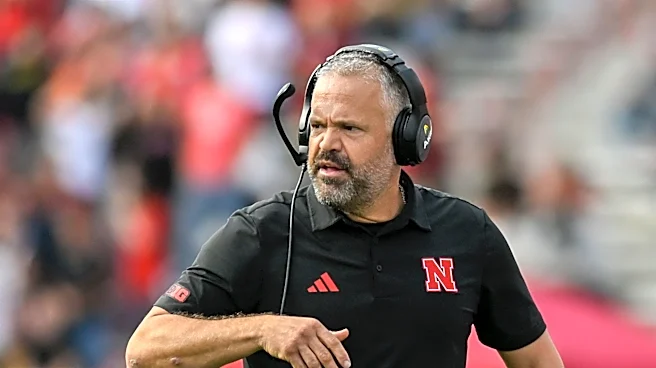
Nebraska beat Maryland 48-23, and it was an odd game.
Part of the oddness came early. Maryland put up 16 points in the first quarter, and for a few minutes it looked like one of those days. The other part came in the fourth quarter, and that part belongs entirely to the officiating crew.
The extra point that never got retried
With 6:35 left, Anthony Colandrea hit Kwazi Gilmer for a 30-yard touchdown to make it 48-23. Kyle Cunanan’s extra point was no good, but Maryland got flagged for roughing the snapper. By rule, that’s simple. The kick
missed, so the penalty gets enforced and Nebraska tries again from half the distance to the goal.
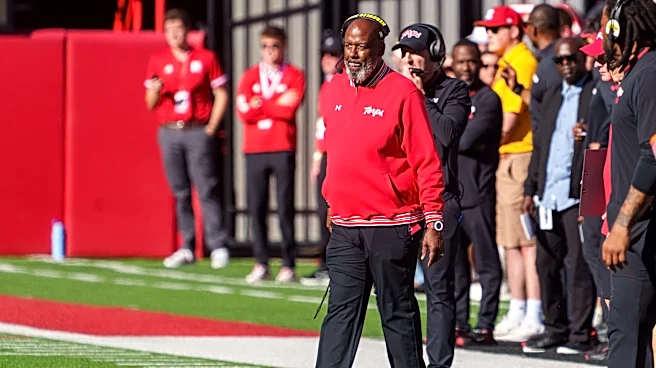
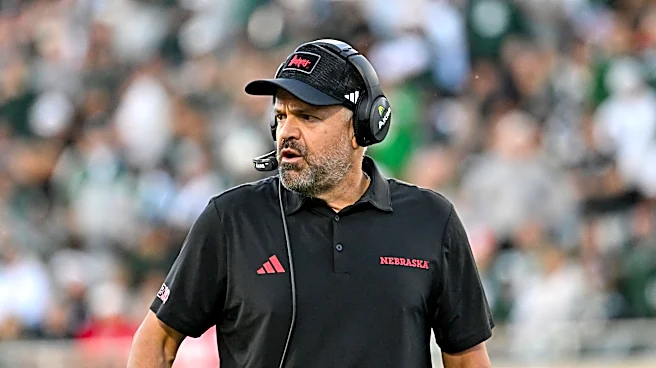
That didn’t happen. An official went over to Matt Rhule, told him the kick was good, and asked if he wanted the yardage on the kickoff. Rhule said sure. The kick wasn’t good. The point never went on the board.
I’m sitting there watching with my stroke brain, and my memory is not what it used to be, and I’m thinking: did they just not retry that? Did I miss something? We didn’t get the point. What the hell?
So let me put it this way. A Big Ten crew blew it so badly that an old guy with a brain injury figured it out from his couch before they did.

The Big Ten issued a statement admitting the error, closing with the line that it has “been in contact with its officiating team” and will “continue to emphasize consistent application of the playing rules.” That reads like a report card with a big red F on it.
There are eight people on that crew. Eight. One of them should have walked over to the referee and said, “Hey, we did this wrong.” Nobody did. And according to CBS Sports, most of this same crew worked the Michigan-Western Michigan finish that everybody was screaming about last month. Those people should never officiate as a group again, and frankly some of them probably shouldn’t be working Big Ten games. This is supposed to be the highest level of FBS football.
The stats: offense
Here’s how Nebraska did against our top-25% benchmarks.
- Points: 48. Hit, even if it took us a while to get there.
- Yards per play: 6. Miss.
- Yards per pass attempt: 6. Miss.
- Explosive plays: 10. Hit, and keep an eye on this one.
- Third down conversions: 6 of 13. Hit.
- Red zone touchdown rate: Hit.
Third down conversion rate is a huge key in these games, and it’s going to be a huge key the rest of the way. And the red zone? For the past few years Nebraska has been bad at scoring touchdowns down there. We’ve straightened that out. That’s a damn good sign.
Explosive plays by half
This is probably the key to the whole game. Nebraska had three explosive plays in the first half and a gob of them in the second. Maryland had a gob in the first half and did next to nothing after that except garbage time.

Did we come out ready to play? Early on, it looked like we got a stop, and then Maryland converted, went down the field, and scored. In past years that’s where a Husker team would start to fail, bad things would happen, and they’d keep happening all game long. This team doesn’t do that nearly as much. That matters.
Maryland does have good players. That receiver who took one 65 yards was fast. Our defender missed the tackle going for the interception. Stuff happens. Tackling in space is really hard. If you don’t believe me, go out in the backyard and try tackling your neighbor while he’s running at you and juking. Don’t do that if you’re as old as me.
But we cannot start that way against Indiana. We can’t give up explosive plays early, and probably all game, to Indiana and expect to have any chance.
Colandrea is a game changer
Look at the explosive plays list and Anthony Colandrea is all over it. He’s been our leading rusher over the past few weeks. Whether he’s throwing it or running it, he changes games. He’s connecting with Kwazi Gilmer, and I think that keeps happening, because AC is that good.
Offensive balance, and why I don’t care about running the ball
It took a while, but rushing and passing ended up close to even: 36 runs, 39 passes. That doesn’t bother me at all.
I know a lot of you hate it when we can’t run. Here’s the easiest way I can explain the approach. If the opposing safeties stay high, we run. If they bring a safety down into run support, we pass. Why would you run into a stacked box?

We’ve proven we have a passing quarterback. We’ve proven he’s a game changer. We’ve proven we have receivers who can make explosive plays. The idea that we should be able to run the ball whenever we want is kind of dumb. A balanced offense can pass and can run.
So here’s my question for the comment section: why do we need to run the ball? We need to score points. If we score them throwing it, who cares?
The stats: defense
- Points allowed: 23. Miss, against a target of 20.
- Yards per carry allowed: 5.6. Miss, against a target of 3.7.
- Opponent red zone trips: 3. Hit.
- Opponent red zone touchdown rate: Hit.
- Sacks: 1. Miss.
- Takeaways: 2. Hit.
- Turnover margin: Positive again. Hit.
The first quarter was concerning. Sixteen points. Were they going to keep scoring? Were we going to adjust? We did adjust, and we pretty much shut Maryland’s offense down in the second half. The yards per carry number comes mostly from those explosive plays early.
Holding opponents out of the end zone in the red zone has been a problem for us in the past. We hit that number. That’s a good thing. And we keep winning the turnover battle.
Special teams
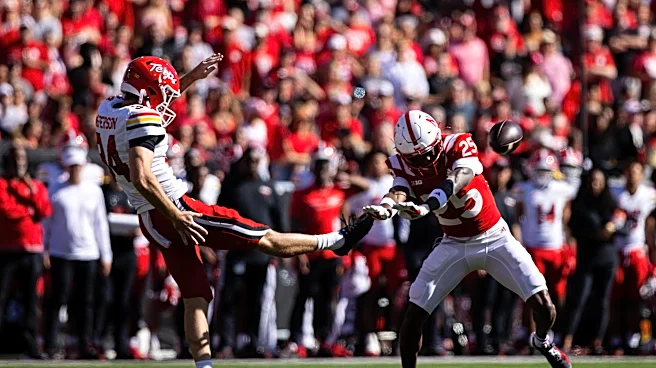
Our average starting field position was close to the target, a slight miss. Net punting came in at 43.6. Overall, I thought special teams did pretty decently.
We tried a 50-yard field goal, and I think the staff wanted to see if the kid can make one. Statistically, most college kickers never even attempt one from 50. Something like 65 to 70 percent never try. NFL kickers do because they’re the best of the best. I don’t think we’ll be trying many 50-yarders against teams like Indiana.
Penalties: 132 yards of nonsense
Now we get to my favorite part.
Nebraska had 16 penalties for 132 yards, including false starts and two offensive holdings. The two teams combined for 28 penalties, the most in an FBS game since 2021. I don’t know what to say about it, other than that crew went a little bonkers. The broadcast barely showed us any of them.

In the first half they were on pace to call a record number of penalties, and I’m not sure how many were real.
I watch the NFL. I like football. I’m a Packers fan, and they’re horrible. I like watching the NFC North, and the Vikings look like they might be doing something. No fantasy stuff, I just like watching players. But the NFL has become close to unwatchable this season because of the flags. Offensive holding, constantly. Defensive backs, constantly. A guy touches a guy like it’s a basketball game and bam, free first down. There’s no flow, and that’s what this game felt like.
Offensive holding is a good example. If the defender isn’t in position to make a play on the ball, why call it? At that point you’re calling penalties just to call penalties.
I hope that crew never works another Big Ten game together this season. Split them up. I don’t know what the problem was, but they weren’t doing a very good job of putting on a football game.
Indiana is next
Now we play Indiana, a top-five or top-10 team. I don’t pay much attention to the AP poll anymore. People keep leaving teams off their ballots, it seems heavily influenced by the SEC, and honestly you could throw it out the window. It’s not about Nebraska being unranked. I don’t care about the AP. I’ll care when the College Football Playoff committee rankings come out.
I’m going to that game, and I hope to God I see a good one.
Indiana is going to try to take away our running game. They’ll bring a safety down, add run support, and force us to throw. I’m not afraid of that. If we can pass successfully and create explosive plays in the passing game, that opens up the run. Then Jamal Rule can play well, the other backs can play well, the offensive line can play well with fewer penalties, and we get our balance back. Colandrea will probably have to play very well and make some explosive plays on his own.
On defense, Indiana doesn’t have Fernando Mendoza this year. He was probably my favorite player to watch last season. He looked like a little kid out there and seemed like a wonderful guy. Now it’s us against Indiana, and I hope our defense makes their quarterbacks and running backs miserable all afternoon. We have to take away their run and force them to throw, and we have to keep them from creating explosive plays.
If I had to describe this game in one phrase, it’s explosive plays. Who gets the 65-yard pass? Who gets the 40-yard run? Both teams take care of the ball well enough that I don’t think it turns into a turnover game, although those happen. I think our defensive backs are good enough to cover their receivers one-on-one. It should be a real chess match.
And we’ll find out something else. Against a good team, do we fall back into the same old problems we’ve had for years, where we mentally break down and let the game get away? I’d hope we’ve eliminated that.
About stacking the box
A YouTube commenter, Andrew Kramer, pushed back on me about stacking the box. His argument: in the old Nebraska-Oklahoma games, both teams had nine or more in the box every snap against the wishbone and I-formation, and nobody said “we can’t run, they’re stacking the box.” He thinks it’s mostly a phrase spread offenses use, since spread formations leave you outnumbered. If we really wanted to run, we could use bigger power formations.

It’s a fair comment, and I want to answer it.
I ran the numbers on newspapers.com, which I use constantly for research. For 1965 through 1999, the search “stacking the box football” returns 1,163 results. For 2000 through 2025, the same search returns 5,862. So yes, the phrase is far more common in the spread era, which took off around 2000. Andrew’s right on that part.
But could we just line up in power formations and run? My question is why we would. It’s not very efficient. We want to score points, and passing games are much more efficient at scoring points.
I know saying “it’s OK to pass” is blasphemy in Nebraska. But think about those old wishbone teams. If they got behind by 14, they had almost no way to come back. It didn’t happen often, but when it did, the game was over. If we fall behind Indiana by 14 with a run-only offense, we’re probably losing.
The easy answer for why we can’t do it the old way: we don’t have Tom Osborne, we don’t have Milt Tenopir, and we don’t have the offensive lines from the ’90s. The real answer is rule changes. You can’t cut block outside the tackle box anymore, and the pass blocking rules are very different from the old days. That shifts everything toward the passing game.
So answer me this: if we keep winning this season with a balanced offense that passes and runs, why isn’t that acceptable football? I miss the old formations and I miss that success too. But that’s not the game anymore.
Some of the old stuff is coming back, though. Northwestern ran some Wing-T, and even a formation called the Lonesome Polecat. You’ll see buck sweep and waggle action showing up again, even in the NFL. The reason ties back to everything above. When defenses play two high safeties to stop explosive passes, offenses run to force a safety down, so they can get those explosive passes back.
Nebraska ran some option against Maryland, more speed option than anything resembling a fullback attack. The fullback is basically gone. You can pretend a tight end is a fullback, and you can pretend a defensive lineman is a fullback, which is pretty fun.
That’s all I’ll say about play calling for now. Let me know what you think about this one and about Indiana in the comments.
Go Big Red.